TENS and therapeutic ultrasound: what physiotherapy equipment really does
An honest look at two familiar clinic tools: what they can give, and what not to expect of them.
TENS currents and therapeutic ultrasound are supporting tools that can help mainly with temporary pain relief. The research doesn’t support them as standalone treatment, so their place is alongside active exercise and manual therapy, which are the core of treatment.
Equipment is one of the things the public most identifies with physiotherapy: the patient lies down, electrodes are attached or an ultrasound head is moved over the skin, and something happens. It’s worth talking honestly about what that something actually does.
The two best-known tools are TENS currents and therapeutic ultrasound. Both can contribute, and neither is the treatment itself.
What is TENS and how does it work?
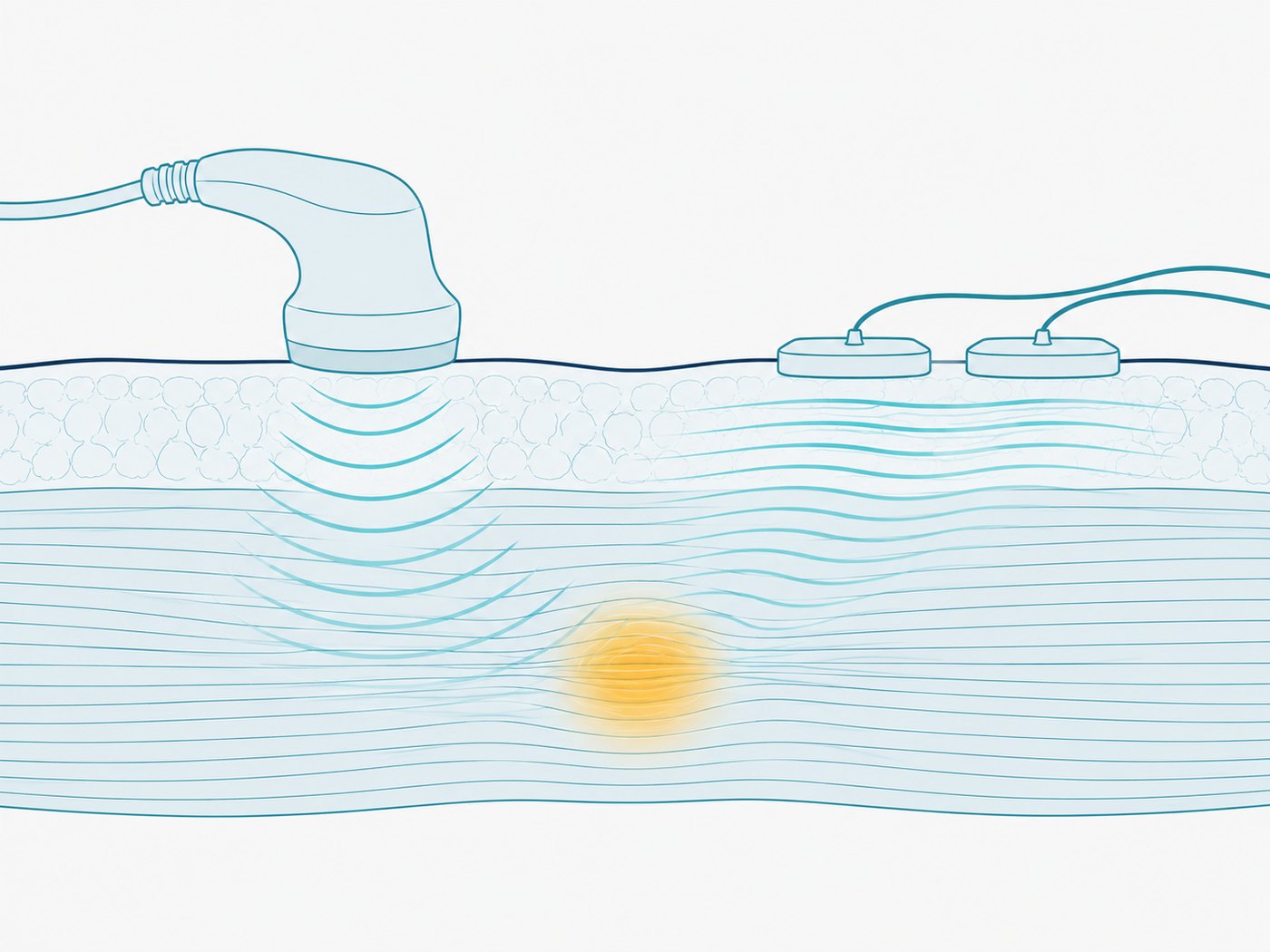
TENS is a gentle electrical stimulation delivered through electrodes attached to the skin. The sensation is a light tingle or vibration, not pain.
The accepted explanation relies on the idea that sensory stimulation competes with pain signal transmission in the nervous system, thereby "dampens" the sensation of pain. The body’s natural pain-dampening mechanisms may also be involved.
What’s important to understand: The effect is on the sensation of pain, not on the source of the problem. When the device is off, the mechanism stops working.
What does the research say about TENS?
The evidence is mixed, and the cautious conclusion is:
- Temporary pain relief in some patients, mainly during use and shortly after
- Good safety and few side effects, mainly local skin irritation
- No evidence that it speeds tissue healing or changes the course of the problem
- In chronic pain Systematic reviews found very low certainty, and leading guidelines recommend against offering it as regular treatment in these conditions
So the sensible use is: when pain interferes with function or sleep and makes it hard to start exercising, TENS can provide a window of relief that makes it possible to start moving. That’s a perfectly legitimate goal, as long as it’s presented as such.
And what about therapeutic ultrasound?
Therapeutic ultrasound delivers sound waves to deep tissues, aiming to create local warming or a gentle mechanical effect.
Here the research assessment is even more cautious: In most common clinic conditions, the evidence for effectiveness is limited. In chronic lower back pain, for example, systematic reviews found a tiny or zero difference versus sham treatment, and current guidelines don’t recommend it as routine care.
For this reason, in recent years the entire profession has shifted its center of gravity from equipment to active exercise. I use ultrasound in a targeted, limited way, and always as an addition, not the mainstay.
So where does equipment fit properly?
The principle that guides me is simple: The equipment doesn’t treat in place of exercise; it helps it begin.
- In early stages, when severe pain prevents any meaningful movement
- When pain disturbs sleep and disrupts recovery
- As a brief addition within a session that is mostly active and hands-on work
And what I avoid: a treatment plan that’s all equipment, without exercise and without gradual load building. It may feel pleasant in the moment, but usually doesn’t produce real change over time.
Frequently asked questions
Because temporary pain relief is real value when it lets you move, sleep, and start exercising. The problem starts when the tool is presented as the treatment itself.
Home devices exist, and in most cases they’re safe to use. It’s still worth getting guidance on electrode placement and duration of use, and making sure there are no contraindications.
Yes. Special caution or avoidance is required in conditions such as a pacemaker, pregnancy, areas with impaired sensation, damaged skin, and over an area of tumor or active infection. That’s why the medical background is always reviewed first.
Approaches in the field still vary. The line I work by relies on the current literature, which places active exercise and manual therapy at the center and leaves equipment in a supporting role.
What’s worth remembering?
TENS and therapeutic ultrasound are supporting tools that can temporarily ease pain, but don’t treat the source of the problem. The core of treatment is active exercise and manual therapy, and the equipment is there to help it begin.
- TENS currents can temporarily ease pain, mainly during use and shortly after.
- The evidence for therapeutic ultrasound’s effectiveness is limited in most common clinic conditions.
- The equipment is there to help exercise begin, not to replace it as standalone treatment.
Not sure if this is your situation? I’d be happy to give you a professional assessment and build a treatment plan that fits you.
Book a consultation callYou might also be interested in:
 Pain somewhere else?
Return to the interactive body map and pick an area
←
Pain somewhere else?
Return to the interactive body map and pick an area
←