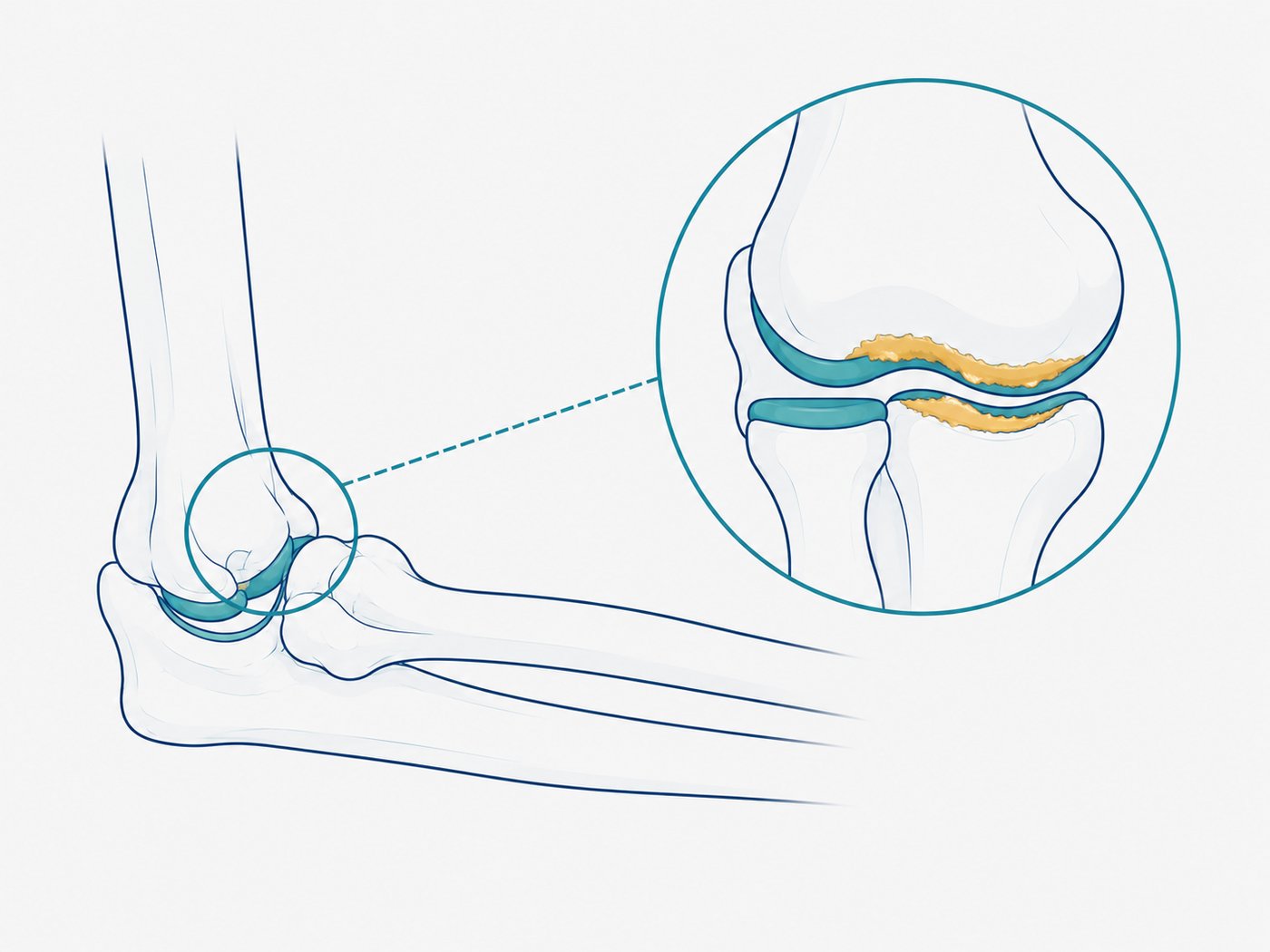
Elbow osteoarthritis: less common, no less limiting
Cartilage wear in the elbow is talked about less than in the knee or shoulder, but is particularly common in throwing and strength athletes.
Elbow osteoarthritis is talked about less than in the knee or shoulder, but is particularly common in throwing and strength athletes who have loaded the joint for many years.
When people think about cartilage wear (osteoarthritis), most think of the knee or hip - but the elbow joint can undergo similar wear too, mainly in people who have loaded it for many years, such as throwing athletes, weightlifters or people who have worked with prolonged hand-held vibration.
This is a less common problem than knee osteoarthritis, but it certainly exists, and is often diagnosed late because people don’t think of it at first.
How does it usually feel?
Symptoms can vary, but many describe:
- Deep pain in the elbow that worsens with movement and load.
- Stiffness in the morning or after prolonged sitting.
- A gradual reduction in the range of motion, mainly in full extension.
- Sometimes a “locking” or “catching” sensation during movement.
- Mild swelling around the joint during flare-ups.
A reduction in the full extension range of the elbow, even a slight one, is usually the earliest sign of cartilage wear - before the pain becomes significant.
What causes elbow osteoarthritis?
Repetitive, accumulated load on the elbow over years, mainly in throwing and strength athletes, is the main cause. Previous elbow injuries, such as fractures or sprains, also significantly increase the risk of earlier cartilage wear.
How can physiotherapy help?
Treatment focuses on preserving the existing range of motion and preventing further loss of it, alongside strengthening the muscles around the elbow that help distribute the load on the joint. Adjusting training loads, particularly in throwing athletes, is an important part of the process to slow the rate of progression.
When should you get checked?
If the elbow suddenly locks and won’t release, there’s warm, noticeable swelling, or the range of motion drops fast - see an orthopedic specialist and consider imaging.
Frequently asked questions
Yes, significantly less common, but it certainly exists - particularly in populations with repetitive load on the elbow.
In most cases yes, with the type of exercises and the load adjusted so as not to worsen the wear.
Only in advanced cases that significantly interfere with function. In most cases you can manage with conservative treatment for a long time.
What’s worth remembering?
Elbow osteoarthritis is less well known than in the knee or shoulder, but preserving range of motion early is the key to slowing its progression.
- Repetitive, accumulated load on the elbow over years, and previous injuries such as fractures or sprains, are the main causes.
- A reduction in the full extension range of the elbow, even a slight one, is usually the earliest sign - before the pain becomes significant.
- Treatment focuses on preserving the existing range of motion and strengthening the muscles around the elbow.
Not sure if this is your situation? I’d be happy to give you a professional assessment and build a treatment plan that fits you.
Book a consultation callYou might also be interested in:
 Pain somewhere else?
Return to the interactive body map and pick an area
←
Pain somewhere else?
Return to the interactive body map and pick an area
←