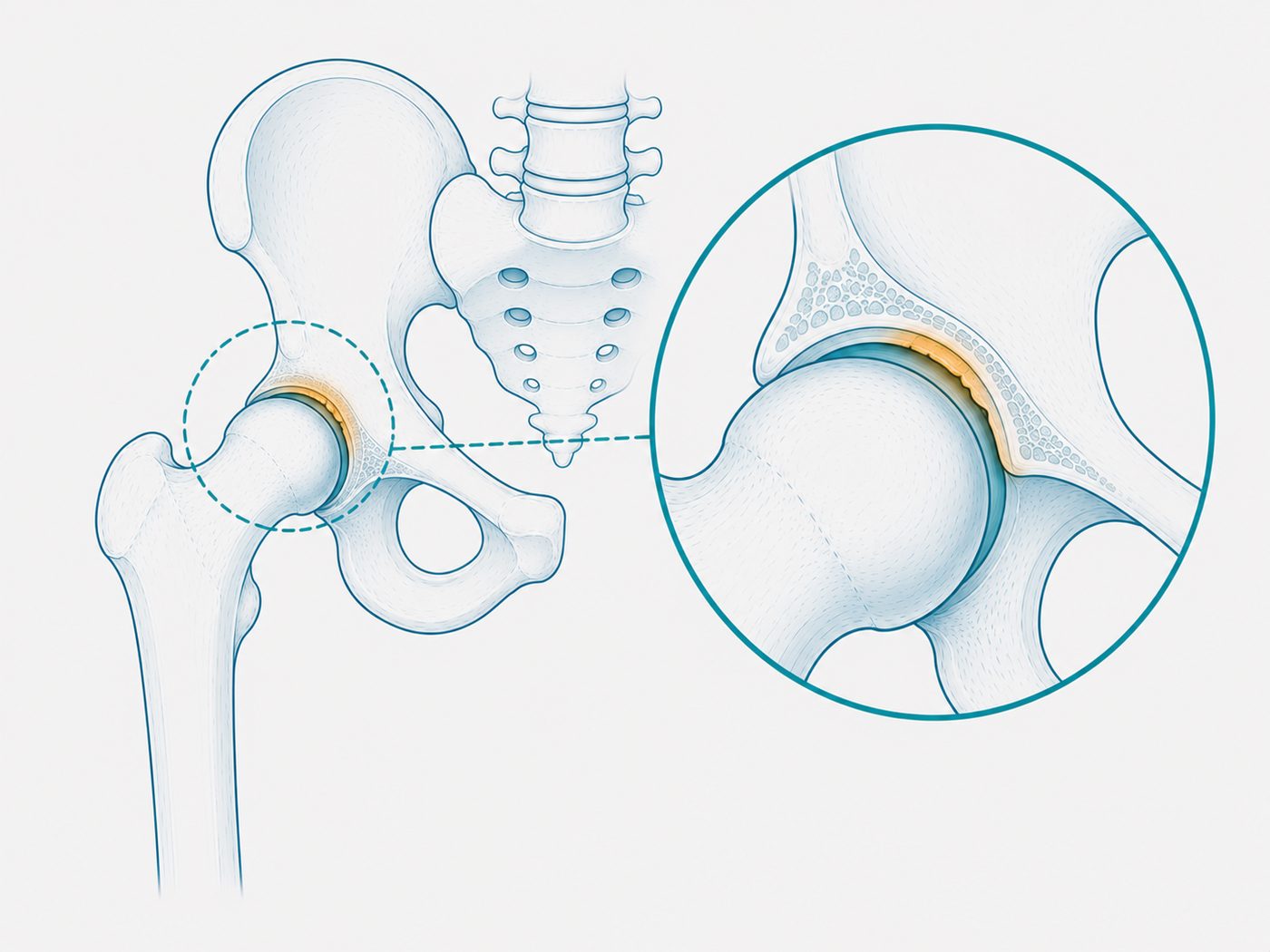
Hip impingement (FAI): when the hip doesn’t feel free
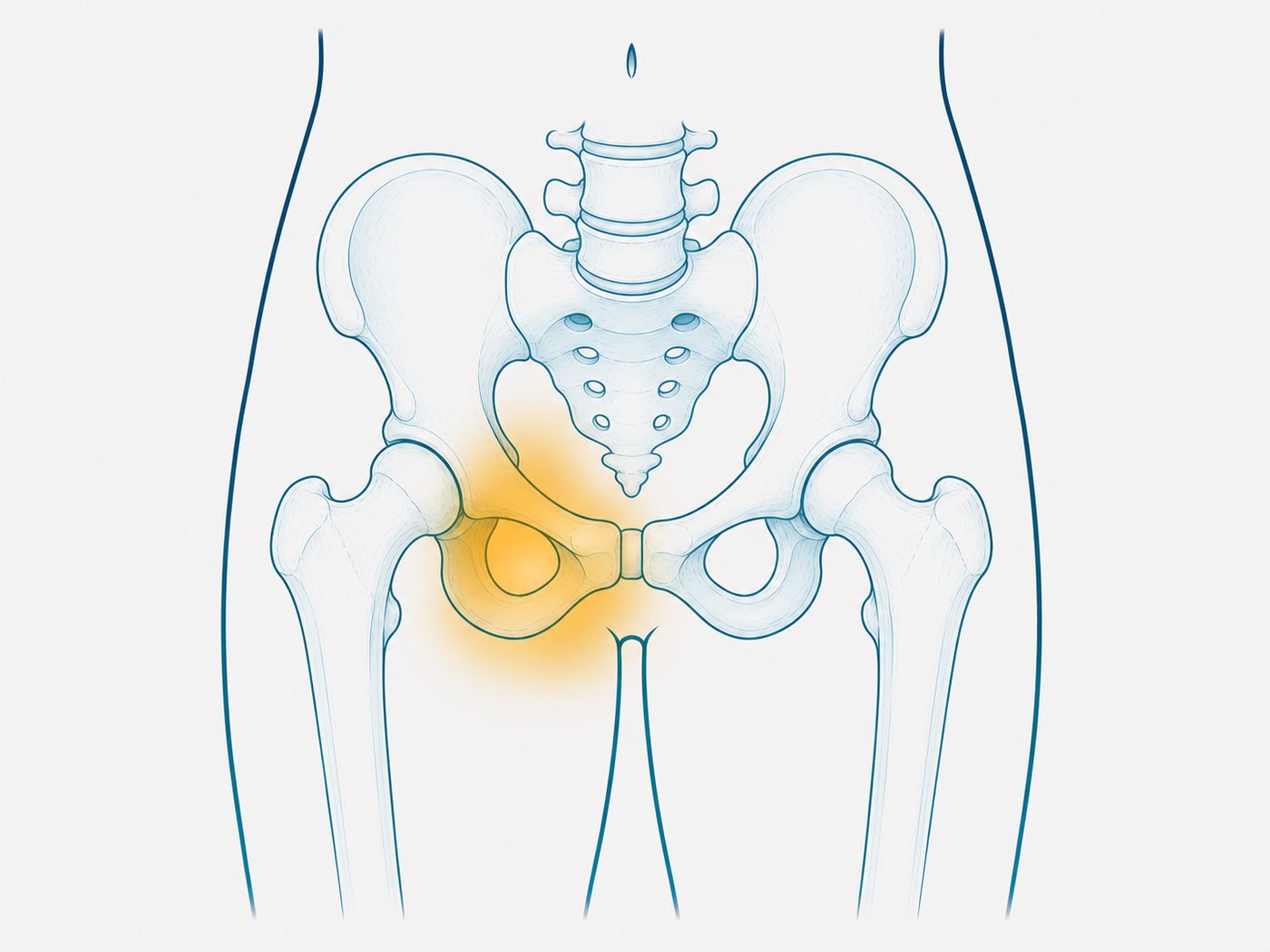
Deep pain in the groin that appears with flexion, hip rotation or physical activity.
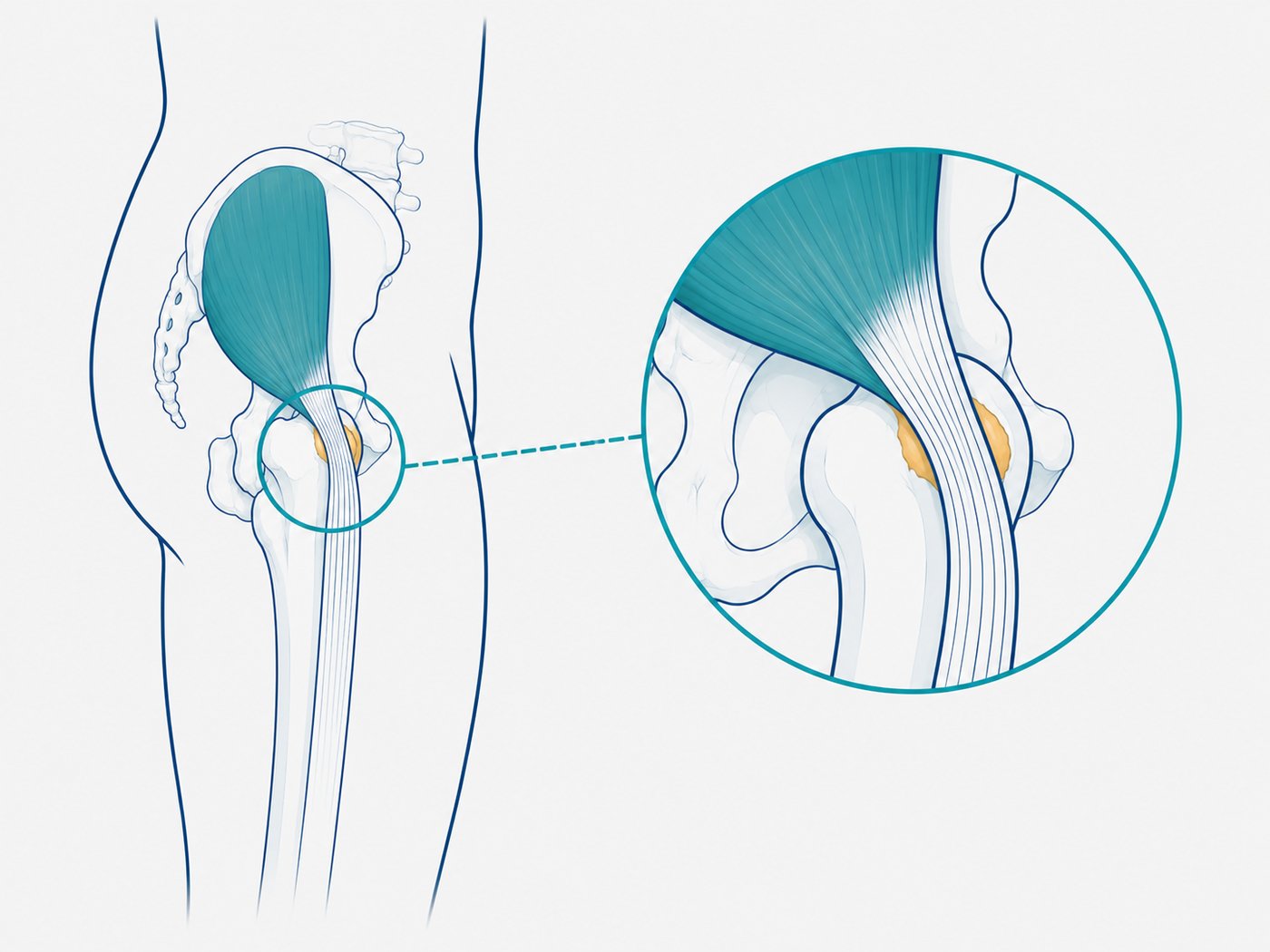
Femoroacetabular impingement (FAI) is usually described as a “wall” the hip meets in deep flexion - different from ordinary muscular pain, and particularly common in active people and athletes.
If you feel deep pain in the groin during prolonged sitting, squats, running or rotation of the hip, this may be femoroacetabular impingement (FAI). This condition is particularly common in active people and athletes, but it can also appear in the general population. Many patients describe it as a “wall” the hip meets in deep flexion - a sensation different from ordinary muscular pain, and that is exactly the clue that points me toward the diagnosis.
What is femoroacetabular impingement?
FAI is a condition in which there is impingement between the head of the femur and the socket of the pelvis during certain movements, mainly deep flexion combined with rotation. Over time pain and a reduction in range of motion can appear, and sometimes damage to other structures such as the rim of the socket (the labrum) that surrounds the joint.
If you feel the pain mainly in low or deep sitting (such as a low chair or sitting on the floor), try sitting on a higher chair until you are assessed - it reduces the angle of flexion that provokes the pain.
How does it usually feel?
- Deep pain in the groin.
- Pain when flexing the hip.
- Pain when squatting or sitting.
- A reduction in the range of motion.
- Sometimes clicking or a catching sensation.
How can physiotherapy help?
After assessment, we build a rehab plan: adjusted loads, improving range of motion, strengthening the pelvic and hip muscles, and better movement control - aiming to reduce pain and allow a safe return to activity, including correcting the movement patterns that overload the area.
Frequently asked questions
No. In many cases significant improvement can be achieved through conservative treatment - surgery is usually reserved for cases that have not responded to treatment after a sufficient period.
Sometimes yes, after adjusting the exercises and loads - temporarily avoiding deep flexion movements while continuing with other activity.
When the pain persists, limits function or appears consistently with certain movements - there’s no need to wait for it to become chronic.
What’s worth remembering?
FAI doesn’t necessarily prevent physical activity. The right assessment, tailored exercise and load management can help reduce pain and improve the quality of movement.
- FAI arises from impingement between the head of the femur and the socket of the pelvis in movements of deep flexion combined with rotation.
- It’s identified by deep groin pain that worsens with prolonged sitting, squats, running or hip rotation.
- Sitting on a higher chair, which reduces the angle of flexion, can bring relief until an assessment is made.
Not sure if this is your situation? I’d be happy to give you a professional assessment and build a treatment plan that fits you.
Book a consultation callYou might also be interested in:
 Pain somewhere else?
Return to the interactive body map and pick an area
←
Pain somewhere else?
Return to the interactive body map and pick an area
←