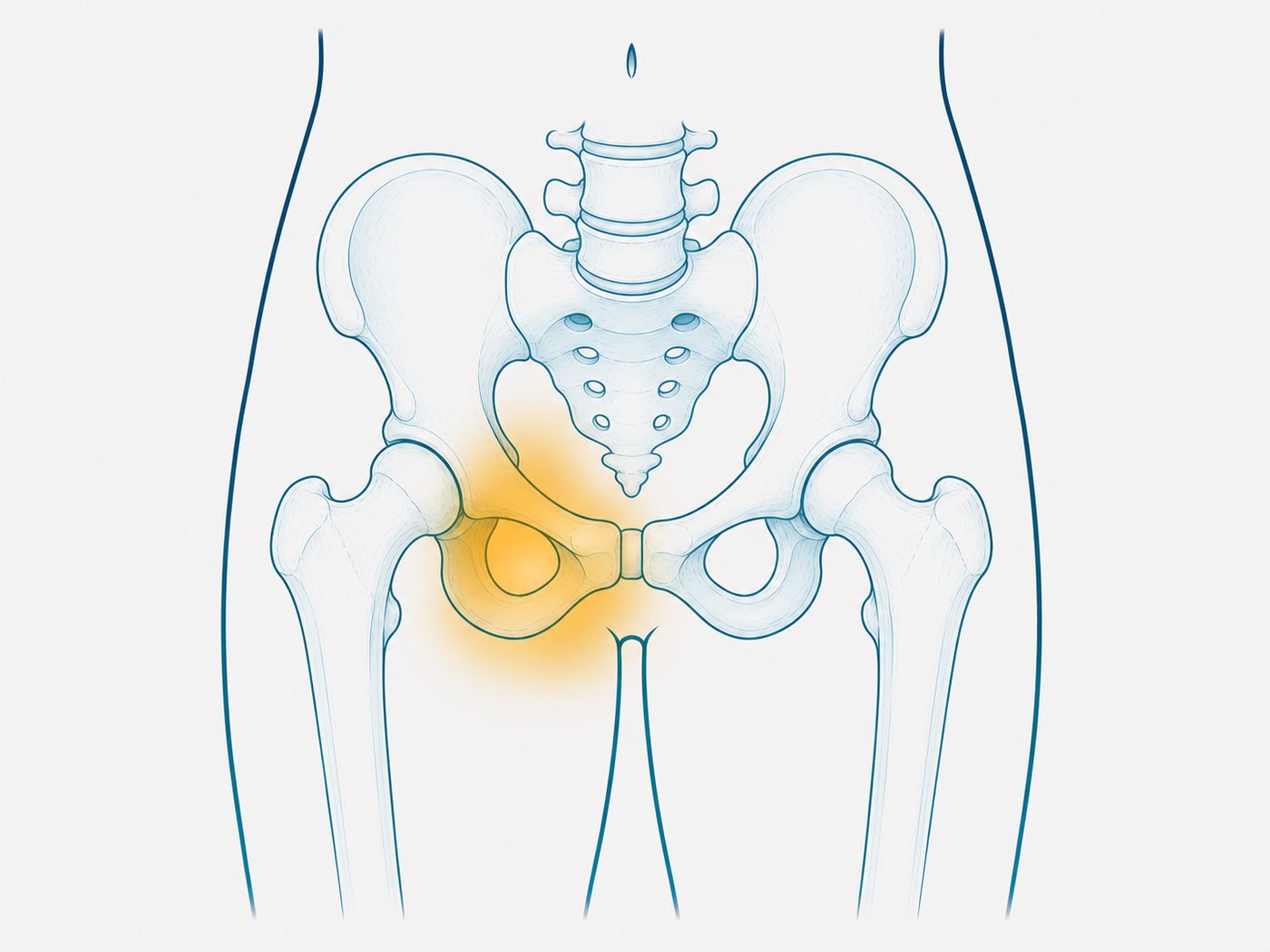
Hip pain: when the simplest walk hurts
Pain in the hip or groin that appears when walking, standing up or climbing stairs.
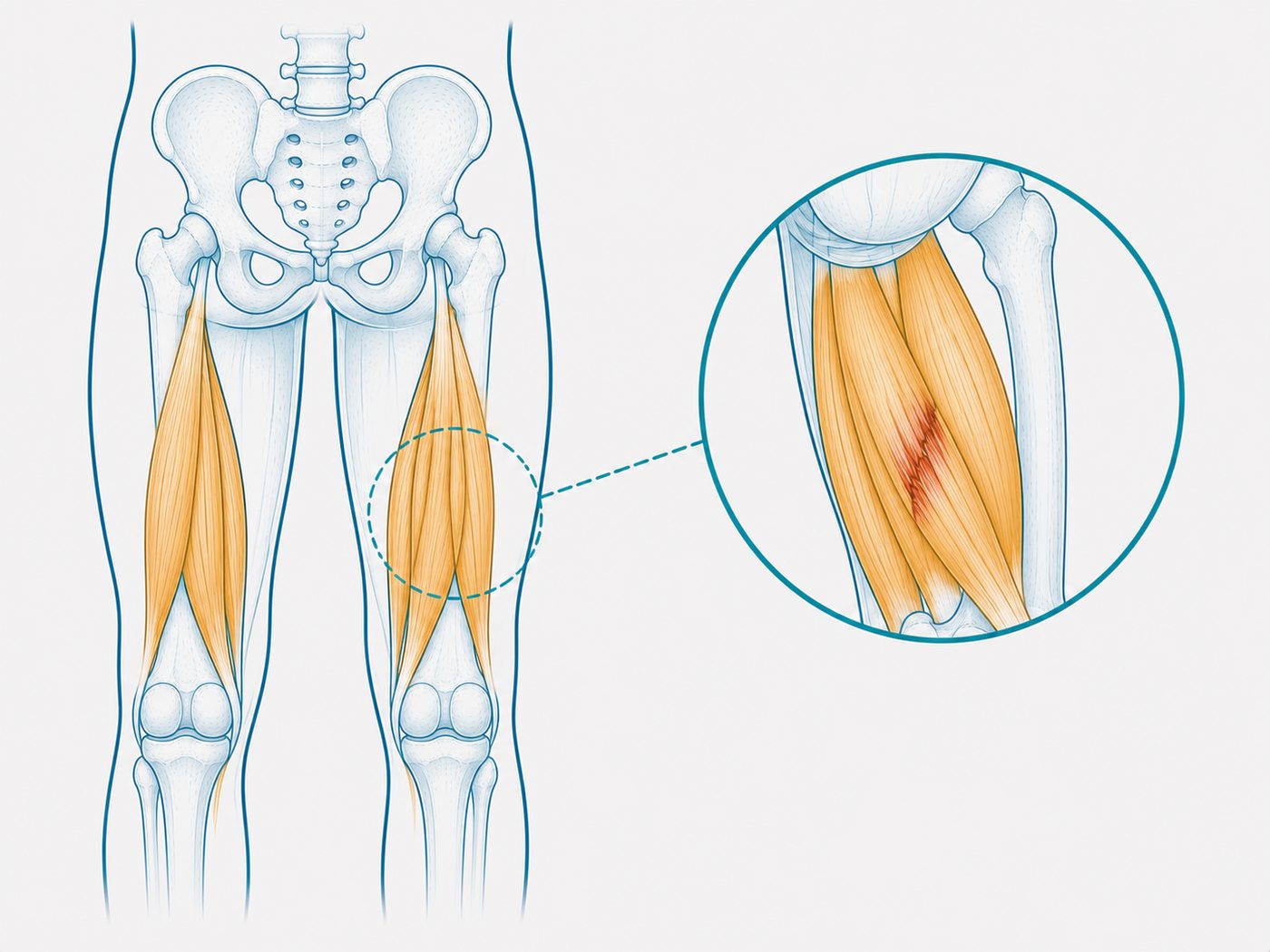
The hip joint carries your body weight with every step - pain in this area isn’t always a sharp “injury”, but usually the result of weakness in the glutes and core that passes excess load into the joint.
The hip joint carries your body weight with every step, which is why pain in this area affects almost every movement - walking, sitting, climbing stairs and even lying on your side. Many of the patients who come to me describe it exactly that way: not a sharp, frightening pain, but something that accompanies them through the day and makes the simplest things harder. And that is exactly what makes it frustrating - you aren’t necessarily injured, but you do feel that your body is limiting you.
What are the common causes?
Weakness in the glutes and core is one of the most common causes I come across - when these muscles aren’t working enough, the hip joint is forced to absorb a load it was not built to carry alone. Repeated load from running or walking on uneven ground can irritate the joint gradually, sometimes without you noticing until the pain is already there. Unbalanced posture - for example shifting your body weight onto one leg when standing for a long time - passes excess load into one hip at the expense of the other. And sometimes, especially when the pain comes with morning stiffness or a restricted range of motion, there is a genuine joint problem that calls for professional assessment. Another common sign is pain climbing stairs or getting up from a low seat.
What helps bring relief?
Strengthening the glutes and core so the load is distributed properly is the foundation - not generic exercises, but exercises aimed precisely at the movement pattern causing your pain. Stretches for the front and back thigh muscles help release tension that builds up around the joint and restore a comfortable range of motion. And correcting the walking pattern - if weight bearing is asymmetric, even a small change in the way you walk can take significant load off the painful hip.
Try to notice when the pain appears: standing up after sitting for a long time, climbing stairs, or specifically at night? The timing says a lot about its source, and that is exactly where I begin the assessment.
When should you get checked?
- The pain limits your range of motion
- There is a slight limp or a change in your walking pattern
- The pain comes on at rest or at night as well
- The pain radiates into the lower thigh or the knee
- The pain doesn’t improve after a few days of rest
- Weakness in the glutes and core is one of the most common causes of hip pain - the joint is forced to absorb a load it was not built to carry alone.
- Unbalanced posture, such as shifting weight onto one leg when standing for a long time, passes excess load into one hip at the expense of the other.
- Strengthening the glutes and core, targeted to the specific movement pattern causing the pain, is the foundation for relief.
Not sure if this is your situation? I’d be happy to give you a professional assessment and build a treatment plan that fits you.
Book a consultation callYou might also be interested in:
 Pain somewhere else?
Return to the interactive body map and pick an area
←
Pain somewhere else?
Return to the interactive body map and pick an area
←