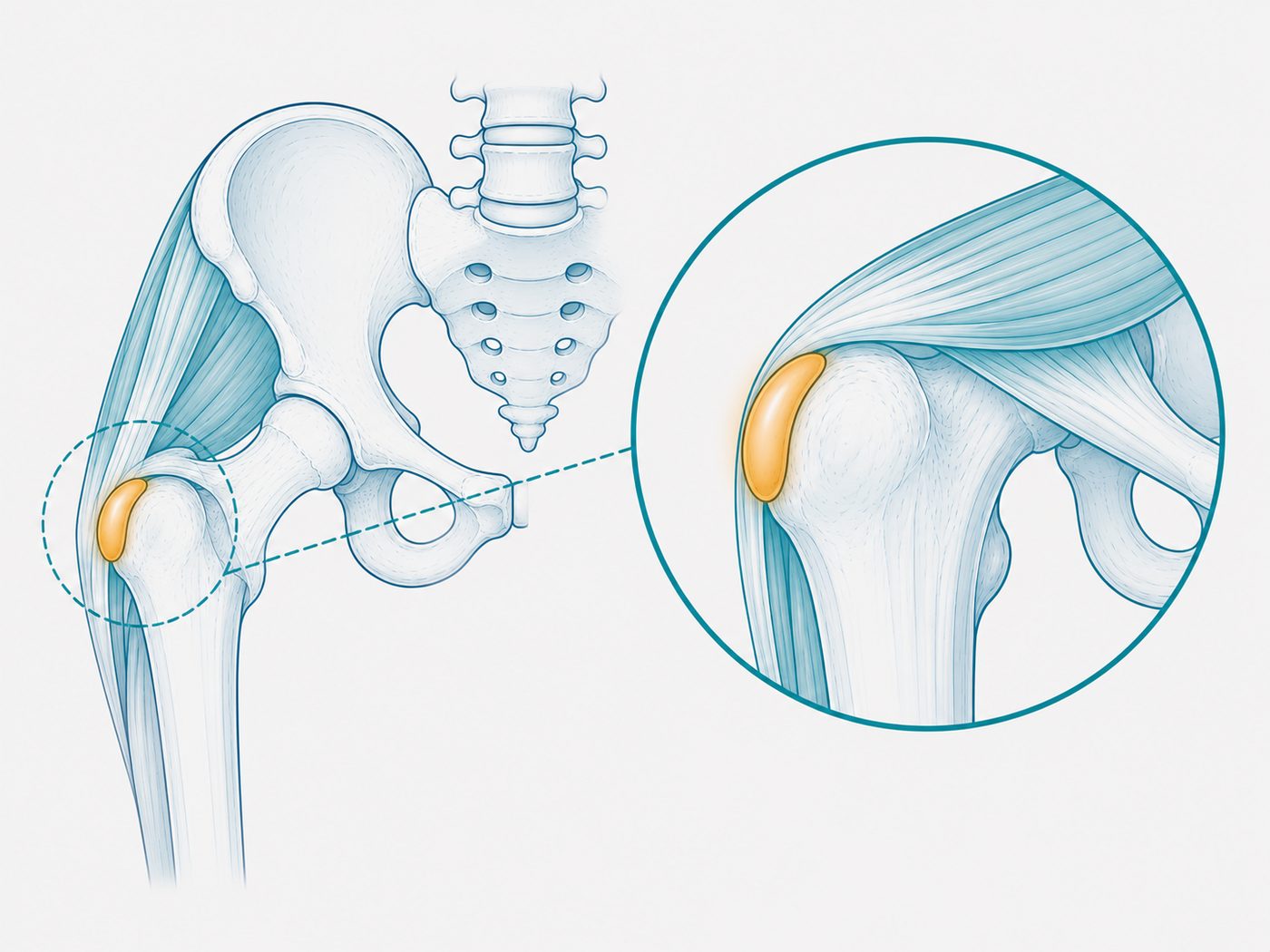
Greater trochanteric pain syndrome (hip bursitis): when lying on your side hurts
Pain on the outer side of the hip that worsens with walking, climbing stairs or lying on that side.
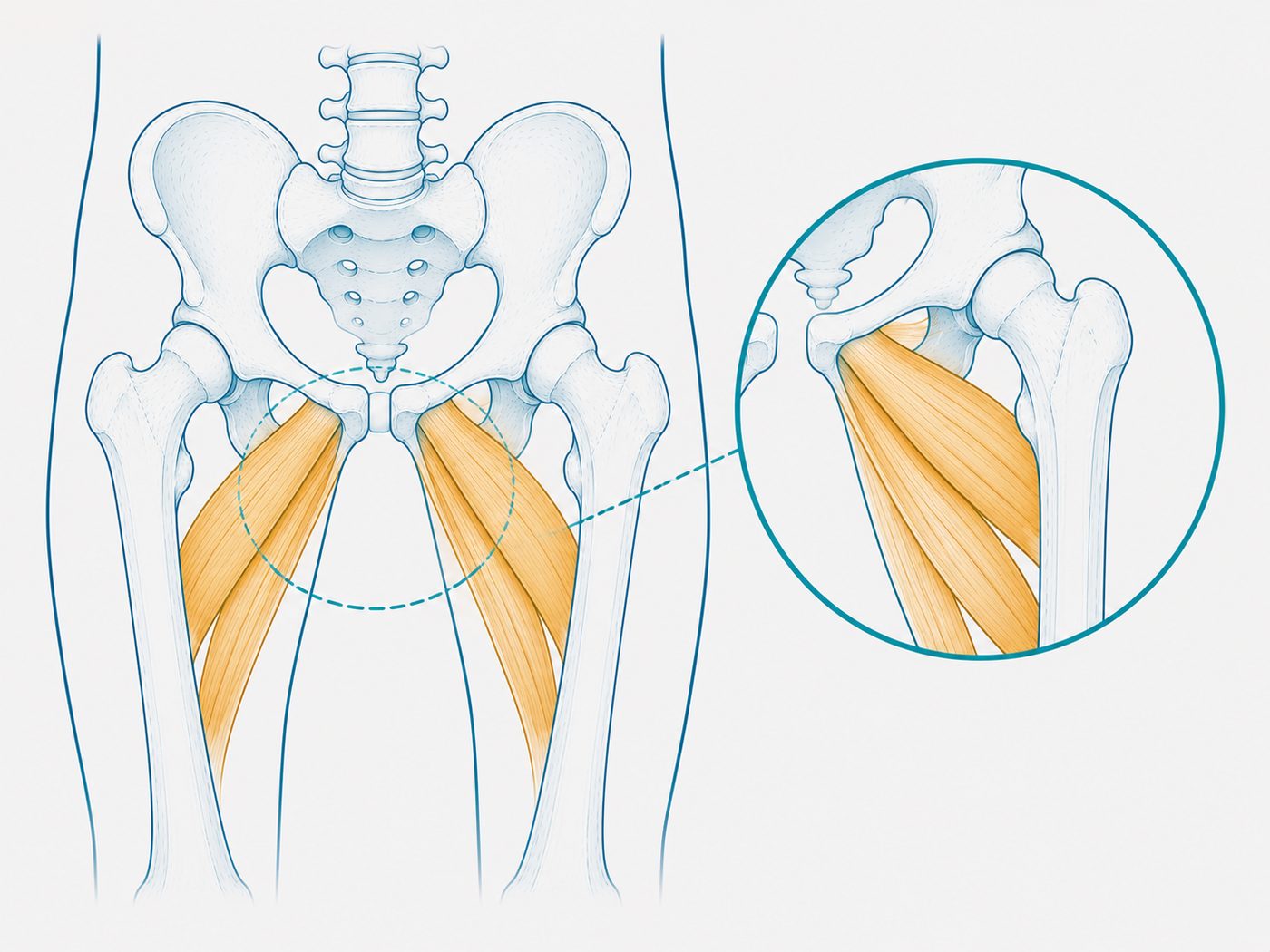
Hip bursitis causes pain on the outer side of the hip that makes sleeping on that side particularly difficult - and it is usually linked to weakness in the lateral hip muscles that should be stabilizing the joint.
One of the sentences I hear quite often is: “I can no longer sleep on the painful side.” When the pain appears on the outer side of the hip and worsens with walking or stairs, one of the possibilities is hip bursitis - and this is exactly the condition where people give up good sleep for months before coming in for treatment.
What is hip bursitis?
A bursa is a small fluid-filled sac whose job is to reduce friction between tissues. When the area around the bursa is irritated by load or repeated friction - for instance running on a hard surface, a sudden increase in activity, or even sitting for long periods with legs crossed - pain and tenderness can appear. In most cases this is also linked to weakness in the lateral hip muscles, which should be stabilizing the joint and reducing that friction in the first place.
Until the pain settles, try sleeping with a pillow between your knees while lying on the good side - it reduces the stretch on the painful side and allows better sleep while treatment progresses.
How does it usually feel?
- Pain on the outer side of the hip.
- Pain when lying on that side.
- Tenderness to touch.
- Pain climbing stairs.
- Discomfort with prolonged walking.
- The pain lasts more than two to three weeks
- There is marked swelling or local heat in the area
- The pain significantly disturbs sleep over time
- There is noticeable weakness when walking
How can physiotherapy help?
Treatment focuses on reducing the load on the area, improving hip movement, strengthening the surrounding muscles (mainly the lateral hip muscles that stabilize the joint) and guidance on returning gradually to activity without aggravating the pain.
Frequently asked questions
No. It’s usually better to adjust the load (shorter walking distances, for example) rather than stop moving altogether.
Sometimes it improves, but if the pain doesn’t pass, get assessed and start treatment - the muscle weakness usually behind it doesn’t fix itself.
In most cases yes, after rehabilitation and gradual loading.
What’s worth remembering?
Pain at the side of the hip isn’t something you have to “live with”. The right assessment and tailored physiotherapy can help reduce the pain and get you back to your routine, including comfortable sleep at night.
- The bursa is a fluid-filled sac that reduces friction; irritation is caused by load or repeated friction, usually alongside weakness in the lateral hip muscles.
- Sitting with legs crossed, running on a hard surface or a sudden increase in activity can all trigger the pain.
- Sleeping with a pillow between the knees on the good side reduces the stretch on the painful side and allows better sleep during treatment.
Not sure if this is your situation? I’d be happy to give you a professional assessment and build a treatment plan that fits you.
Book a consultation callYou might also be interested in:
 Pain somewhere else?
Return to the interactive body map and pick an area
←
Pain somewhere else?
Return to the interactive body map and pick an area
←