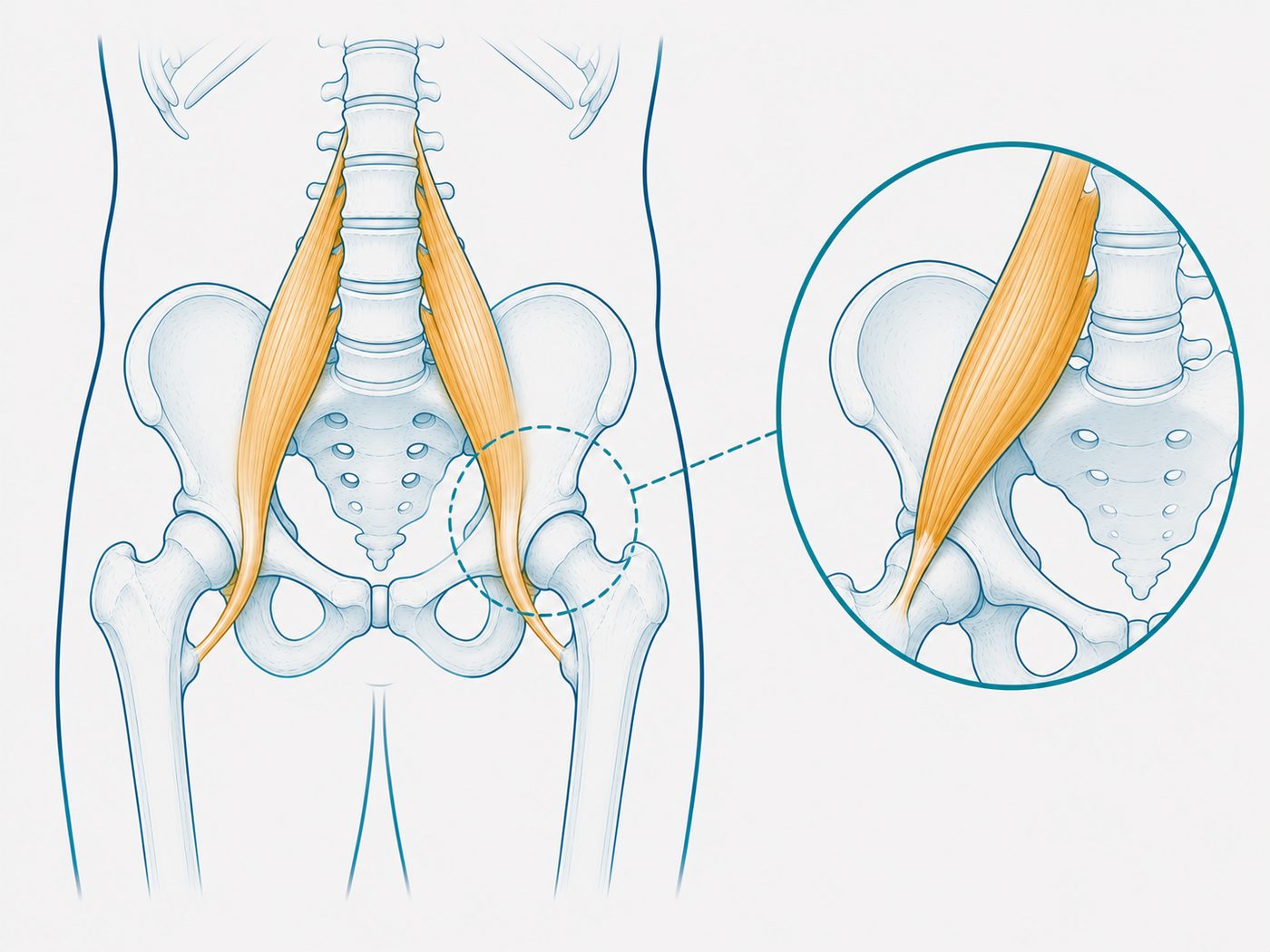
Iliopsoas strain: a small muscle with a big job
Pain at the front of the thigh or groin that worsens when lifting the knee, running or climbing stairs.
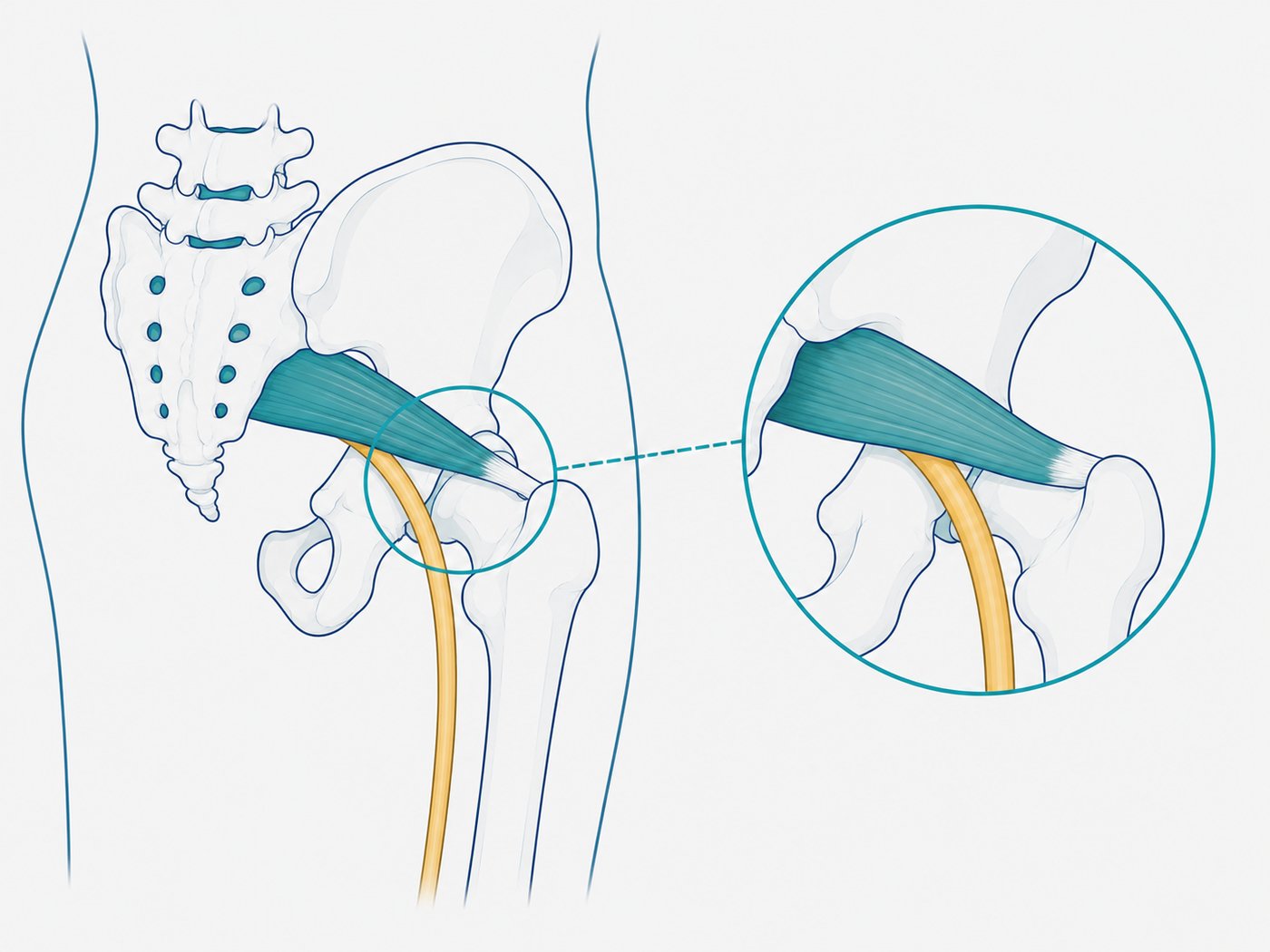
The iliopsoas is one of the most important muscles for hip flexion - most people have never heard of it until it starts to hurt, and then discover how involved it is in almost every movement that involves lifting the leg.
The iliopsoas is one of the most important muscles for flexing the hip. When it is irritated or injured, the pain is usually felt at the front of the groin or thigh and can make walking, running, standing up from a chair or climbing stairs harder. This is a muscle most people have never heard of until it starts to hurt - and then they discover how involved it is in almost every movement that involves lifting the leg.
What is an iliopsoas strain?
The injury can be a strain, an overload or irritation of the muscle or the tendon. It’s common in runners, ball-sport players and people training with repeated hip flexion movements (such as kicking or running uphill), but it can also appear after an unusual effort in someone not used to that kind of activity.
If the pain increases going up stairs but less going down, that points straight toward the iliopsoas - because going up requires active hip flexion under load, exactly the movement this muscle performs.
How does it usually feel?
- Pain at the front of the groin.
- Pain at the front of the thigh.
- Pain when lifting the knee.
- Difficulty running or climbing stairs.
- Tenderness in the groin area.
How can physiotherapy help?
After assessment, we build a rehab plan: load management, improving range of motion, progressive strengthening of the muscles around the pelvis and hip, and preparing for a safe return to activity - including specific strengthening for the muscle itself once the pain has settled enough.
Frequently asked questions
Not always. In many cases the load can be adjusted and controlled activity continued, while temporarily avoiding movements that directly cause pain.
The iliopsoas is the main hip flexor, so this movement activates it directly and intensifies the pain if it is irritated.
When the pain persists, worsens or limits daily or sporting activity - it is particularly important not to “push” through this pain, because it tends to get worse.
What’s worth remembering?
Early assessment and tailored rehabilitation can reduce the pain, improve function and allow a safe return to activity.
- The injury is common in runners, ball-sport players and people training with repeated hip flexion movements, but can also appear after an unusual effort.
- Pain that increases going up stairs but less going down points directly to the iliopsoas.
- It’s identified by pain at the front of the groin or thigh that worsens when lifting the knee, running or climbing stairs.
Not sure if this is your situation? I’d be happy to give you a professional assessment and build a treatment plan that fits you.
Book a consultation callYou might also be interested in:
 Pain somewhere else?
Return to the interactive body map and pick an area
←
Pain somewhere else?
Return to the interactive body map and pick an area
←