Piriformis syndrome: when the source isn’t your back
Deep buttock pain that radiates into the leg and feels like sciatica - but the source is a small muscle rather than the spine.
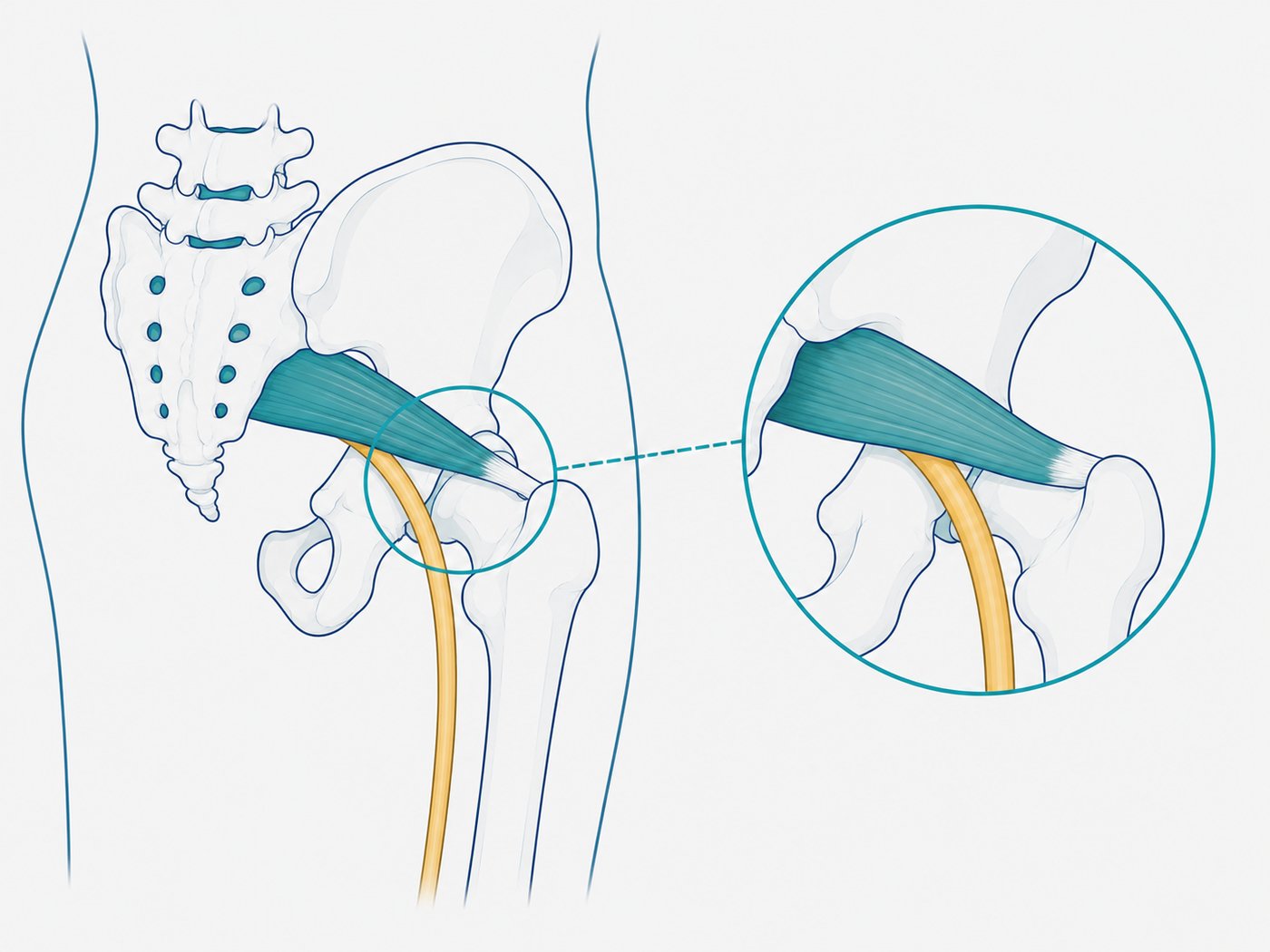
Deep buttock pain radiating into the leg can feel exactly like sciatica - but the source isn’t always the spine; sometimes a small, long muscle called the piriformis presses on the sciatic nerve running beside it.
Deep buttock pain radiating down the leg can feel exactly like sciatica - but its source isn’t always the spine. Sometimes it comes from a small, long muscle called the piriformis, located deep in the buttock and very close to the sciatic nerve.
When this muscle becomes stiff or irritated, it can press on the nerve running beside it - producing a clinical picture that is very easy to confuse with a disc problem in the lower back.
How does it usually feel?
Symptoms can vary, but many describe:
- Deep buttock pain, sometimes described as “deeper” than ordinary muscular pain.
- Radiation down the back of the thigh, usually not below the knee.
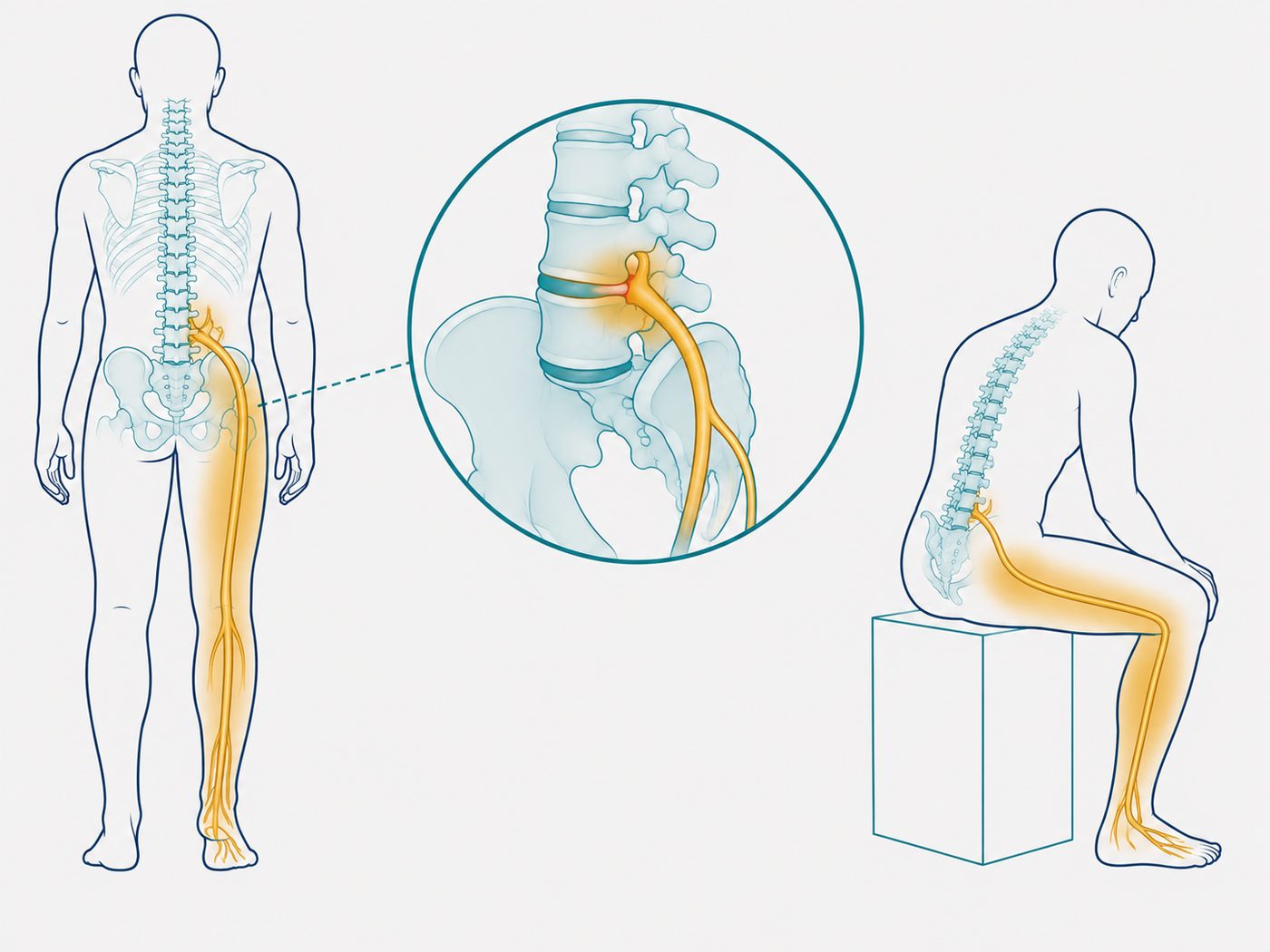
- Worsening with prolonged sitting, especially on a hard surface.
- Worsening when climbing stairs or running.
- Sometimes a mild numbness in the buttock or thigh.
If the pain is worse specifically when sitting rather than standing or walking - that is important information which distinguishes piriformis syndrome from other conditions that behave the other way around.
What causes piriformis syndrome?
Repetitive load on the deep gluteal muscles, for example running, cycling or prolonged sitting, can lead to excessive stiffness in the muscle. Some people also have an anatomical variation in which the sciatic nerve runs particularly close to the muscle or even through it, which increases sensitivity to pressure.
How can physiotherapy help?
Treatment focuses on gradually releasing the muscle, improving its flexibility, and strengthening the larger surrounding glute muscles to reduce the load falling specifically on this small one. Targeted stretching exercises, together with adjustments to sitting position, usually bring significant relief within a few weeks.
When should you get checked?
Because the symptoms are so similar to sciatica from a disc, a professional differential assessment matters before starting targeted treatment - treatment based on the wrong diagnosis simply won’t work.
Frequently asked questions
There are several manual movement tests that distinguish between the two, but the pain from piriformis syndrome is usually worse when sitting and doesn’t include symptoms such as worsening when coughing, which are more characteristic of a disc problem.
It helps, but without addressing the cause - usually weakness in the larger glute muscles - the pain tends to return.
In most cases yes, with a temporary adjustment to the load, until the symptoms improve.
What’s worth remembering?
Piriformis syndrome is an important differential diagnosis alongside sciatica from a disc - and correctly identifying the source is the condition for treatment that actually works.
- When the muscle becomes stiff or irritated, it can press on the sciatic nerve and produce a clinical picture easily confused with a disc problem.
- Pain that is worse specifically when sitting rather than standing or walking distinguishes piriformis syndrome from other conditions.
- The radiation usually stays in the back of the thigh and doesn’t reach below the knee, unlike radiculopathy.
Not sure if this is your situation? I’d be happy to give you a professional assessment and build a treatment plan that fits you.
Book a consultation callYou might also be interested in:
 Pain somewhere else?
Return to the interactive body map and pick an area
←
Pain somewhere else?
Return to the interactive body map and pick an area
←