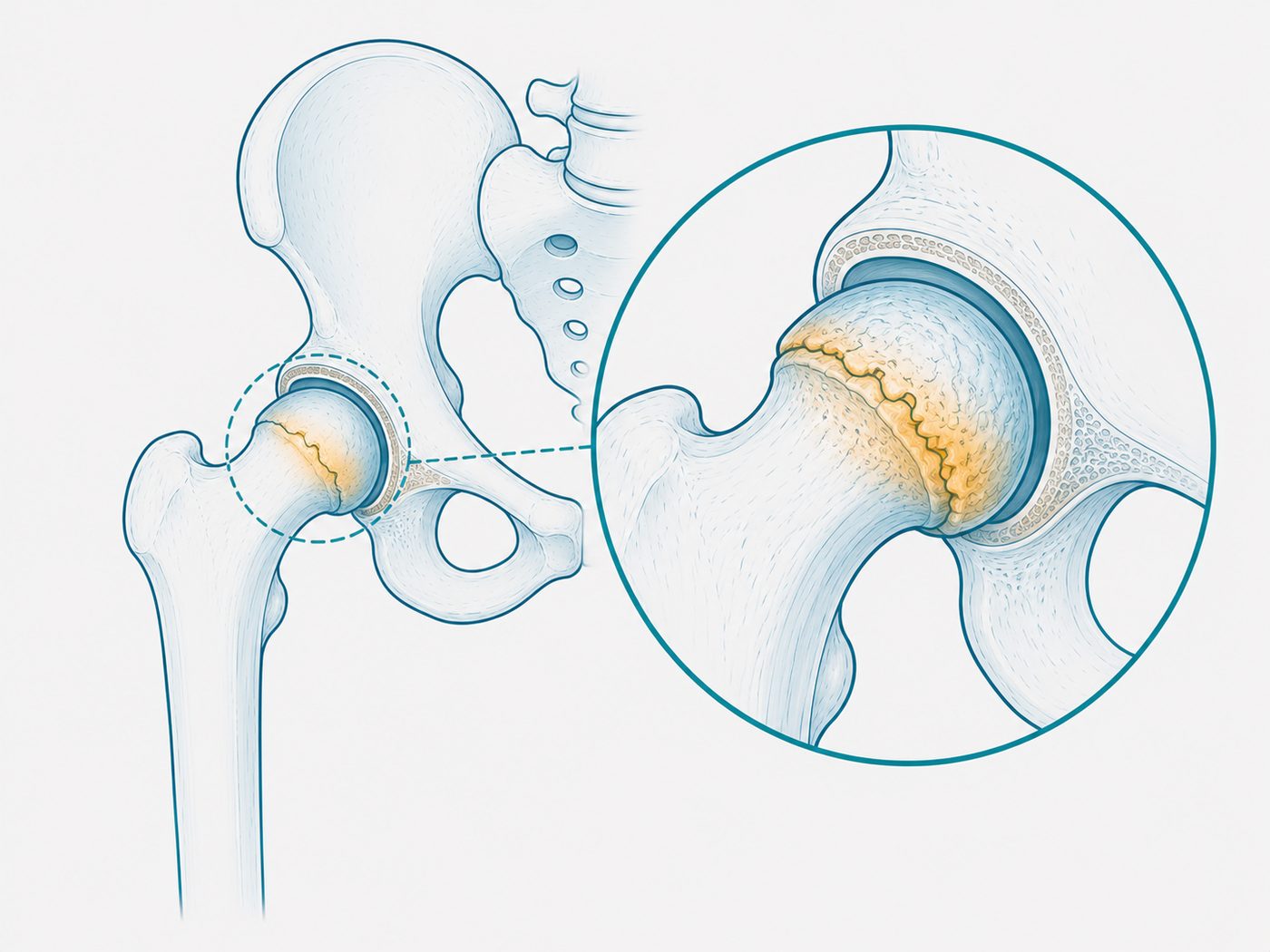
Hip osteoarthritis: when walking no longer feels the same
Pain in the groin or hip that appears when walking, standing up or climbing stairs.
The words “cartilage wear” don’t mean “the end” - the severity of findings on an X-ray doesn’t always reflect the intensity of the pain, and many people can significantly improve their quality of life without giving up being active.
Some people only start to feel pain at the end of a long walk. Others notice that getting up from a chair or climbing stairs has become an effort. Often they hear the words “cartilage wear” and fear there is nothing to be done - I see that fear in people’s eyes almost every time, and it is exactly the first thing I want to address: those words don’t mean “the end”.
In practice, many people can significantly improve their quality of life without giving up being active.
What is hip osteoarthritis?
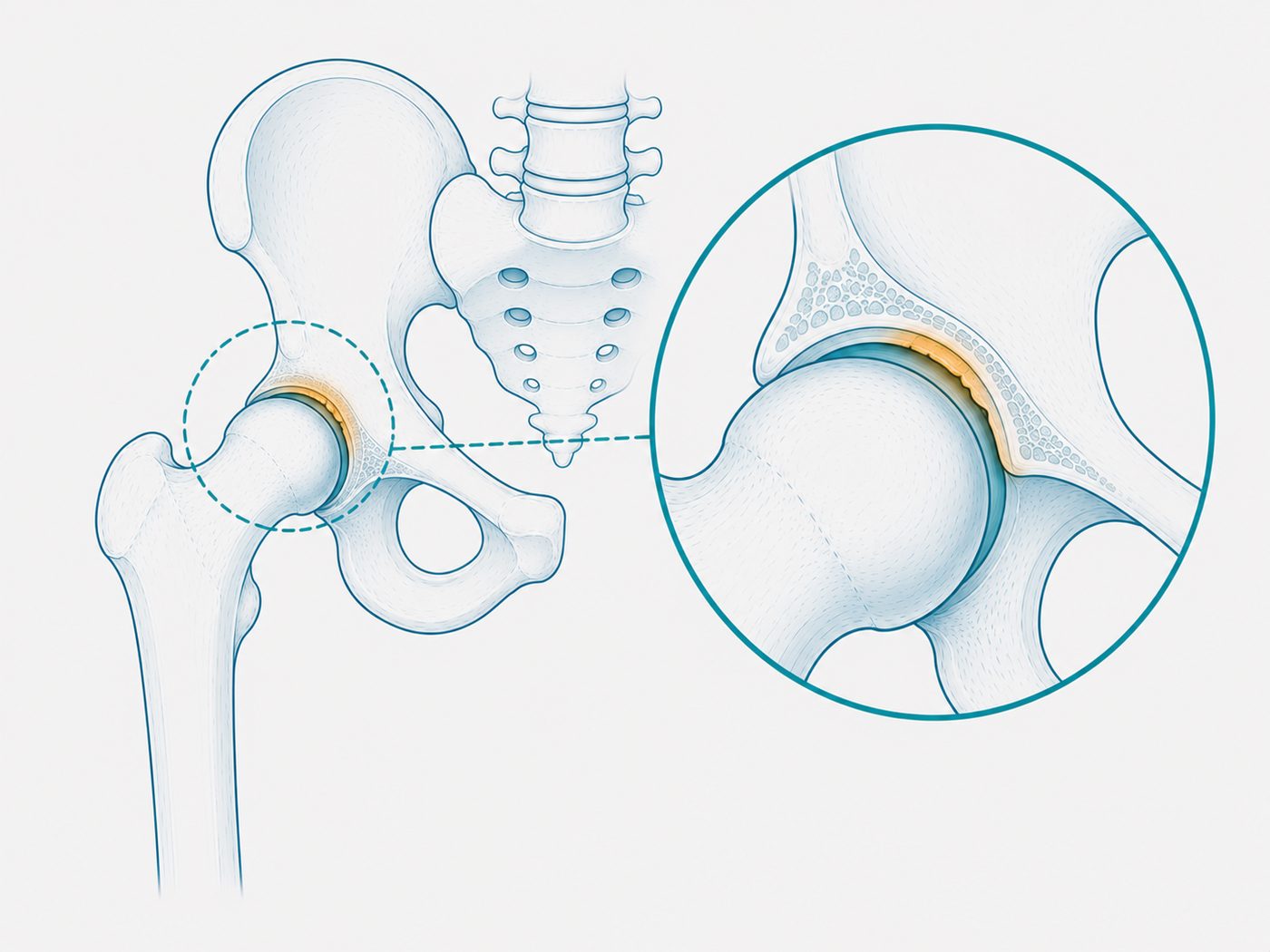
Osteoarthritis is a process in which the joint undergoes changes over the years. It can affect the cartilage, the bone and the tissues around the joint, but the severity of the findings on an X-ray doesn’t always reflect the intensity of the pain - some people with significant findings on imaging function excellently, and the other way around.
A few minutes of stiffness in the morning or after sitting for a long time that eases with movement is very common in osteoarthritis and not necessarily worrying - the body simply needs to “start up” the joint after rest.
How does it usually feel?
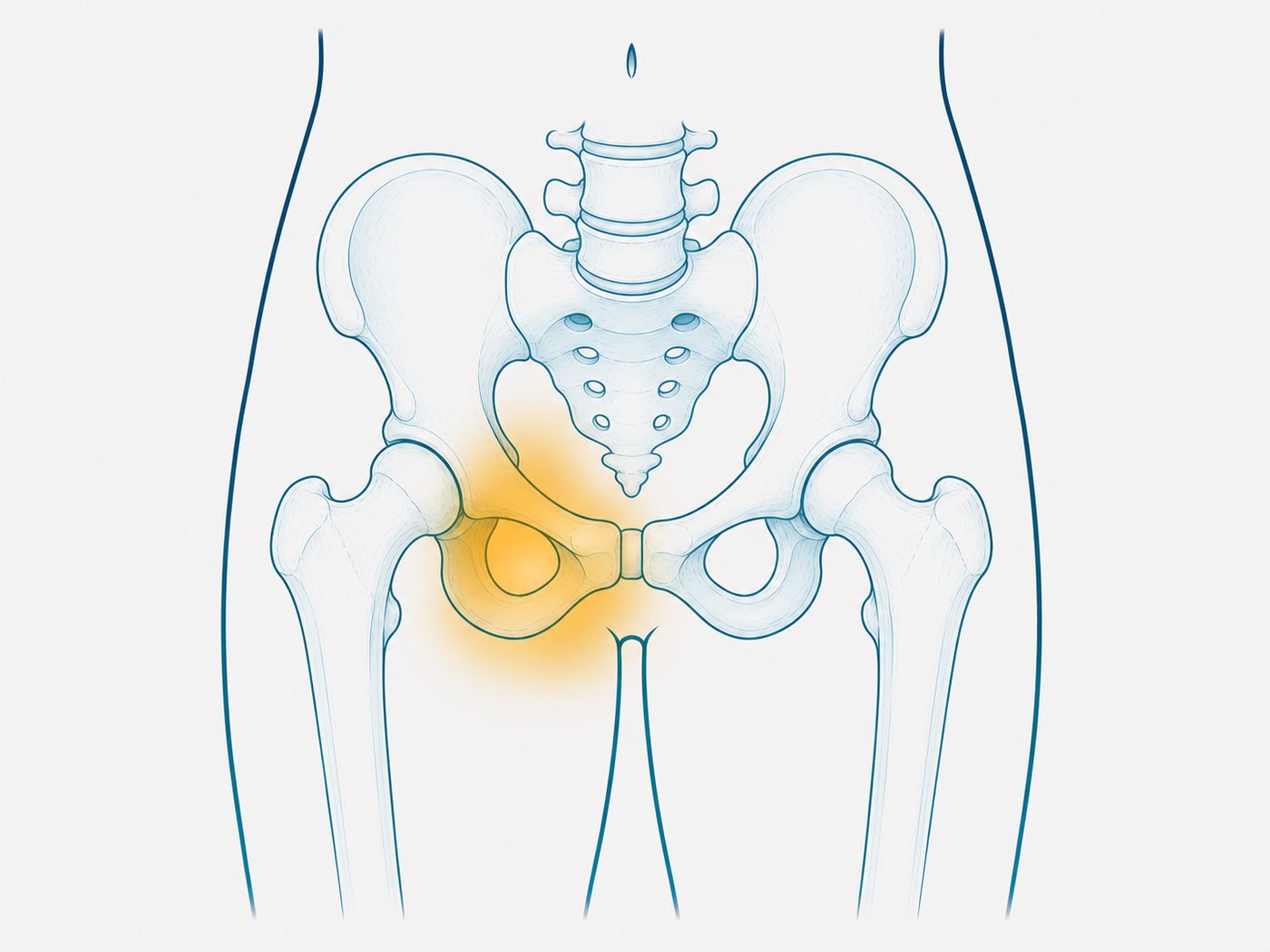
- Pain in the groin.
- Hip pain when walking.
- Difficulty getting up from a chair.
- Stiffness after rest.
- Difficulty climbing stairs.
Should I stop walking?
In most cases, no. Adapted activity is in fact an important part of treatment - the joint “likes” movement, even if it needs to be adapted at first. The aim is to find the level of load that suits you and build it up gradually.
How can physiotherapy help?
Treatment includes a personal assessment, muscle strengthening (mainly the glutes and core, which support the joint), improving range of motion, balance work, and guidance on doing daily activities more comfortably. We tailor the plan to each patient’s goals - someone who wants to get back to long hikes gets a different plan from someone who simply wants to go down stairs without pain.
Frequently asked questions
Not necessarily. Many people manage to reduce pain and improve function through adapted activity and rehabilitation - progression isn’t as linear and fixed as people tend to think.
No. Sometimes the source of the pain is elsewhere (from the lower back, for example), which is why a structured examination that distinguishes between the different sources matters.
No. Many patients improve a lot without surgery, and sometimes surgery is delayed by many years.
What’s worth remembering?
Hip osteoarthritis doesn’t mean you have to give up movement. The right assessment, adapted activity and physiotherapy can help you keep doing the things that matter to you.
- Hip osteoarthritis is a process that affects the cartilage, the bone and the tissues around the joint over the years.
- A few minutes of stiffness in the morning or after sitting that eases with movement is common in osteoarthritis and not necessarily worrying.
- In most cases it isn’t advisable to stop walking - adapted activity is an important part of treatment, because the joint “likes” movement.
Not sure if this is your situation? I’d be happy to give you a professional assessment and build a treatment plan that fits you.
Book a consultation callYou might also be interested in:
 Pain somewhere else?
Return to the interactive body map and pick an area
←
Pain somewhere else?
Return to the interactive body map and pick an area
←