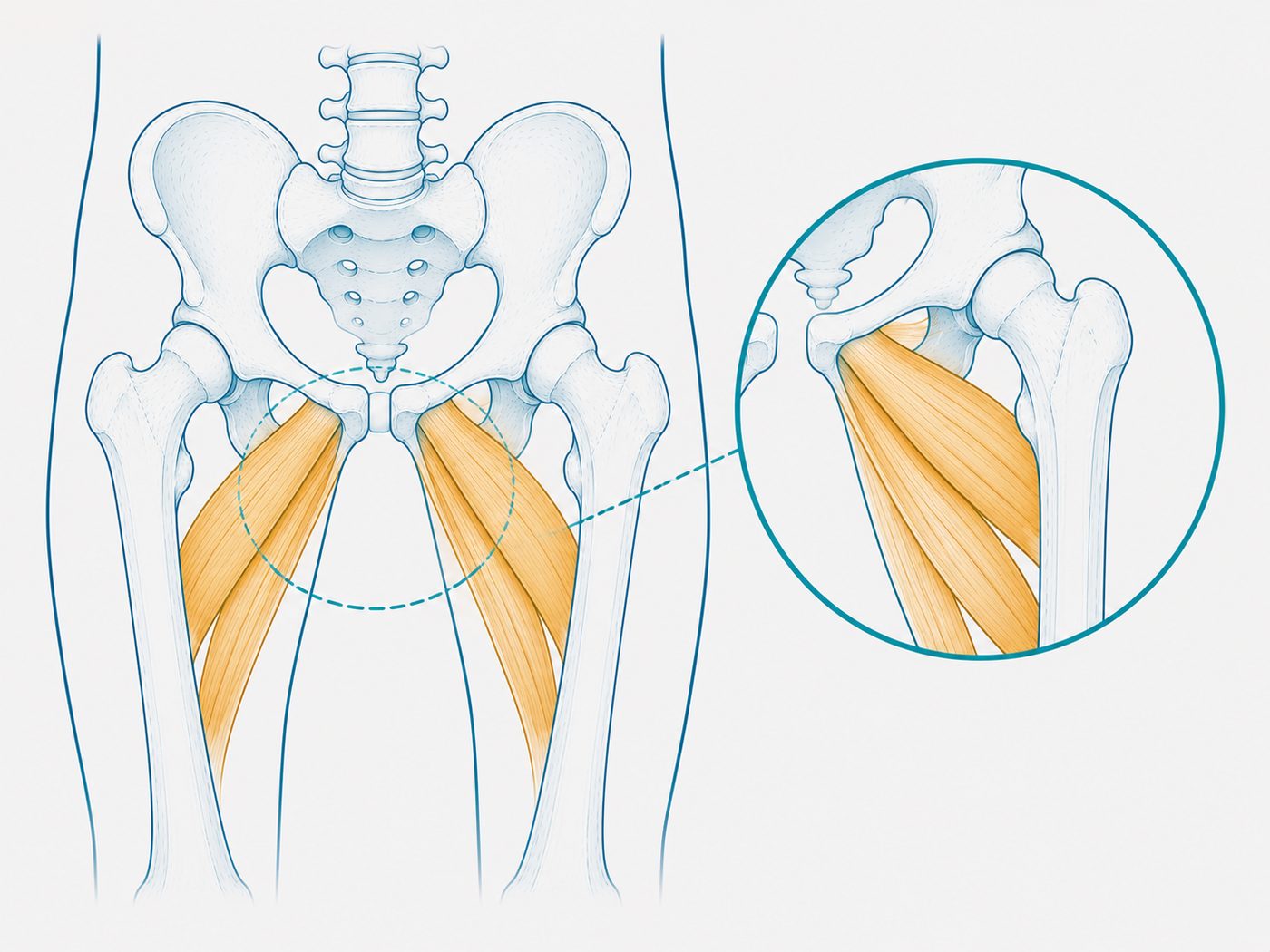
Hamstring strain: when the sprint stops in an instant
Pain that appears during sprinting, jumping or changing direction and can make walking or running difficult.
A hamstring strain is one of the most common injuries in sport - it usually appears in a sharp moment of sprinting or sudden acceleration, exactly at the point where the muscle is working under its greatest load.
Many people describe exactly the same moment: during a fast run or a sudden acceleration a sharp pain appears at the back of the thigh, as though someone pulled the muscle or struck it from behind. This is one of the most common muscle injuries in athletes, but it can also appear in active people who aren’t professional athletes - for example in a casual weekend football game after a week sitting in the office.
What is a hamstring strain?
The hamstring muscles are responsible for bending the knee and driving the leg during walking and running, and they work under their greatest load precisely at the braking phase of a fast stride (as the foot lands). When too great a load is applied to them - especially without an adequate warm-up - a strain or tear of varying severity can occur.
A dynamic warm-up (movement, not static stretching) before sprints or rapid changes of direction significantly reduces the risk of this kind of injury - it is one of the simplest preventive steps, and usually the most neglected.
How does it usually feel?
- Sharp pain at the back of the thigh.
- Difficulty running or accelerating.
- Pain when stretching.
- Tenderness to touch.
- Bruising sometimes appears.
How can physiotherapy help?
After an assessment, we build a rehab plan: load management, restoring range of motion, progressive strengthening (with an emphasis on eccentric exercises, which are especially good at preventing recurrence), and preparing for a safe return to running, sport, and daily activity.
Frequently asked questions
Usually not. A short rest may help at the start, but rehabilitation and gradual loading matter later on - resting for too long actually increases the risk of recurrence.
Not always. It’s important to make sure the muscle has returned to full function - including strength and flexibility - before returning to high intensity, not just that the pain has stopped.
Returning to activity too quickly or incomplete rehabilitation can increase the risk of a repeat injury - this is one of the injuries with the highest recurrence rate in sport, precisely because people return to activity too early.
What’s worth remembering?
A hamstring strain is an injury you can rehabilitate well from. Proper treatment, patience and a graded return to activity can reduce the risk of a repeat injury.
- The hamstring muscles work under their maximal load at the braking phase of a fast stride, as the foot lands.
- A dynamic warm-up (movement, not static stretching) before sprints significantly reduces the risk of injury.
- Treatment includes load management, restoring range of motion and progressive strengthening, with an emphasis on eccentric exercises.
Not sure if this is your situation? I’d be happy to give you a professional assessment and build a treatment plan that fits you.
Book a consultation callYou might also be interested in:
 Pain somewhere else?
Return to the interactive body map and pick an area
←
Pain somewhere else?
Return to the interactive body map and pick an area
←