Hip labral tear: pain that doesn’t always show on a standard X-Ray
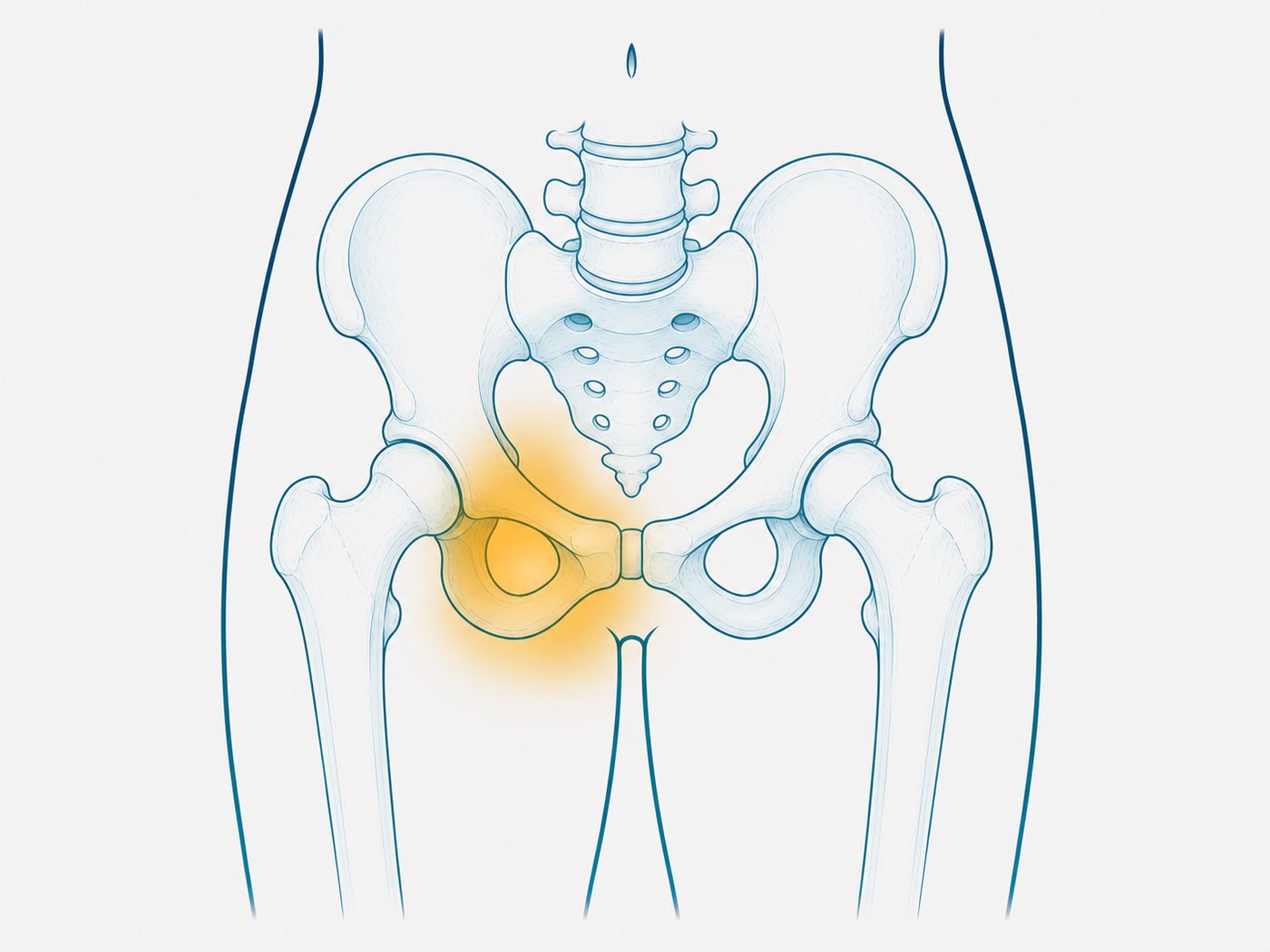
Pain in the groin or hip that appears while walking, rotating the hip or during sport.
Pain from a hip labral tear is always “deep” and not always easy to pinpoint precisely - and not every tear causes pain, which is why the clinical examination matters no less than the imaging findings.
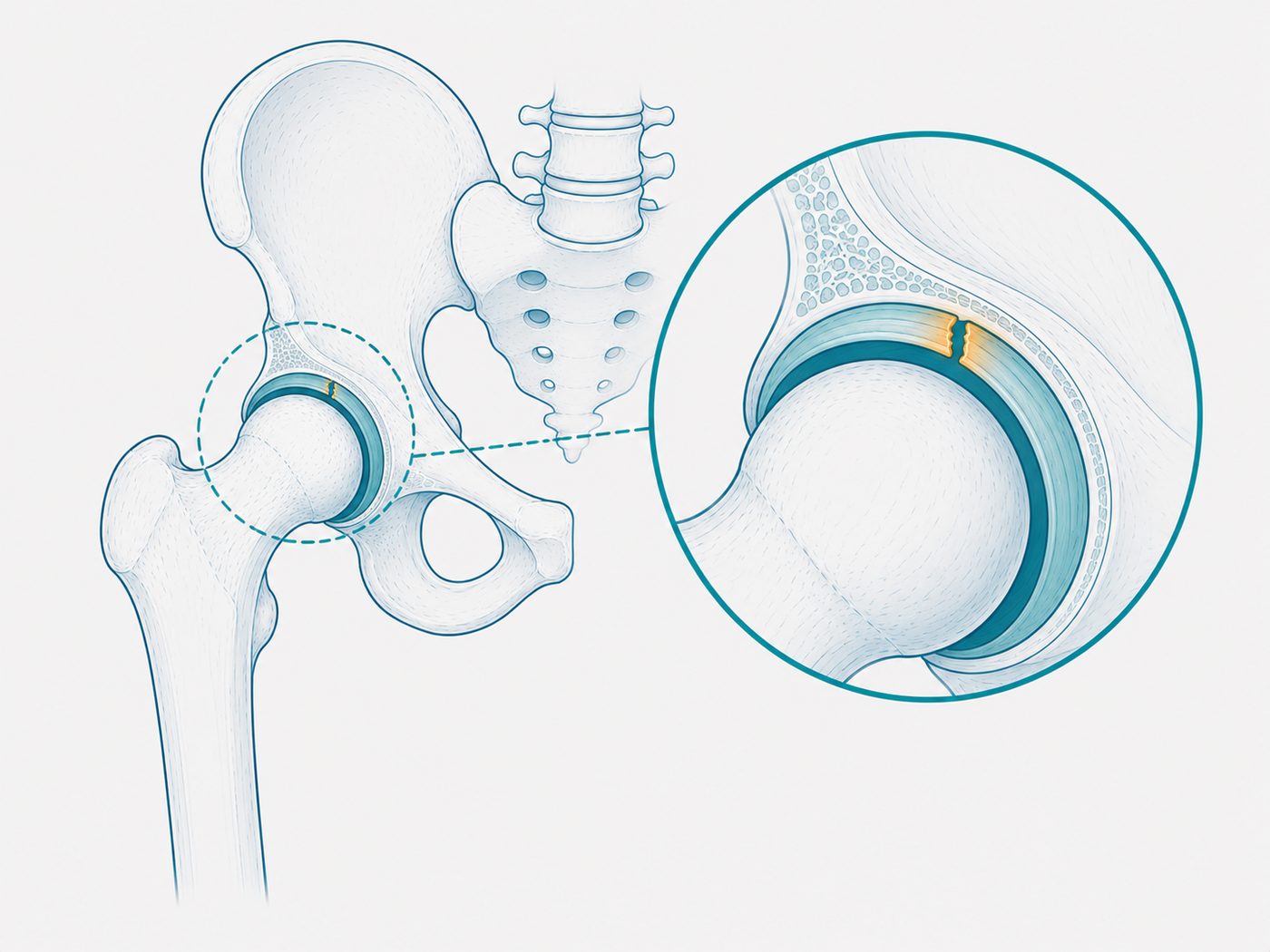
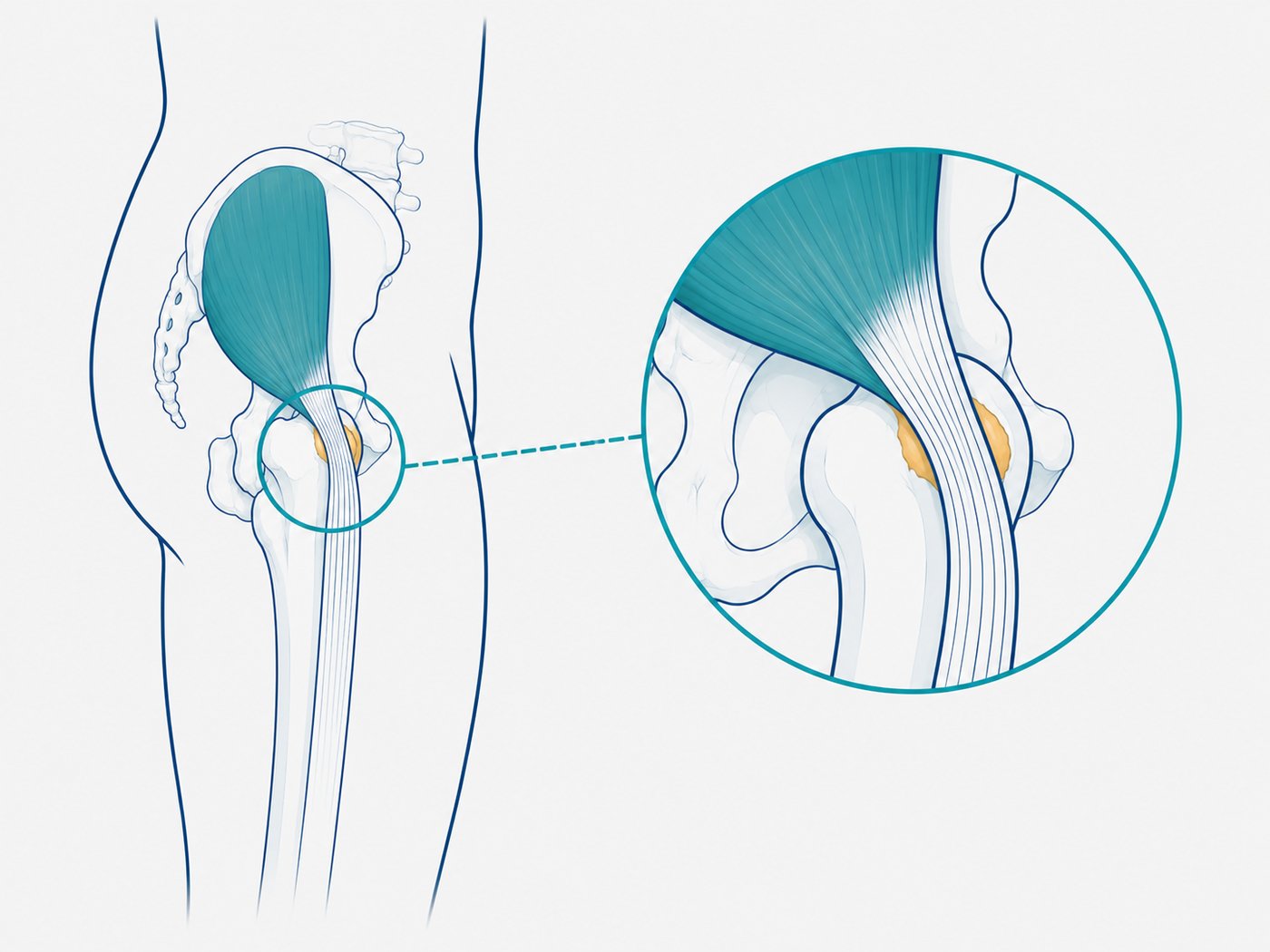
The hip labrum is a ring of cartilage that surrounds the hip joint and contributes to its stability. When it is damaged, deep pain in the groin, a catching sensation or clicking in the joint can appear, particularly during rotation of the hip, standing up from sitting or sporting activity. This pain is always “deep” and not always easy to pinpoint precisely - which is exactly what makes a thorough clinical assessment so significant.
What is a hip labral tear?
A labral tear can come from an injury, repetitive loads (especially in sports with sharp rotations like football, dance, or martial arts), or the particular structure of the hip joint. Not every tear causes pain - so the clinical examination matters no less than the imaging. Some people have a tear on MRI and don’t feel it at all.
If the pain appears mainly when you bring the knee toward the chest and rotate the hip inward (like getting into a car) - that’s a movement I test specifically during assessment, and worth noticing yourself too.
How does it usually feel?
- Deep pain in the groin.
- Clicking or a catching sensation in the hip.
- Pain on rotating the hip.
- Pain after prolonged sitting.
- A decline in sporting performance.
How can physiotherapy help?
After assessment, we build a rehab plan: improving range of motion, strengthening the pelvic and hip muscles (which stabilize the joint and take load off the cartilage rim), better movement control, and load adjustments that fit your goals.
Frequently asked questions
No. In many cases conservative treatment can be started and significant improvement achieved - surgery is usually reserved for cases that have not responded to treatment after a reasonable period.
Sometimes yes, after adjusting the type of activity and the loads - avoiding extreme rotational movements in the early stage while continuing with other activity.
When the pain persists, there is a catching sensation in the joint, or the symptoms limit function.
What’s worth remembering?
A hip labral tear isn’t necessarily the end of sporting activity. The right assessment and a tailored rehabilitation plan can help reduce pain and restore function.
- The hip labrum is a ring of cartilage that stabilizes the hip joint; a tear is caused by injury, repetitive loads or a particular structure of the joint.
- It’s identified by deep pain in the groin, a catching sensation or clicking on rotating the hip or standing up from sitting.
- Bringing the knee toward the chest with inward rotation of the hip (such as getting into a car) is a characteristic diagnostic movement.
Not sure if this is your situation? I’d be happy to give you a professional assessment and build a treatment plan that fits you.
Book a consultation callYou might also be interested in:
 Pain somewhere else?
Return to the interactive body map and pick an area
←
Pain somewhere else?
Return to the interactive body map and pick an area
←