Intercostal pain: when every breath reminds you it’s there
Pain that increases with deep breathing, coughing or movements of the chest.
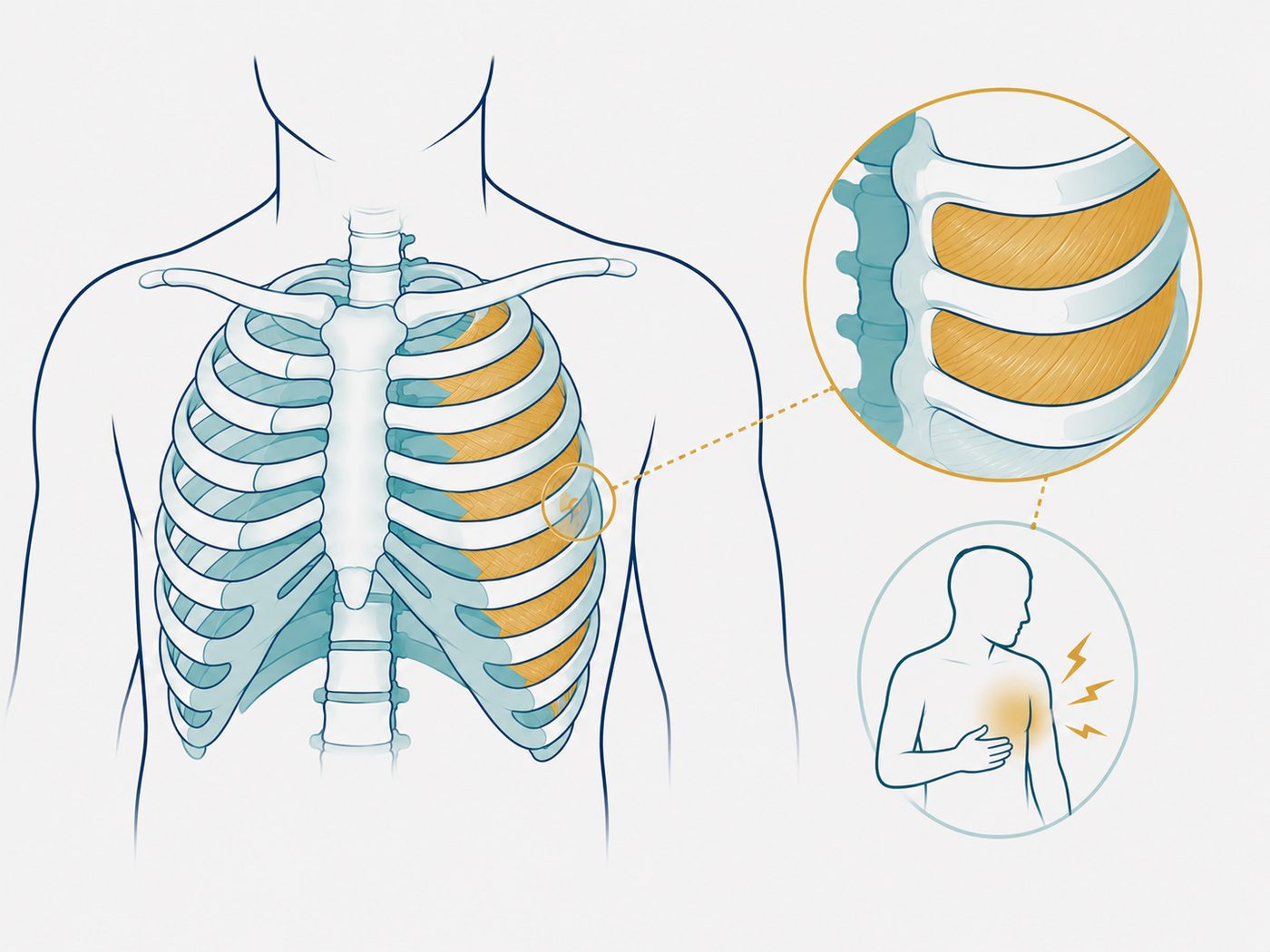
Pain between the ribs can be stressful because the chest immediately brings the heart to mind - but in many cases its source is entirely benign: the muscles, joints or tissues between the ribs.
Pain between the ribs can appear after a prolonged cough, physical activity, a sharp movement or even with no clear cause. Sometimes it is sharp and focal, and sometimes it is felt with almost every deep breath or change of position. Although the pain can be stressful (particularly because the chest immediately brings the heart to mind), in many cases its source is in the muscles, joints or tissues between the ribs - a pain that is entirely benign medically.
Why does it happen?
Between every two ribs there are muscles, nerves and other tissues that allow the chest to expand during breathing. Load, stretching or irritation of one of these structures - for instance a strong and prolonged cough, a sudden twisting movement or lying in an uncomfortable position - can cause pain that appears mainly during movement or breathing.
If you can reproduce the pain exactly by pressing on a specific point between the ribs, that’s a reassuring sign - it points toward a muscle or joint source rather than the heart or lungs. Tell me about it during the assessment.
How does it usually feel?
- Sharp pain between the ribs.
- Pain on deep breathing.
- Pain when coughing or sneezing.
- Tenderness to touch in the area.
- Pain when twisting the chest.
- Pressing pain in the center of the chest, not focal and not related to movement
- Significant shortness of breath
- Pain radiating into the arm, jaw or back
- Accompanying sweating, dizziness or nausea
How can physiotherapy help?
After appropriate assessment, a treatment plan can be built that includes improving the movement of the chest, breathing exercises, gentle exercises to reduce load and guidance on a gradual return to activity - including addressing sleeping or sitting positions that may worsen the pain.
Frequently asked questions
No. There are other causes - so get a structured assessment when the pain is strong or isn’t improving, to confidently rule out other sources.
In most cases, no. Appropriate breathing practice can be an important part of rehabilitation - prolonged avoidance of deep breathing may restrict the mobility of the chest even further.
If the pain is especially severe, appeared after a real injury, comes with shortness of breath, or isn’t improving - seek medical assessment rather than assume it will pass on its own.
What’s worth remembering?
Intercostal pain can improve significantly with the right assessment, appropriate treatment and gradual loading. There is no need to get used to living with the pain.
- A prolonged cough, a sudden twisting movement or lying in an uncomfortable position can irritate the structures between the ribs.
- Being able to reproduce the pain exactly by pressing on a specific point is a reassuring sign pointing to a muscular or joint source, not the heart or lungs.
- Pressing pain in the center of the chest that doesn’t change with movement or breathing requires immediate medical assessment to rule out a cardiac source.
Not sure if this is your situation? I’d be happy to give you a professional assessment and build a treatment plan that fits you.
Book a consultation callYou might also be interested in:
 Pain somewhere else?
Return to the interactive body map and pick an area
←
Pain somewhere else?
Return to the interactive body map and pick an area
←