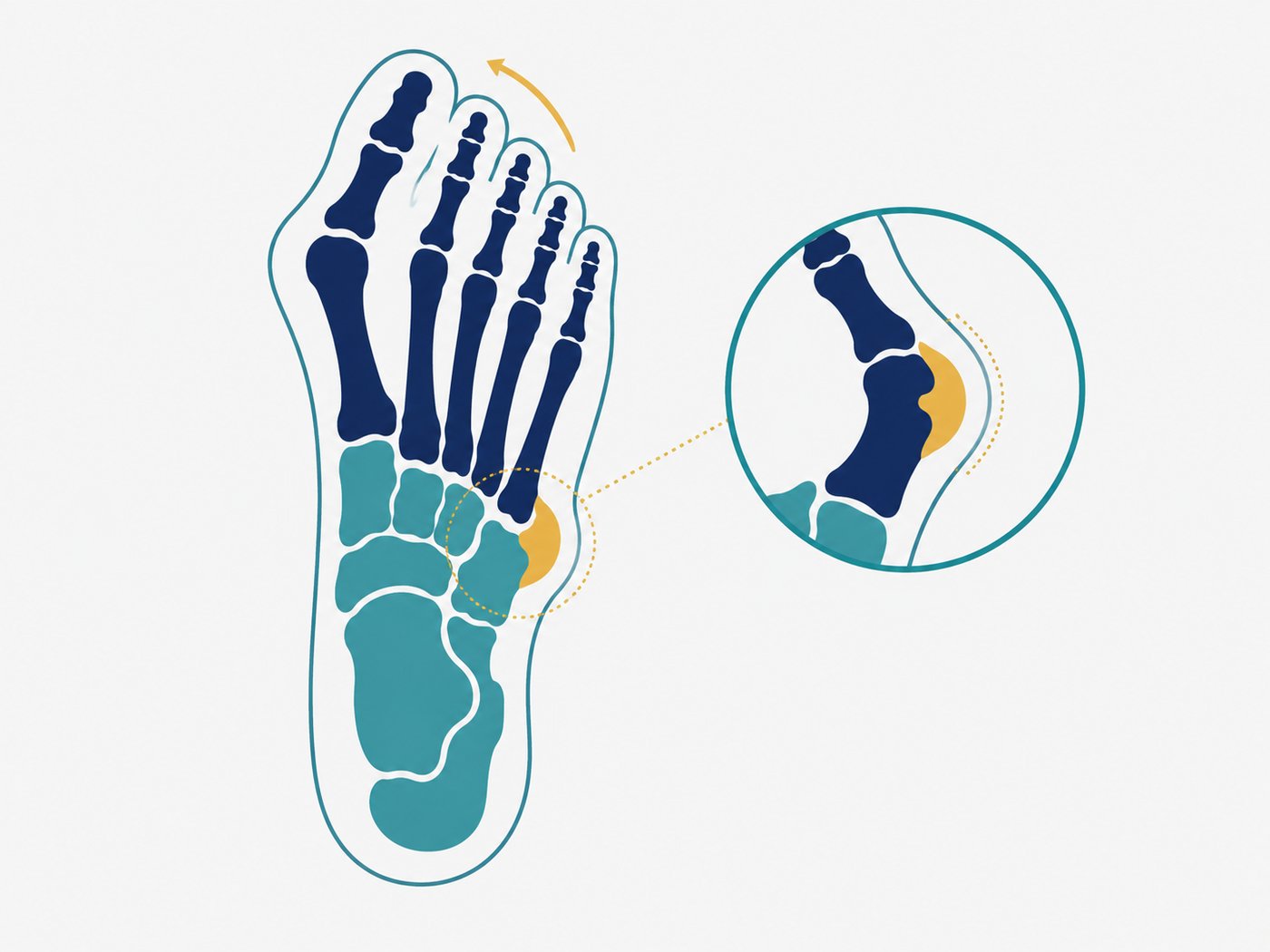
Hallux valgus (bunion): when the big toe drifts outward
A prominent, painful bone at the base of the big toe, which many people ignore until it starts to interfere with walking.
Hallux valgus (bunion) is a gradual and very common change in the structure of the foot - studies show it appears in around 23% of adults, and it is particularly common in women and with increasing age.
If you have noticed a bump developing gradually on the inner side of the foot, near the base of the big toe, and perhaps the toe itself is already starting to “drift” toward the other toes - this is probably hallux valgus, known popularly as a bunion.
Many people treat it as a purely cosmetic matter, but it is in fact a gradual change in the structure of the foot, which in most cases only continues to worsen over time if it isn’t addressed.
How does it usually feel?
Symptoms can vary, but many describe:
- A bony bump on the inner side of the base of the big toe.
- Redness, swelling or tenderness over the bump, particularly in closed shoes.
- Pain that worsens with prolonged walking or wearing narrow shoes.
- A gradual reduction in the range of motion of the big toe.
- Sometimes the big toe overlaps the second toe.
Notice whether the pain comes from friction with the shoe or from deep inside the joint itself - this significantly changes the direction of treatment, including the recommendation on the type of footwear.
What causes hallux valgus?
It’s usually a combination of an inherited structural tendency, together with external factors such as narrow shoes or a high heel that intensify the pressure on the base of the toe. A flat or unstable foot can also accelerate the progression.
How can physiotherapy help?
In the early stages, physiotherapy focuses on preserving the range of motion of the joint, strengthening the small muscles of the foot that support the structure of the arch, and sometimes also fitting orthotics that distribute the load better.
The aim is to slow the progression and reduce pain - not necessarily to “correct” the angle itself, which in advanced stages sometimes requires an orthopedic consultation.
When should you get checked?
If the pain becomes constant even at rest, the toe starts clearly overlapping its neighbors, or the bump starts affecting your walking - see an orthopedic specialist about options beyond conservative treatment.
Frequently asked questions
No. In most cases the progression can be slowed significantly and the pain reduced with conservative treatment. Surgery is mainly reserved for advanced cases that significantly interfere with function.
In many cases, yes, mainly where there is instability in the arch of the foot that intensifies the pressure on the toe - but they don’t reverse the angle itself.
Absolutely, with adjustments to the type of footwear and the load. Complete avoidance of activity isn’t advisable.
What’s worth remembering?
Hallux valgus is a gradual structural change, not just a cosmetic problem. Early identification and tailored treatment can significantly slow its progression.
- Hallux valgus is a gradual structural change, not just an aesthetic matter, which continues to worsen over time without treatment.
- It’s a very common condition - around 23% of adults and up to around 36% of people over 65 - and is several times more common in women.
- Treatment in the early stages focuses on preserving range of motion, strengthening the foot muscles and adjusting footwear or orthotics.
Not sure if this is your situation? I’d be happy to give you a professional assessment and build a treatment plan that fits you.
Book a consultation callYou might also be interested in:
 Pain somewhere else?
Return to the interactive body map and pick an area
←
Pain somewhere else?
Return to the interactive body map and pick an area
←