Heel pain - is it really a heel spur?
Heel pain felt especially in the first steps after rest.
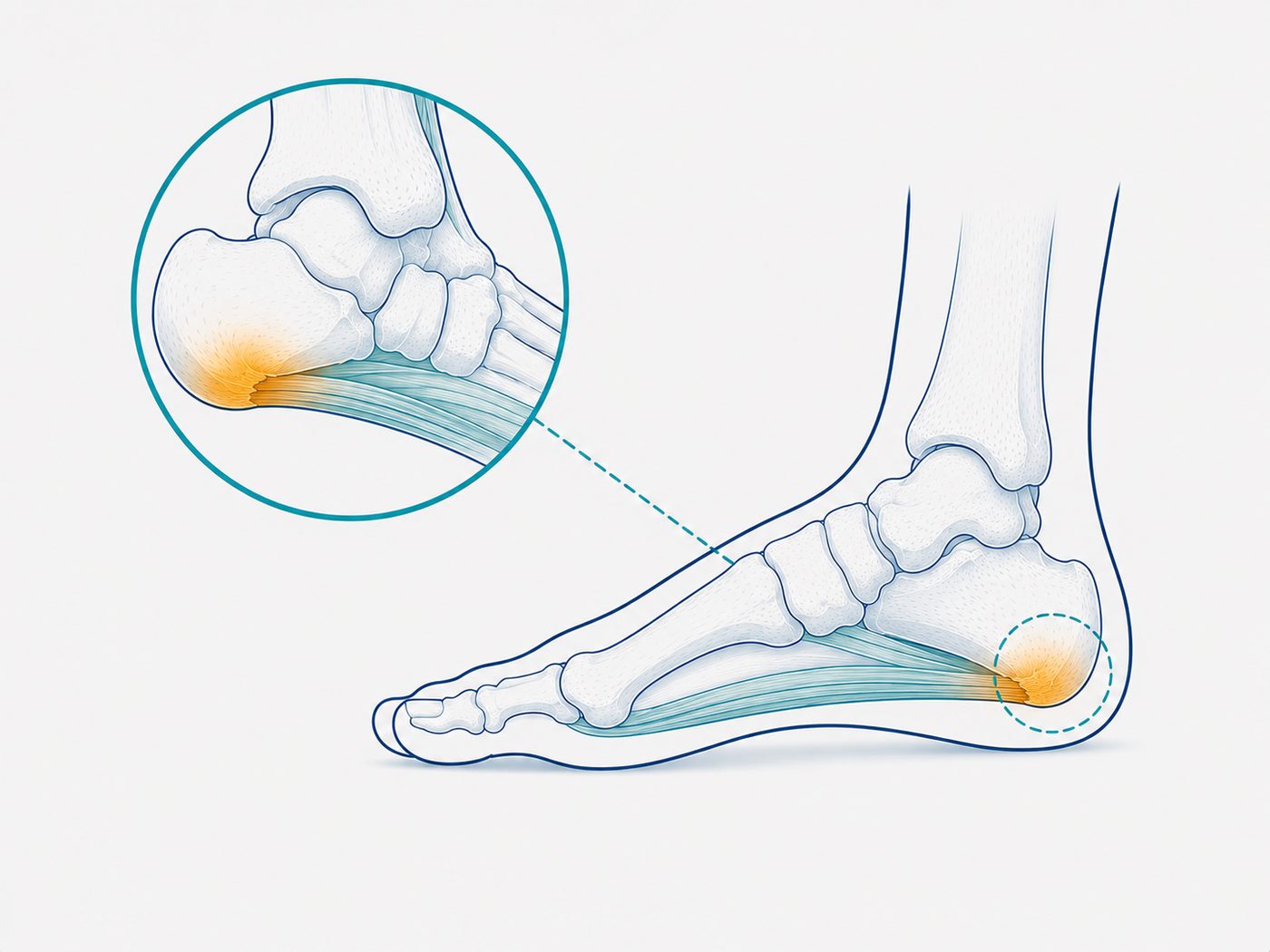
Most heel pain isn’t caused by a “spur”, as many people believe - in many cases the spur has nothing to do with the pain at all; the most common source is the plantar fascia being loaded beyond its capacity.
What really causes heel pain?
Heel pain is one of the most common reasons people come to a physiotherapist. Quite a few patients arrive after an X-ray in which they were told they have a “heel spur”, and so they are certain that this is the reason for the pain. I see it almost every week - “the doctor told me I have a spur, that is probably why”. In practice, in many cases the spur isn’t the cause of the pain at all. Many people live with a spur for years without any pain, while others suffer significant pain even though no spur is visible on the X-ray.
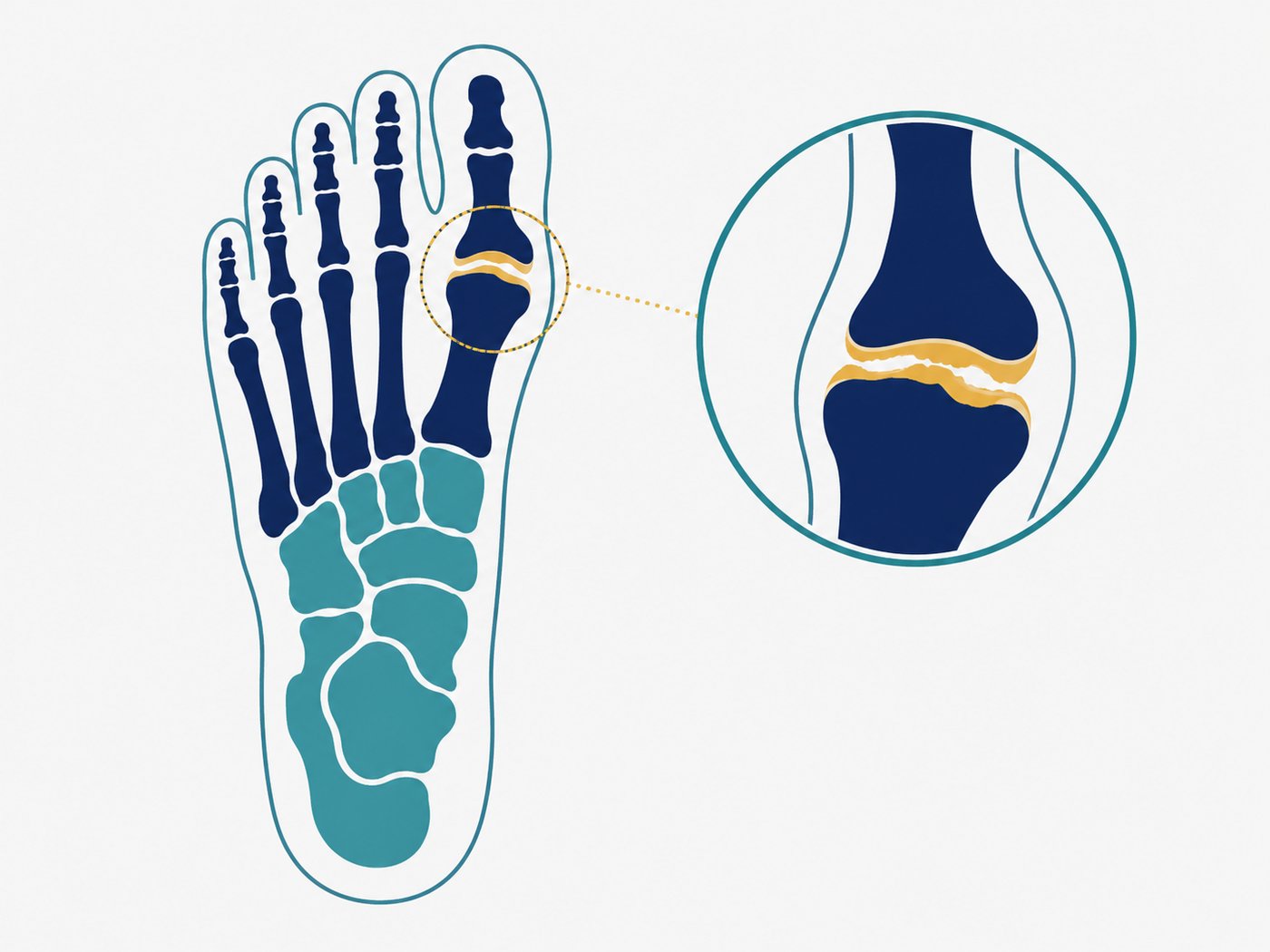
In most cases the source of the pain is the plantar fascia, a thick band of connective tissue that runs from the heel bone to the toes and supports the arch of the foot. When it is loaded repeatedly, or beyond its capacity to cope, pain can develop where it attaches to the heel. This condition is called Plantar Fasciopathy, and it is the most common cause of heel pain.
Try gently stretching the foot (rolling a tennis ball under the sole, or stretching the fascia in the morning before getting up) - it can significantly ease the pain of those first steps, even before you begin a full treatment plan.
The pain is usually felt in the first steps in the morning or after sitting for a long time, and sometimes improves after a few minutes of walking. In some people it comes back and intensifies after prolonged standing, a long walk or physical activity. The sensation is most often described as a stabbing or sharp pain in the heel area, mainly at the start of movement.
There are many factors that can contribute to the problem, including a rapid increase in training load, long hours of work on your feet, excess weight, reduced strength in the calf and foot muscles, reduced ankle flexibility or a change in footwear. That’s why it isn’t enough to know there is a “spur” on the X-ray. It’s important to understand why the pain appeared in the first place and which factors are continuing to load the tissue.
How is it treated?
In most cases there’s no need for surgery, and treatment is conservative. The goal is to reduce the load on the tissue, improve its capacity to handle load, and get you gradually back to full activity.
In physiotherapy, treatment starts with a thorough assessment - finding what’s driving the pain, not just where it hurts. Based on the findings, we build a personal plan that may include strengthening the calf and foot muscles, improving flexibility, balance and movement-control work, sensible load management, and guidance on returning safely to activity. Where there’s a genuine reason, footwear adjustments or orthotics can be recommended too.
There’s no single treatment that suits everyone. What helps one person won’t necessarily help another - that’s why an accurate assessment and a tailored plan are the keys to success. In most cases, with the right treatment and consistency, you can expect real improvement and even a full return to activity.
If you have heel pain that lasts more than a few weeks, interferes with walking or keeps coming back, don’t settle for a finding on an X-ray. A professional assessment can help you understand what is really causing the pain, match the right treatment and build a rehabilitation plan that lets you return safely to activity and reduces the risk of the pain returning in the future.
- Many people live with a spur on an X-ray without any pain, while others have significant pain with no visible spur at all.
- The pain is felt mainly in the first steps in the morning or after sitting for a long time, and improves with a few minutes of walking.
- Stretching the foot, such as rolling a tennis ball beneath it, can bring significant relief even before a full treatment plan begins.
Not sure if this is your situation? I’d be happy to give you a professional assessment and build a treatment plan that fits you.
Book a consultation callYou might also be interested in:
 Pain somewhere else?
Return to the interactive body map and pick an area
←
Pain somewhere else?
Return to the interactive body map and pick an area
←