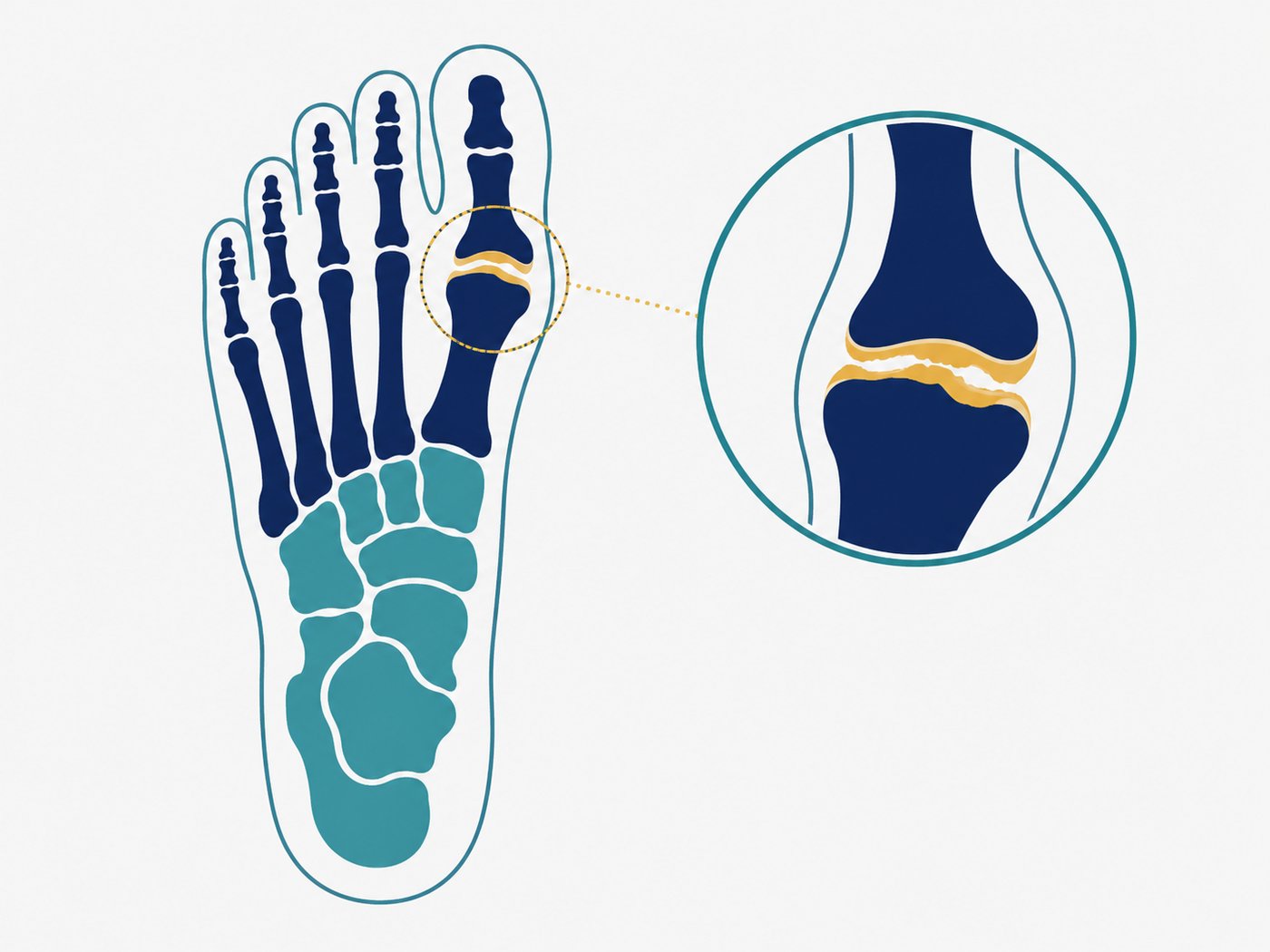
Hallux rigidus: when the big toe stops moving freely
Cartilage wear in the big toe joint that gradually restricts movement - common in older age, and completely different from hallux valgus.
Hallux rigidus is cartilage wear in the big toe joint - the second most common problem in this joint after a bunion, but with an entirely different mechanism: stiffness, not the toe drifting outward.
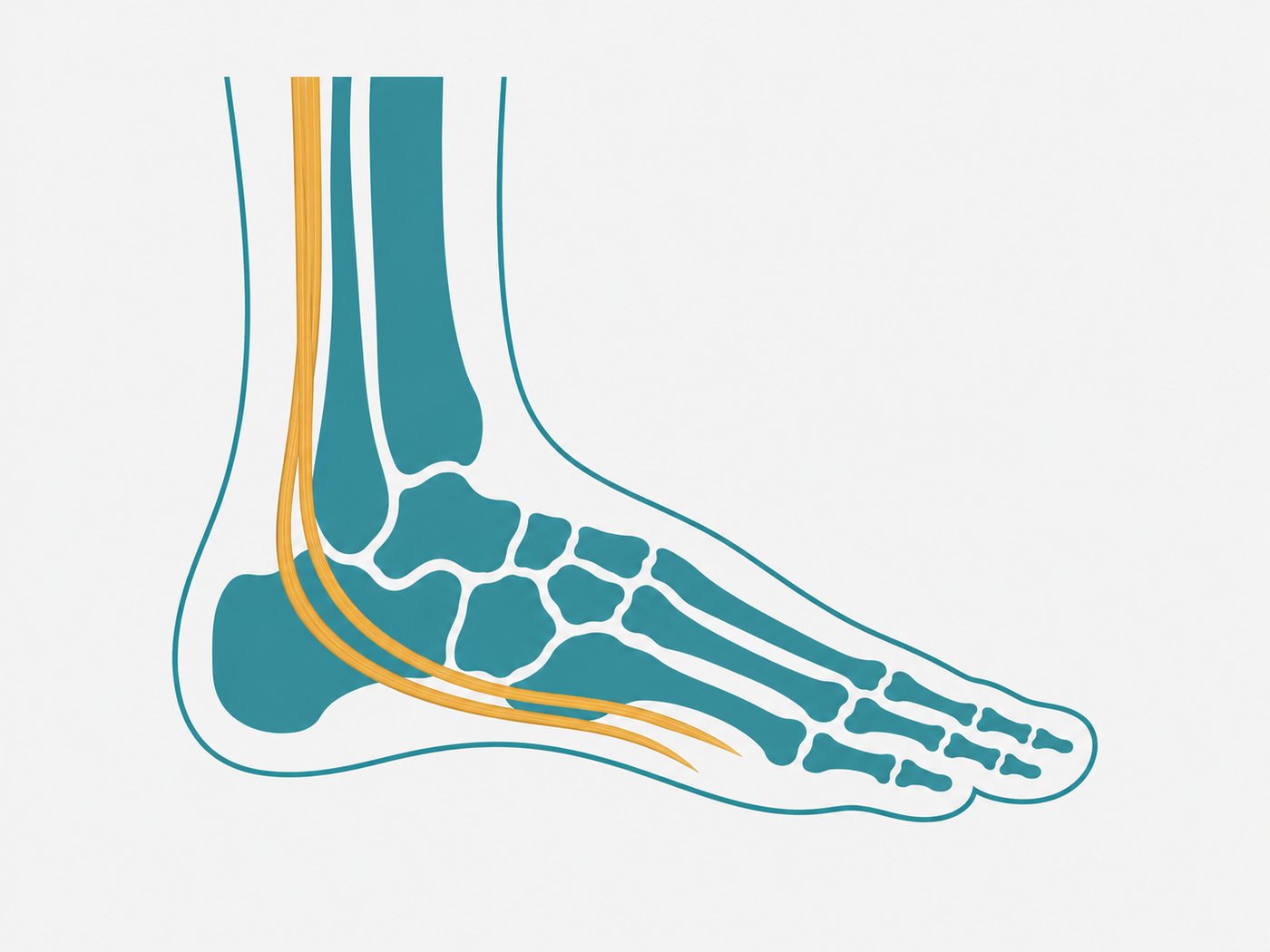
If your big toe is becoming stiffer and stiffer, mainly bending upward as in the final part of a walking step - and not necessarily drifting outward as in a bunion - this may be hallux rigidus: cartilage wear (osteoarthritis) in the big toe joint.
This is the second most common problem in this joint after hallux valgus, but it is an entirely different mechanism - here the problem is wear of the cartilage, not deviation of the toe.
How does it usually feel?
Symptoms can vary, but many describe:
- A gradual reduction in the range of motion of the big toe, mainly upward.
- Pain that worsens at the end of the push-off phase, when the toe needs to bend.
- Stiffness that is more noticeable in the morning or after prolonged sitting.
- Sometimes a bony bump on the top of the toe joint, different from the side bump in a bunion.
- Growing difficulty wearing shoes with a heel, which require more bending of the toe.
The key difference from a bunion: in hallux rigidus the bump is on the top of the joint rather than at the side, and the central problem is stiffness rather than the toe drifting outward.
What causes hallux rigidus?
As with any other cartilage wear, this is accumulated load on the joint over years, sometimes combined with a structural or hereditary tendency. A particular foot structure, such as an unusually long first toe, can accelerate the process.
How can physiotherapy help?
Treatment focuses on preserving the existing range of motion, strengthening the small muscles of the foot, and fitting shoes with a stiffer sole that reduces the need for full bending of the toe while walking. Changes like these can significantly ease day-to-day pain.
When should you get checked?
If the pain becomes constant even at rest, the range of motion has almost completely gone, or the bony bump starts rubbing badly against the shoe - see a foot orthopedic specialist about further treatment options.
Frequently asked questions
No. A bunion is deviation of the toe outward, and hallux rigidus is cartilage wear with a reduction in range of motion - two different mechanisms in roughly the same area.
Yes, significantly - a shoe with a stiff sole that reduces bending of the toe while walking can ease the pain a lot.
Only in advanced stages where the pain and stiffness significantly interfere with function. Early stages respond well to conservative treatment.
What’s worth remembering?
Hallux rigidus is completely different from a bunion despite the similar location - identifying the problem correctly is the key to choosing the right treatment and footwear.
- The bump in hallux rigidus is on the top of the joint, not at the side as in a bunion - a key difference between the two problems.
- It’s identified by a gradual reduction in upward range of motion and pain that worsens at the end of the push-off phase.
- As with any cartilage wear, this is accumulated load over years, sometimes combined with a structural or hereditary tendency.
Not sure if this is your situation? I’d be happy to give you a professional assessment and build a treatment plan that fits you.
Book a consultation callYou might also be interested in:
 Pain somewhere else?
Return to the interactive body map and pick an area
←
Pain somewhere else?
Return to the interactive body map and pick an area
←