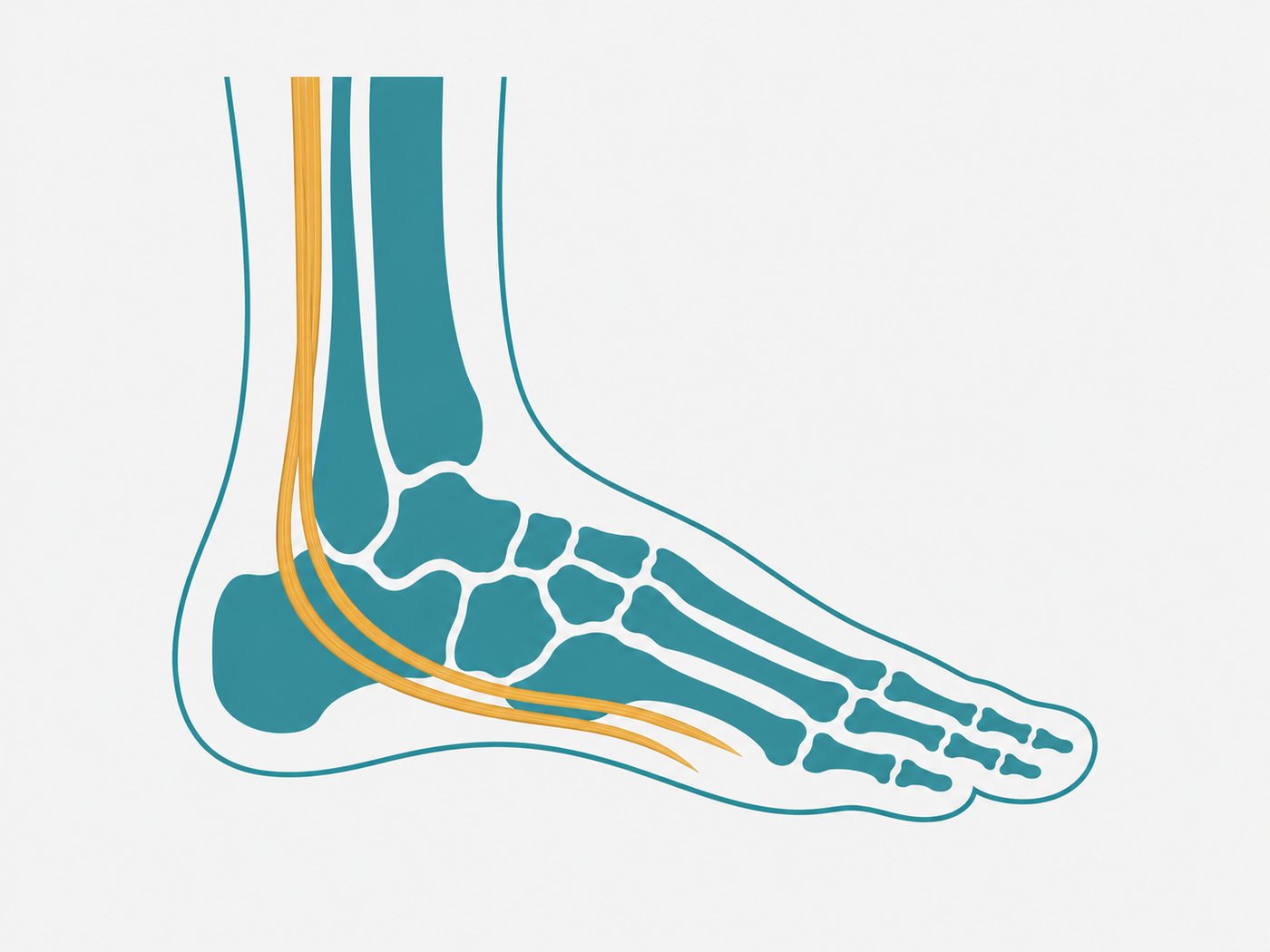
Posterior tibial tendon dysfunction: when the arch gradually collapses
Pain and gradual collapse of the arch of the foot in adults - the leading cause of acquired flat foot.
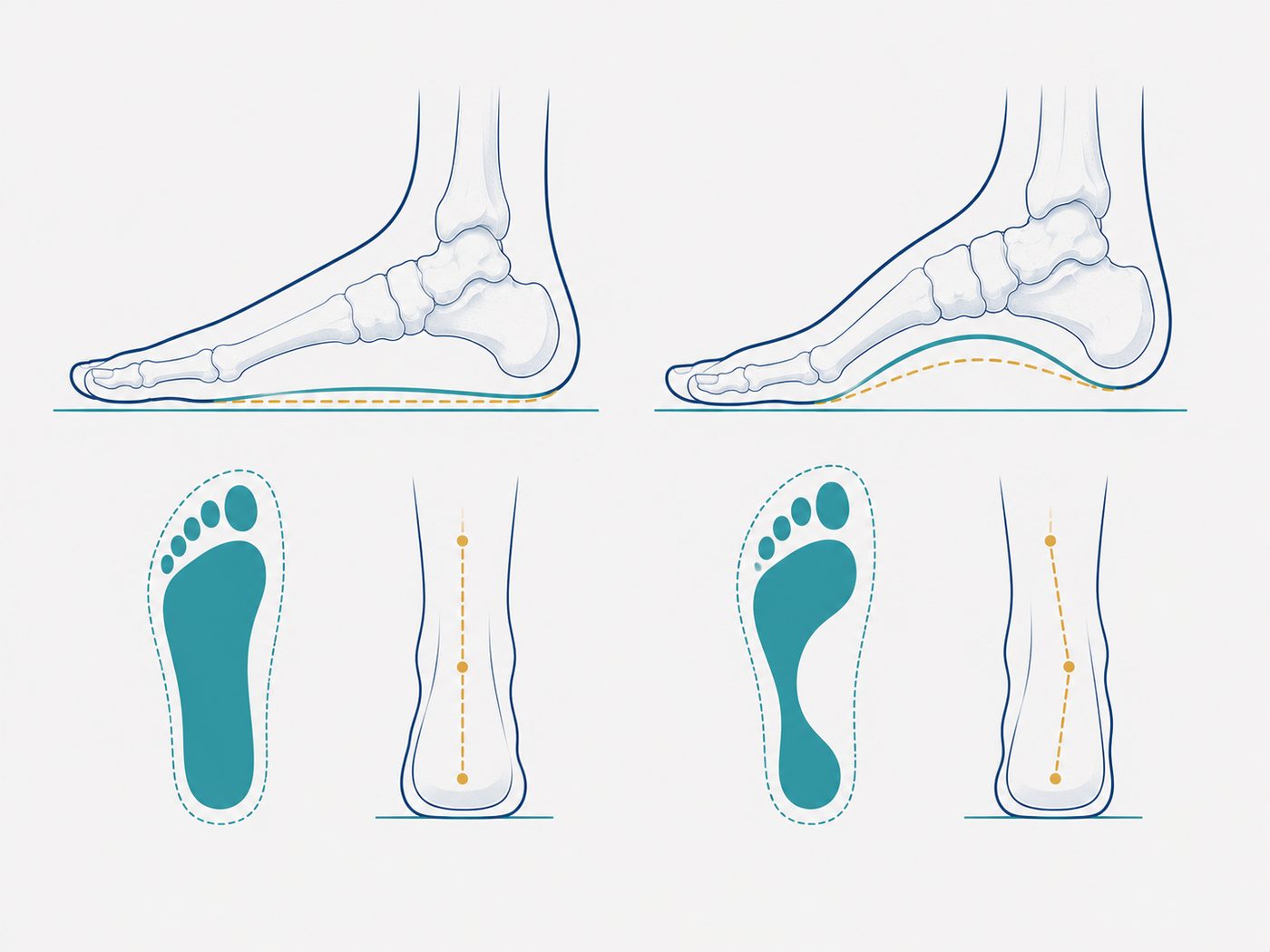
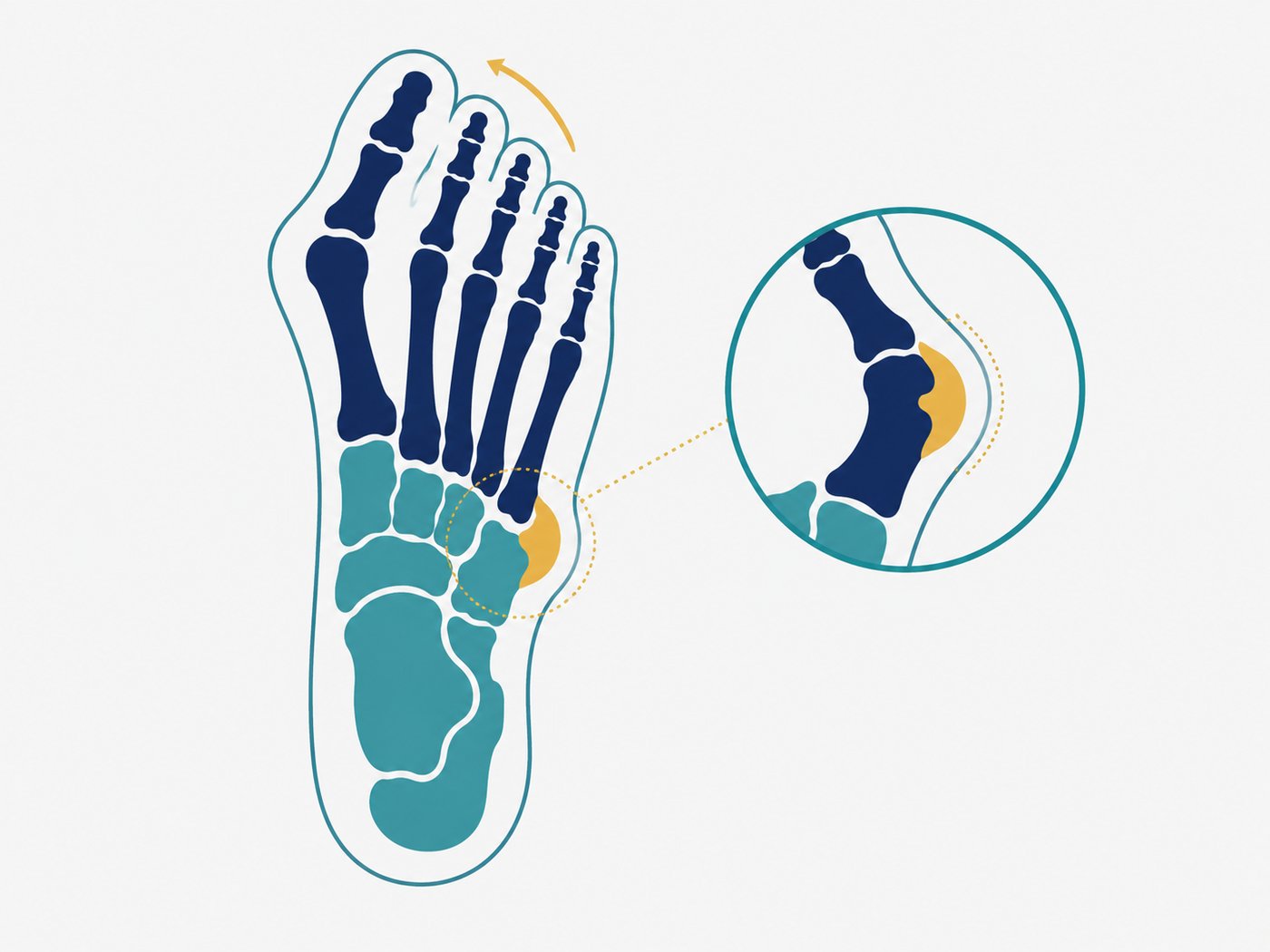
PTTD is the most common cause of adult-acquired flat foot - unlike congenital flat foot, here a tendon that supports the arch simply “tires” and weakens over time.
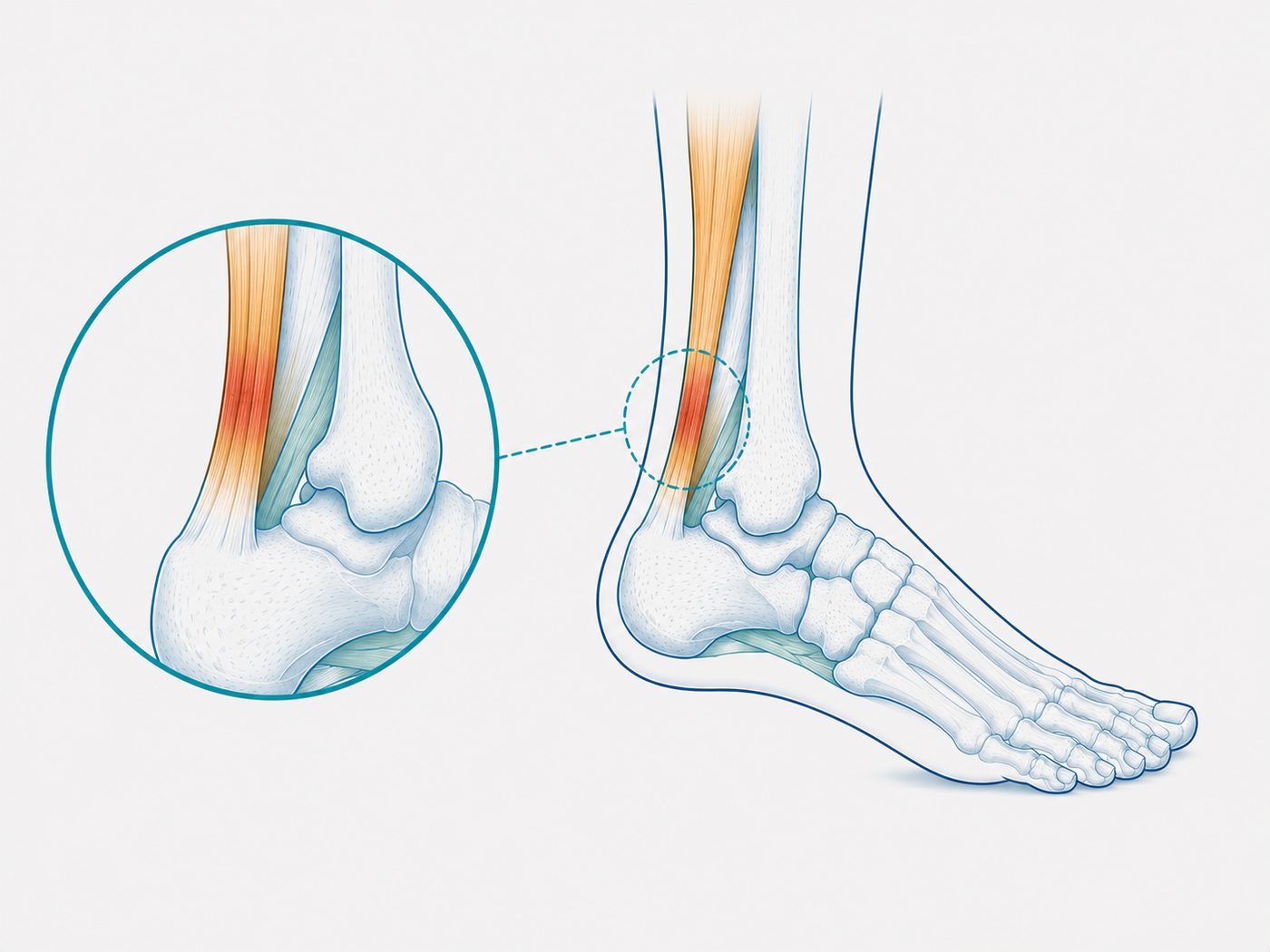
If the arch of your foot was normal for years, and recently you have noticed it flattening gradually, together with pain and some swelling on the inner side of the ankle - this may be posterior tibial tendon dysfunction (PTTD), the most common cause of adult-acquired flat foot.
Unlike congenital flat foot, here it is a tendon whose job is to support the arch that simply “tires” and weakens over time - and that significantly changes the treatment approach.
How does it usually feel?
Symptoms can vary, but many describe:
- Pain and swelling on the inner side of the ankle, along the course of the tendon.
- Gradual and visible collapse of the arch of the foot.
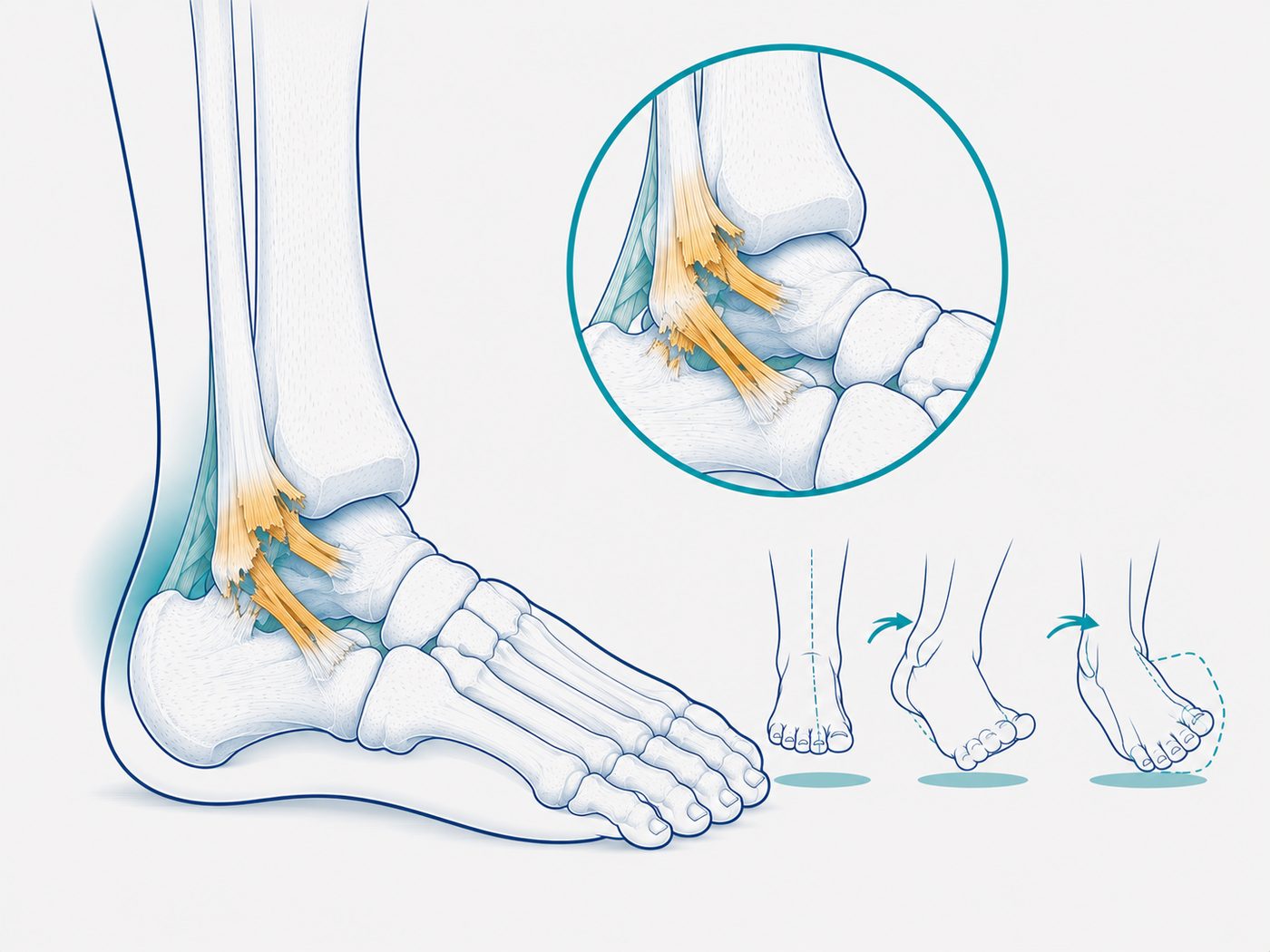
- Difficulty or inability to stand on tiptoe on the affected foot.
- A feeling of instability when walking, especially on uneven ground.
- In advanced stages - pain moving to the outer side of the ankle as well.
A simple test: try standing on tiptoe on the affected foot alone. Significant difficulty doing so is a sign that points strongly toward this tendon.
What causes posterior tibial tendon dysfunction?
The main cause is gradual degeneration of the tendon with age, which is more common in women over 40, people who are overweight and people with diabetes. Repetitive load over years, combined with a natural decline in tissue elasticity, causes the tendon to lengthen and gradually weaken until it can no longer support the arch properly.
How can physiotherapy help?
In the early stages, treatment combines targeted strengthening of the tendon and of the muscles supporting the arch, together with fitting an orthotic that supports the arch and reduces the load on the tendon while it recovers. The earlier you start, the greater the chance of halting the progression with conservative treatment alone.
When should you get checked?
If the arch is collapsing quickly, there’s real pain even at rest, or you can’t rise onto tiptoe on the affected foot at all - see a foot and ankle orthopedic specialist to assess the stage of the condition.
Frequently asked questions
A good orthotic can support the arch and reduce load on the tendon, but it doesn’t replace active strengthening - the two together give the best result.
In the early stages yes, in most cases. In advanced stages the aim is mainly to halt the progression and reduce pain.
Only in advanced stages where conservative treatment isn’t enough. In most early cases you can manage without it.
What’s worth remembering?
Posterior tibial tendon dysfunction is the leading cause of acquired flat foot - and early identification is the difference between halting the progression and a progressive collapse requiring surgery.
- An arch that was normal for years and starts to flatten gradually, together with pain on the inner side of the ankle, points to PTTD.
- Difficulty or inability to stand on tiptoe on the affected foot is a strong clinical sign pointing to this tendon.
- In advanced stages the pain moves to the outer side of the ankle as well, and the feeling of instability when walking increases.
Not sure if this is your situation? I’d be happy to give you a professional assessment and build a treatment plan that fits you.
Book a consultation callYou might also be interested in:
 Pain somewhere else?
Return to the interactive body map and pick an area
←
Pain somewhere else?
Return to the interactive body map and pick an area
←