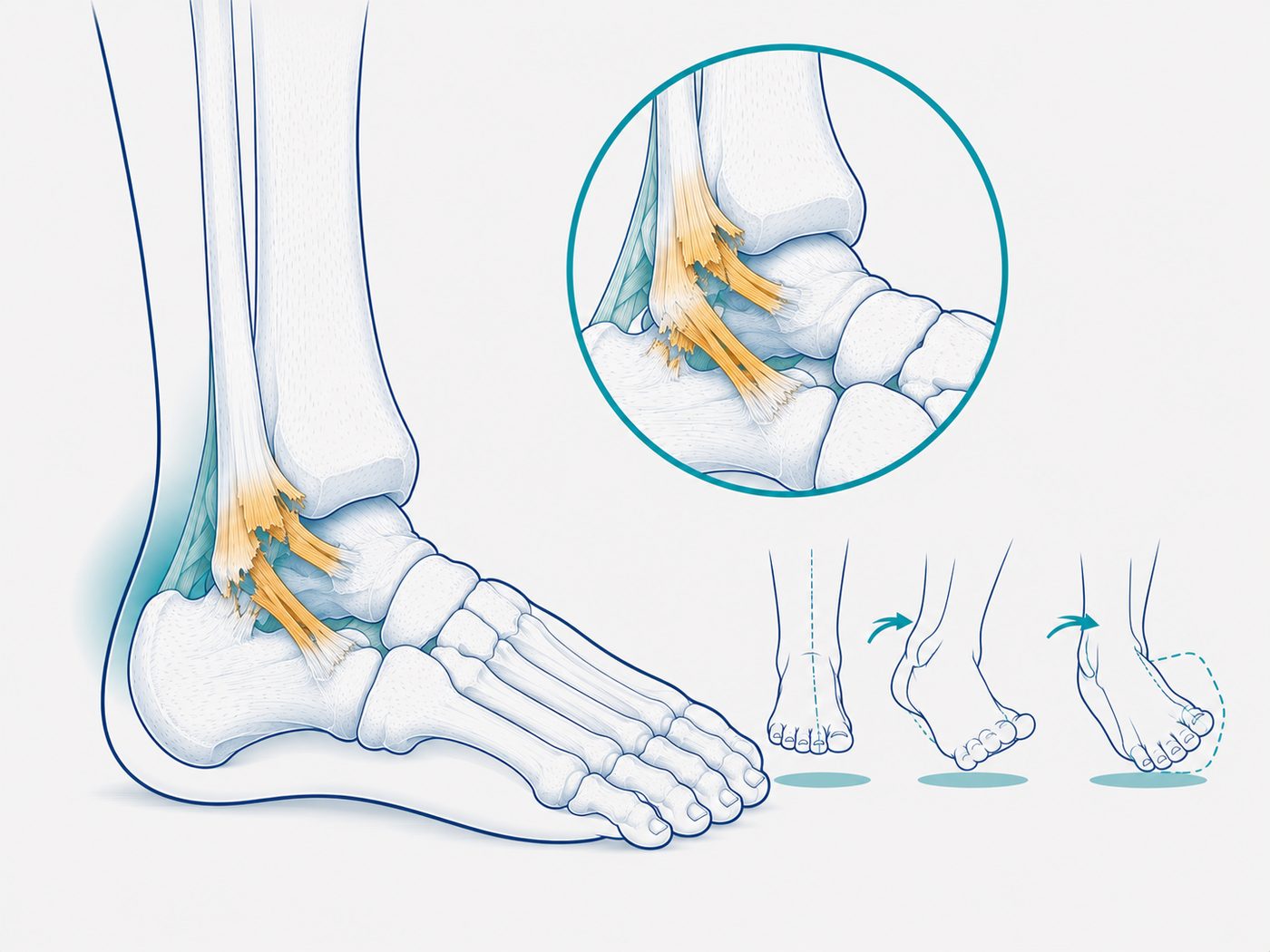
Chronic ankle instability: when the sprain keeps coming back
A feeling of instability, repeat sprains or fear of putting weight through the foot after a previous injury.
After an ankle sprain, a persistent feeling of instability is usually a specific gap in balance and strength that can be corrected - not a permanent feature of a “weak ankle”.
After an ankle sprain, some people recover completely. In others a feeling remains that the ankle “gives way”, rolls easily or is unstable. This condition is called chronic ankle instability and it can affect walking, running and sport. I often come across people who say “my ankle is just weak” - when in many cases this is a specific gap in balance and strength that can be corrected, not a permanent feature of the body.
What is chronic ankle instability?
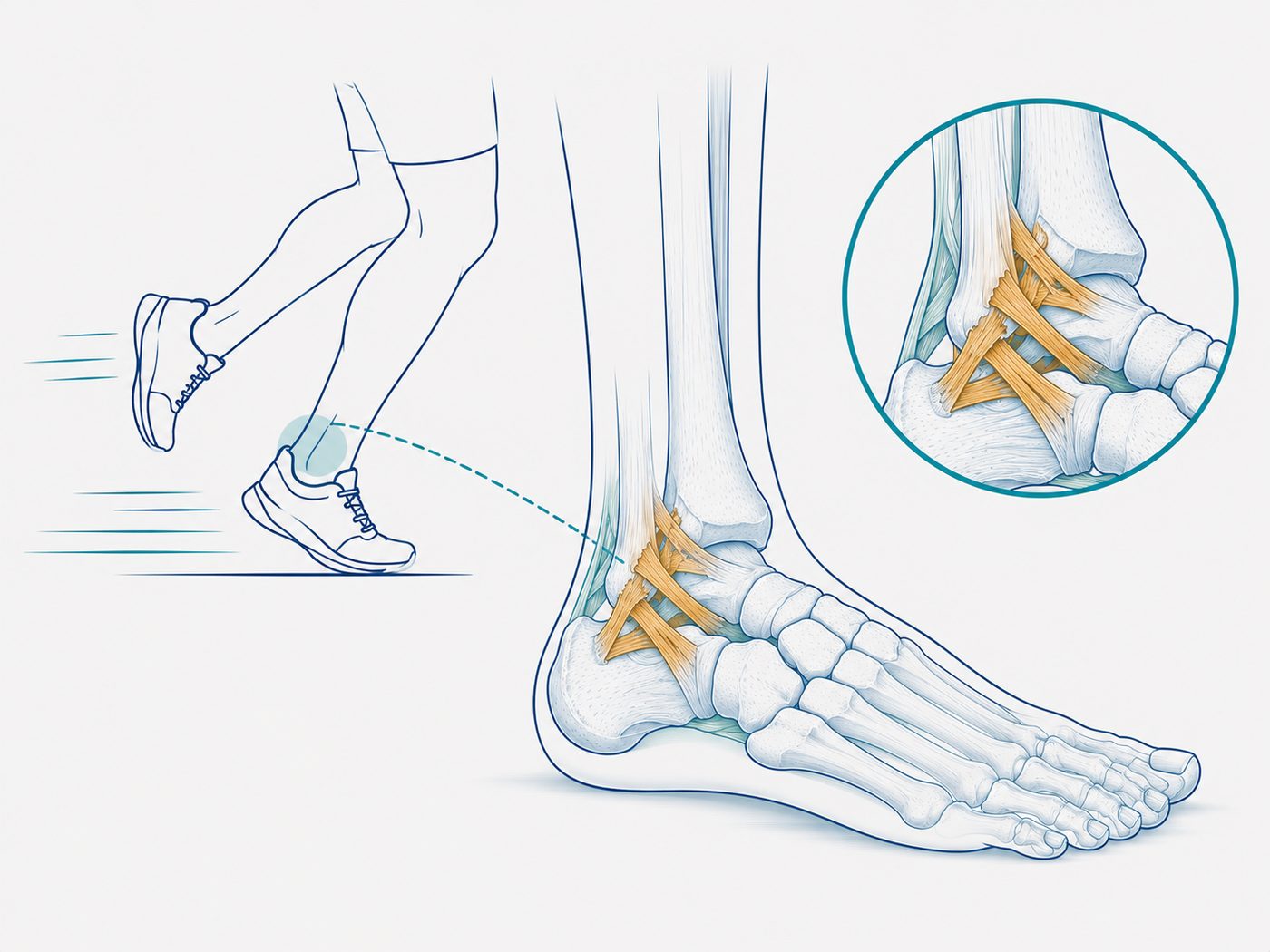
After a sprain, the ligaments, the muscles and the ankle’s balance system may not return to full function - particularly if rehabilitation after the first sprain was partial or too short. As a result the risk of repeat sprains and a feeling of insecurity in movement increases, creating a cycle that perpetuates itself.
Try standing on one leg with your eyes open for 30 seconds - if there is a noticeable difference between the injured and the healthy leg, that is a good sign of a deficit in neuromuscular control that physiotherapy can significantly improve.
How does it usually feel?
- Repeat sprains.
- A feeling of instability.
- Fear of stepping unevenly.
- Pain or swelling after activity.
- Reduced confidence when running or jumping.
How can physiotherapy help?
After assessment, we build a rehab plan: strengthening the ankle and calf muscles, balance and proprioception exercises (restoring the sense of where the foot is in space), better movement control, and preparing for a safe return to activity.
Frequently asked questions
No. Proper rehabilitation can significantly reduce the risk of repeat sprains - that is exactly the difference between full and partial rehabilitation.
In most cases yes, after full rehabilitation and gradual loading, including balance exercises specific to your sport.
When the ankle keeps rolling, feels unstable or limits your activity - there’s no need to wait for another sprain before starting to address it.
What’s worth remembering?
Chronic ankle instability isn’t a life sentence. Tailored rehabilitation can improve stability, restore confidence in movement and reduce the risk of repeat injuries.
- Chronic ankle instability develops when the ligaments, muscles and balance system don’t return to full function after a sprain, mainly when initial rehabilitation was partial.
- It’s identified by repeat sprains, a feeling of instability and fear of stepping unevenly.
- A 30-second single-leg standing test can reveal a difference between the legs, which physiotherapy can significantly improve.
Not sure if this is your situation? I’d be happy to give you a professional assessment and build a treatment plan that fits you.
Book a consultation callYou might also be interested in:
 Pain somewhere else?
Return to the interactive body map and pick an area
←
Pain somewhere else?
Return to the interactive body map and pick an area
←