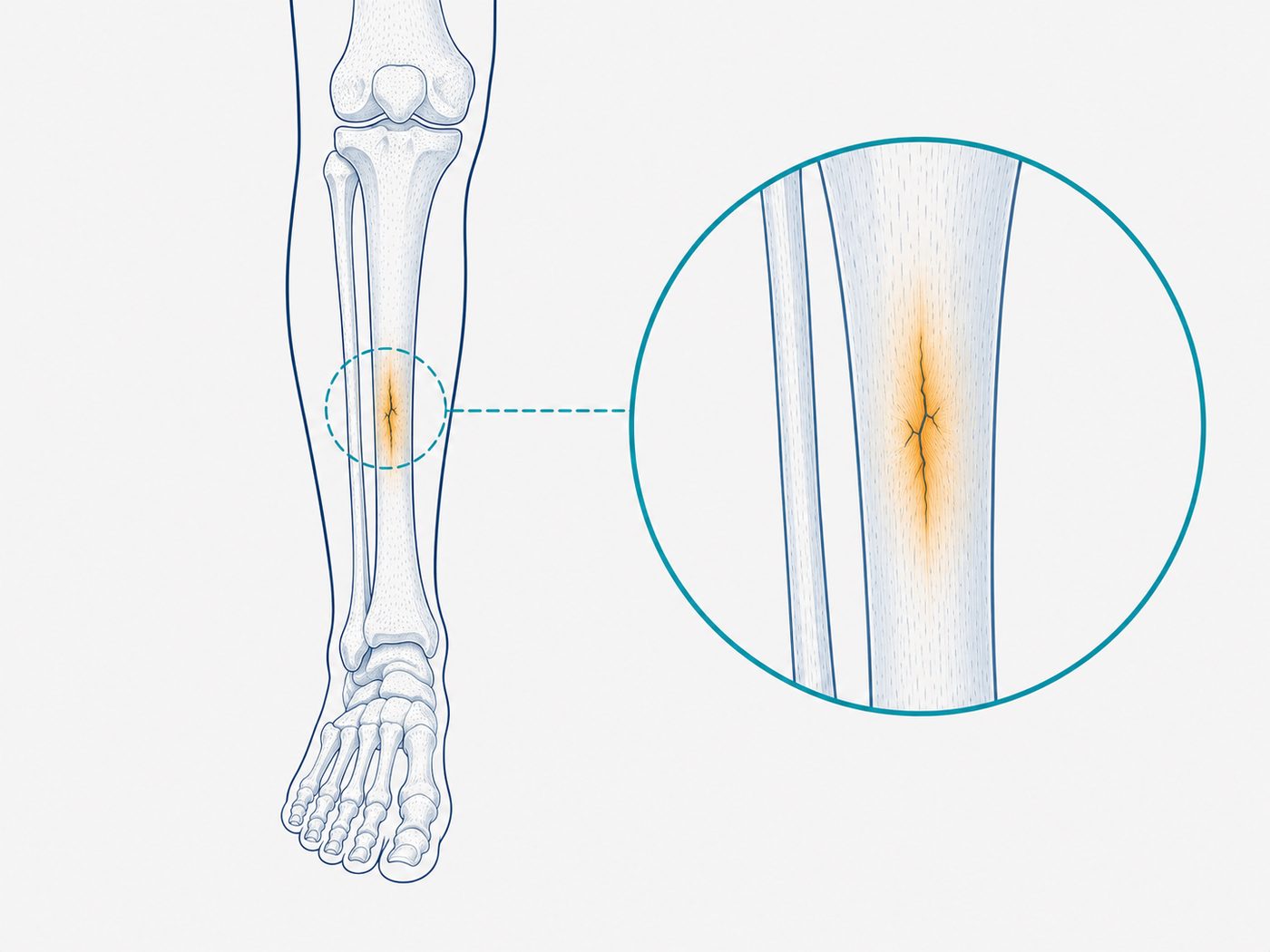
Stress fracture: when your body asks you to stop
Focal pain in a bone that appears on exertion and improves with rest, but can worsen over time.
Not every pain that appears while running is a strain or an inflammation - a stress fracture you keep running on can turn from something needing weeks of rest into something needing months.
Not every pain that appears while running is a strain or an inflammation. If the pain started gradually, returns with every training session and becomes stronger over time, this may be a stress fracture. Stress fractures are common in runners, soldiers and athletes who increase their training load quickly. This is one of the injuries where early identification matters most - because continuing to run on a stress fracture can turn it from something needing weeks of rest into something needing months.
What is a stress fracture?
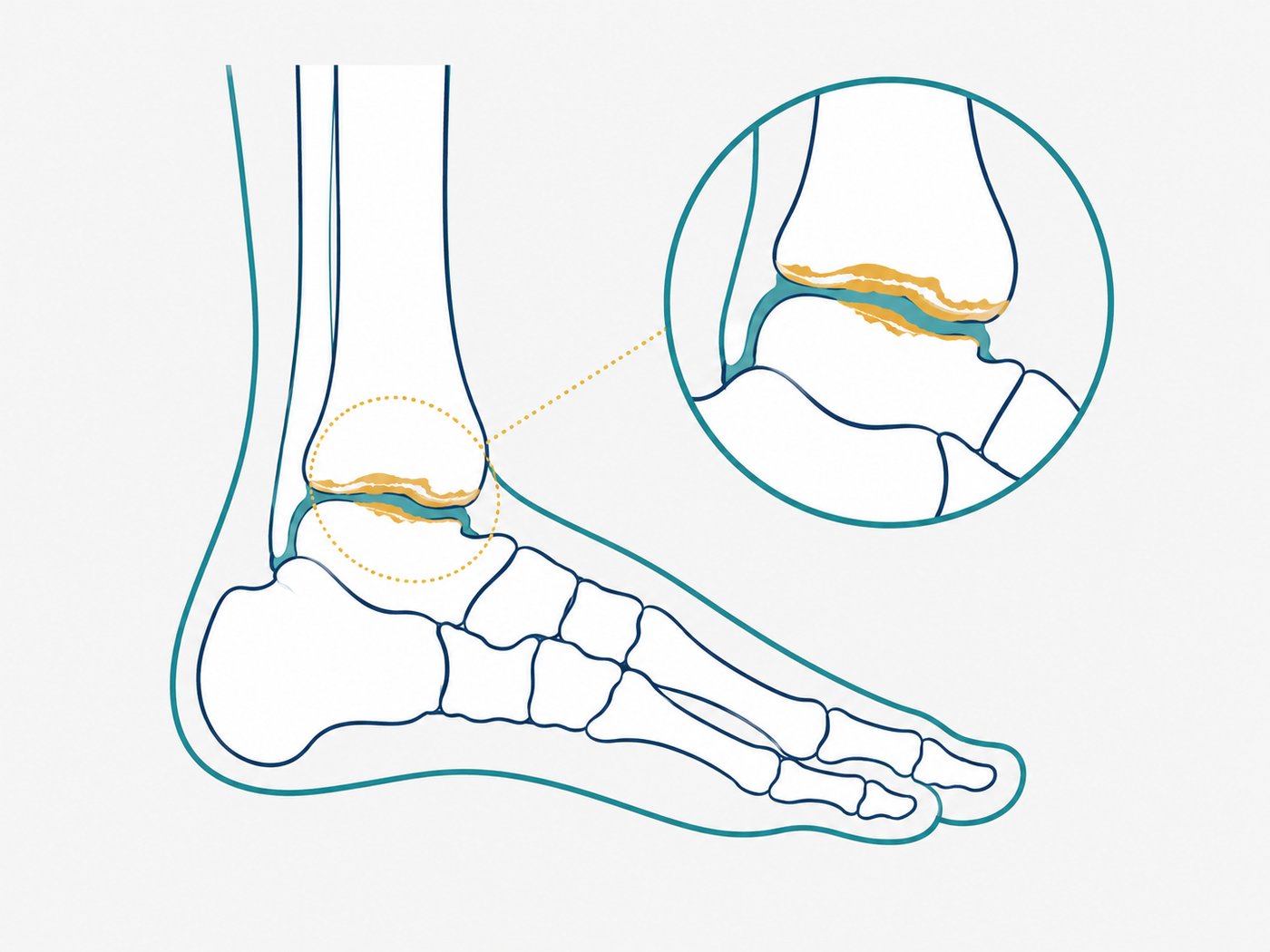
A stress fracture is damage to bone that develops as a result of repetitive loads over time, rather than from one significant injury. When the bone doesn’t have time to recover between training sessions - for instance from increasing load too quickly, inadequate nutrition or insufficient rest - a tiny fracture can develop, which gets progressively worse if you don’t stop in time.
- Focal pain at one specific point on the bone
- The pain appears earlier in each successive training session
- Pain that appears during ordinary walking or at rest as well
- Pain that keeps worsening instead of improving
How does it usually feel?
- Focal pain in the bone.
- Pain that increases during activity.
- Improvement with rest.
- Tenderness to touch.
- Difficulty continuing to run.
A useful rule of thumb: if bone pain doesn’t improve within 3-5 days of rest from activity, that is a good sign to stop and get assessed - rather than continuing to “test” whether it resolves on its own.
How can physiotherapy help?
The first stage is accurate diagnosis and reducing loads according to medical guidance. After that, we build a rehab plan: keeping fit through alternatives that don’t load the affected area (like swimming or cycling), gradual strengthening, and preparing for a safe return to running or sport.
Frequently asked questions
In most cases this isn’t advisable, because continuing the load can significantly worsen the injury and lengthen the recovery time.
Diagnosis is based on the clinical story, the examination and sometimes imaging as needed - an ordinary X-ray doesn’t always show a stress fracture in the early stages.
In many cases, yes, through gradually increasing training loads (no more than a 10% increase in volume from week to week), adequate recovery and a suitable training program.
What’s worth remembering?
The earlier the problem is identified and the load reduced in time, the greater the chance of a quick and safe return to activity.
- A stress fracture develops from repetitive loads the bone doesn’t have time to recover from, not from one sharp injury.
- Pain that starts earlier in each successive training session, or that appears during ordinary walking and at rest, raises suspicion of a stress fracture.
- Rule of thumb: if bone pain doesn’t improve within 3-5 days of rest, that is an important sign to be assessed.
Not sure if this is your situation? I’d be happy to give you a professional assessment and build a treatment plan that fits you.
Book a consultation callYou might also be interested in:
 Pain somewhere else?
Return to the interactive body map and pick an area
←
Pain somewhere else?
Return to the interactive body map and pick an area
←