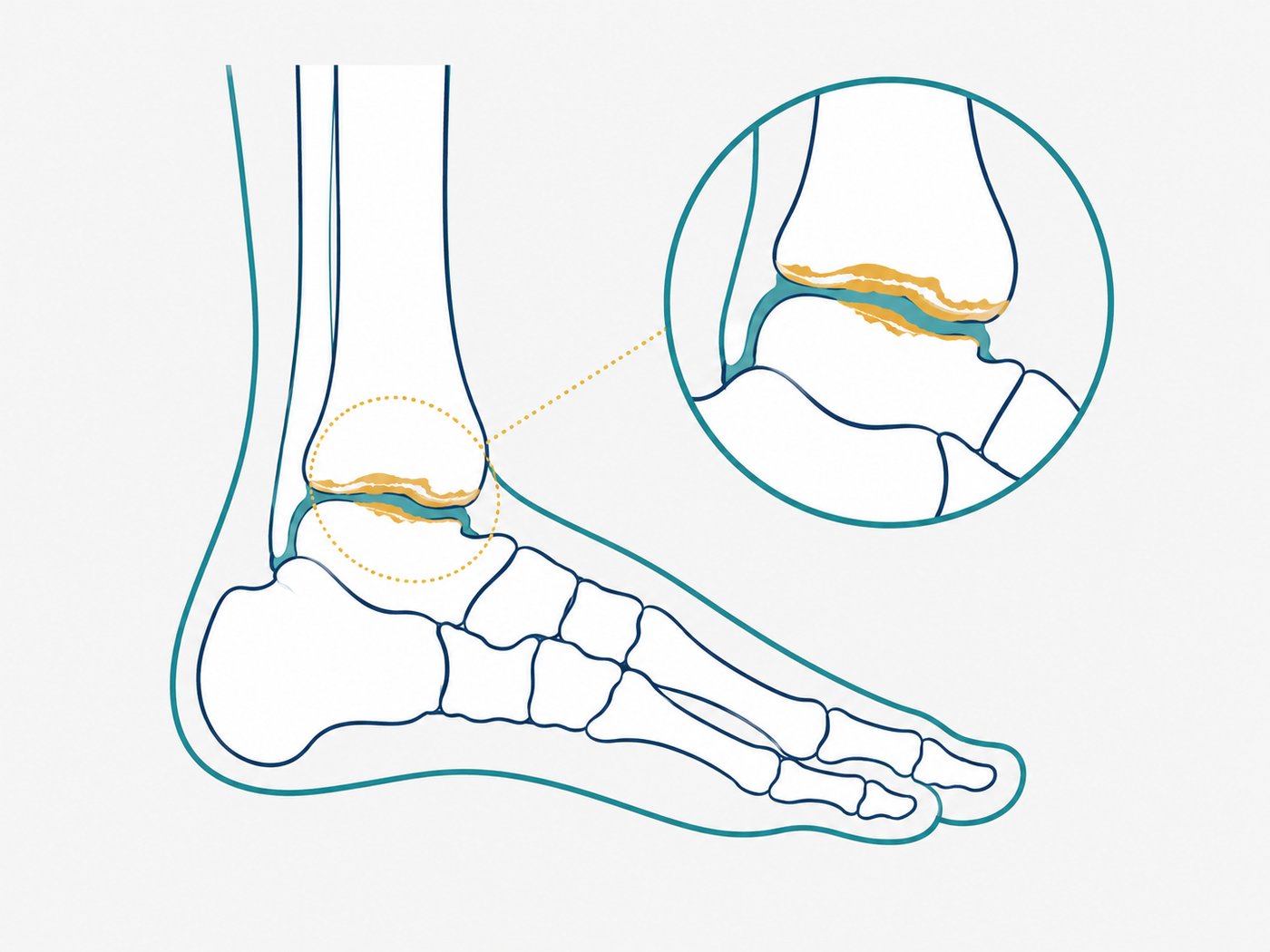
Ankle osteoarthritis: less common, usually after a previous injury
Cartilage wear in the ankle is less common than in the knee or hip, and usually develops following a previous injury in the area.
Ankle osteoarthritis is less common than in the knee or hip, and usually develops following a previous injury in the area such as a fracture or a severe sprain - not simply as a natural consequence of age.
Cartilage wear (osteoarthritis) in the ankle is less common than osteoarthritis in the knee or hip, but when it appears, it is usually not “just” a consequence of age - in most cases there is a history of a significant ankle injury in the past, such as a fracture or a severe sprain.
That is exactly what makes ankle osteoarthritis different: it is often post-traumatic, meaning a direct result of a previous injury, and not only natural wear with age.
How does it usually feel?
Symptoms can vary, but many describe:
- Deep pain in the ankle that worsens with prolonged standing and walking.
- Stiffness in the morning or after prolonged rest.
- A gradual reduction in the range of motion of the ankle.
- Swelling that returns during flare-ups.
- Growing difficulty walking on uneven surfaces.
If you have a history of a fracture or a severe ankle sprain in the past, even if it was many years ago - that is important information which significantly raises the likelihood of post-traumatic osteoarthritis in the area.
What causes ankle osteoarthritis?
In most cases this is a late consequence of a previous ankle injury - a fracture that did not heal perfectly, or recurrent sprains that caused chronic instability and uneven loading of the joint. “Primary” ankle osteoarthritis, without a previous injury, is significantly less common than in the knee or hip.
How can physiotherapy help?
Treatment focuses on preserving the existing range of motion, strengthening the ankle and calf muscles that support the stability of the joint, and adjusting daily activity to reduce unnecessary load. In many cases fitting supportive shoes or orthotics can also help significantly in reducing the pain.
When should you get checked?
If the pain becomes constant even at rest, the swelling is large and lasting, or walking becomes really hard - see a foot and ankle orthopedic specialist about further treatment options.
Frequently asked questions
In most cases yes, unlike osteoarthritis in the knee or hip, which can also be “primary” with no history of injury.
In most cases yes, with the type of activity adjusted to the load the ankle can carry comfortably.
Only in advanced cases that significantly interfere with function. In most cases you can manage with conservative treatment for a significant length of time.
What’s worth remembering?
Ankle osteoarthritis is usually post-traumatic, following a previous injury - and identifying that history helps to understand the full picture and build a suitable treatment plan.
- Ankle osteoarthritis is usually post-traumatic - a late consequence of a fracture or severe sprain in the past, rather than only wear with age.
- It’s identified by deep pain that worsens with prolonged standing and walking, morning stiffness and a gradual reduction in range of motion.
- Treatment focuses on preserving range of motion, strengthening the ankle muscles and fitting supportive shoes or orthotics.
Not sure if this is your situation? I’d be happy to give you a professional assessment and build a treatment plan that fits you.
Book a consultation callYou might also be interested in:
 Pain somewhere else?
Return to the interactive body map and pick an area
←
Pain somewhere else?
Return to the interactive body map and pick an area
←