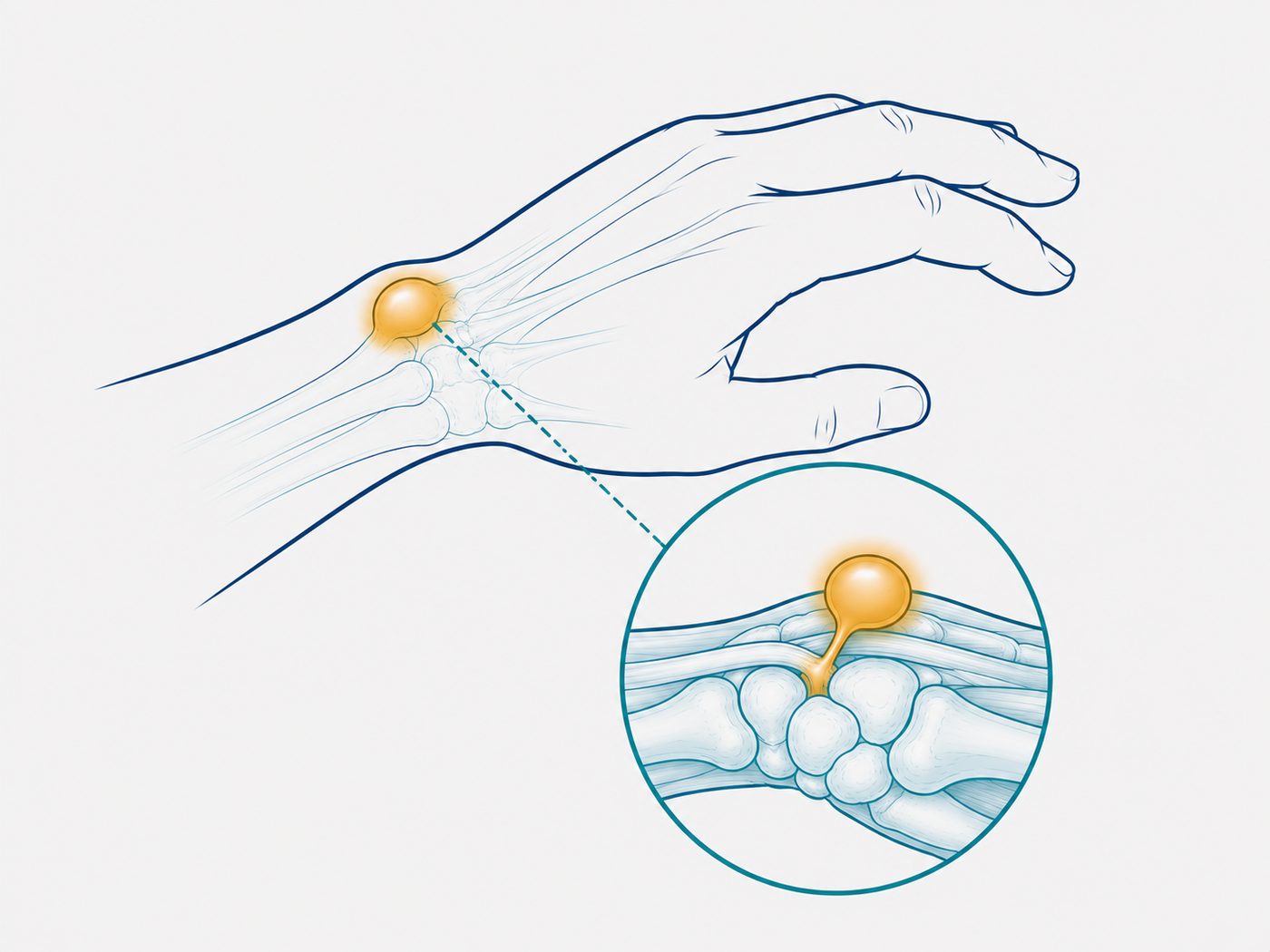
Ganglion cyst: the common lump on the wrist
A round lump on the wrist sometimes accompanied by pain or discomfort.
A ganglion is a benign cyst containing fluid that develops next to a joint or a tendon - despite the worrying appearance, in most cases it isn’t a dangerous growth, and the changing behavior (shrinking, growing, disappearing and returning) is characteristic and not a sign for concern.
A ganglion is a round lump containing fluid that usually appears around the wrist, and sometimes also in the foot or the fingers. In some people it causes no pain at all, and in others it can cause discomfort, tenderness or a restriction in certain activities. I hear a lot of initial worry - “what is this lump?” - and in most cases I can reassure people relatively quickly after a simple examination.
What is a ganglion?
A ganglion is a benign cyst that develops next to a joint or a tendon, and contains thick synovial fluid. Despite its appearance, in most cases it isn’t a dangerous growth. Sometimes it changes in size, shrinking and growing, and it can even disappear and return - this kind of changing behavior is in fact characteristic and not in itself a sign for concern.
Do not try to “burst” the ganglion yourself (an old and popular method that people still hear about) - this can cause damage without actually solving the problem. If it is bothering you, there are far safer and more effective ways to treat it.
How does it usually feel?
- A round lump on the wrist.
- Pain during movement.
- Tenderness to touch.
- Discomfort when gripping.
- Sometimes no pain at all.
How can physiotherapy help?
After assessment, treatment can be tailored to reduce loads, improve wrist movement, with exercises to improve function and guidance on continuing activity according to the symptoms - the aim is to improve function around the ganglion, even if it doesn’t disappear immediately.
Frequently asked questions
In most cases, no. It’s a benign finding, but get it assessed to confirm the source of the lump and rule out other possibilities.
Yes. In some people the ganglion shrinks or disappears even without treatment, sometimes after months and sometimes more quickly.
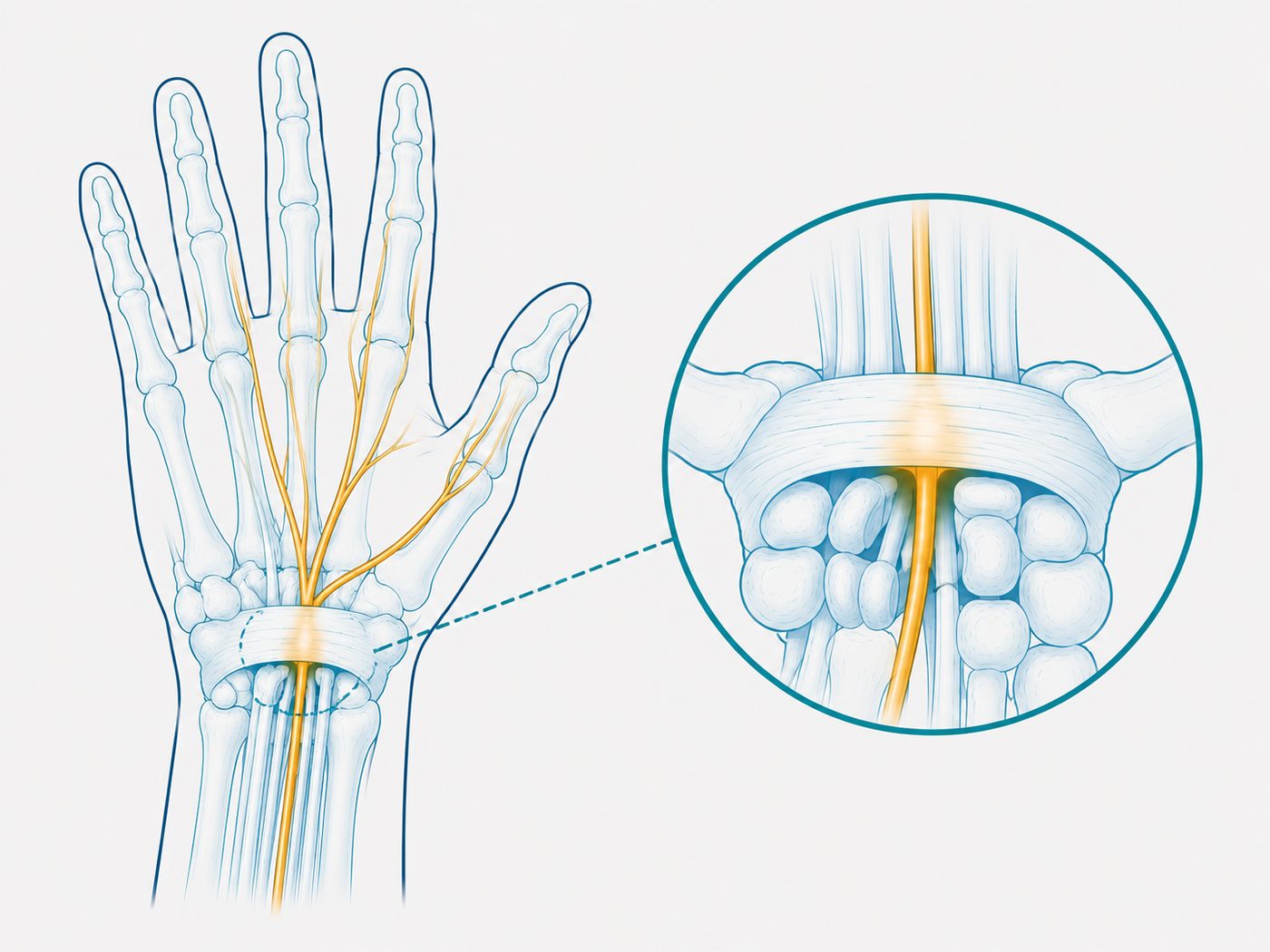
If the lump is painful, grows rapidly, restricts movement or causes weakness or numbness (which can suggest pressure on a nearby nerve).
What’s worth remembering?
Not every ganglion needs treatment, but when it causes pain or limits you - get an assessment and tailored recommendations.
- A ganglion usually appears around the wrist, and sometimes also in the foot or the fingers; in many people it causes no pain at all.
- Trying to “burst” it yourself can cause damage without actually solving the problem.
- There are safe and effective ways to treat it when it interferes with function, including reducing loads and improving wrist movement.
Not sure if this is your situation? I’d be happy to give you a professional assessment and build a treatment plan that fits you.
Book a consultation callYou might also be interested in:
 Pain somewhere else?
Return to the interactive body map and pick an area
←
Pain somewhere else?
Return to the interactive body map and pick an area
←