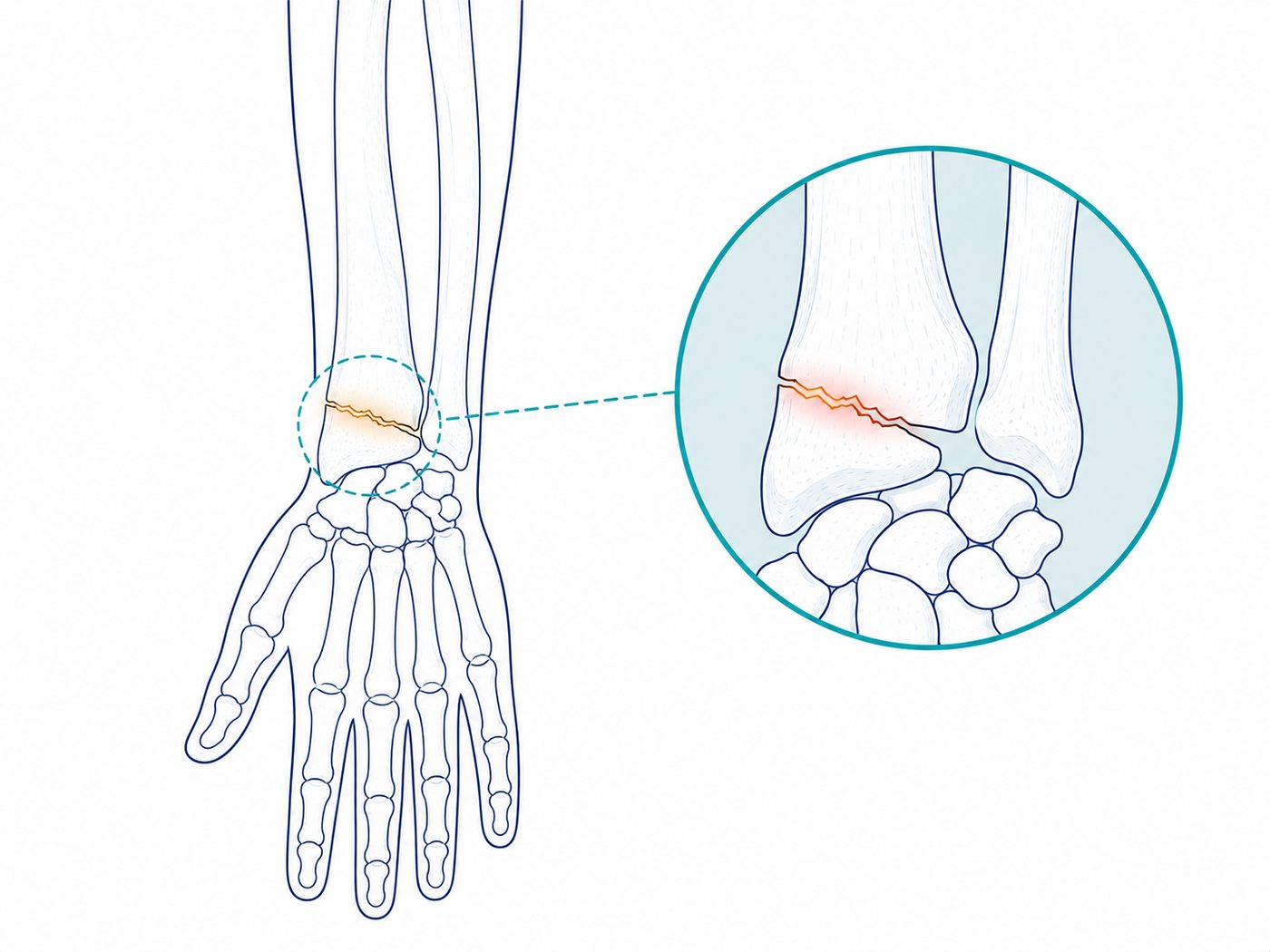
Wrist sprain or fracture: don’t assume it will pass on its own
Pain, swelling or difficulty moving the wrist after an injury or a fall.
After a fall onto an outstretched hand it is hard to tell a sprain from a fracture by feel alone - trying to “test” it yourself by moving the hand is exactly the test best left to a professional.
A fall onto an outstretched hand is one of the most common causes of wrist pain. Sometimes it’s a sprain, sometimes a fracture. Because the symptoms can be similar, get a medical assessment when the pain is strong or movement is limited. I hear quite a few people who try to “test” for themselves whether it’s a fracture by moving the hand - that’s exactly the test to leave to a professional, because it isn’t reliable and can worsen an existing injury.
What is the difference between a sprain and a fracture?
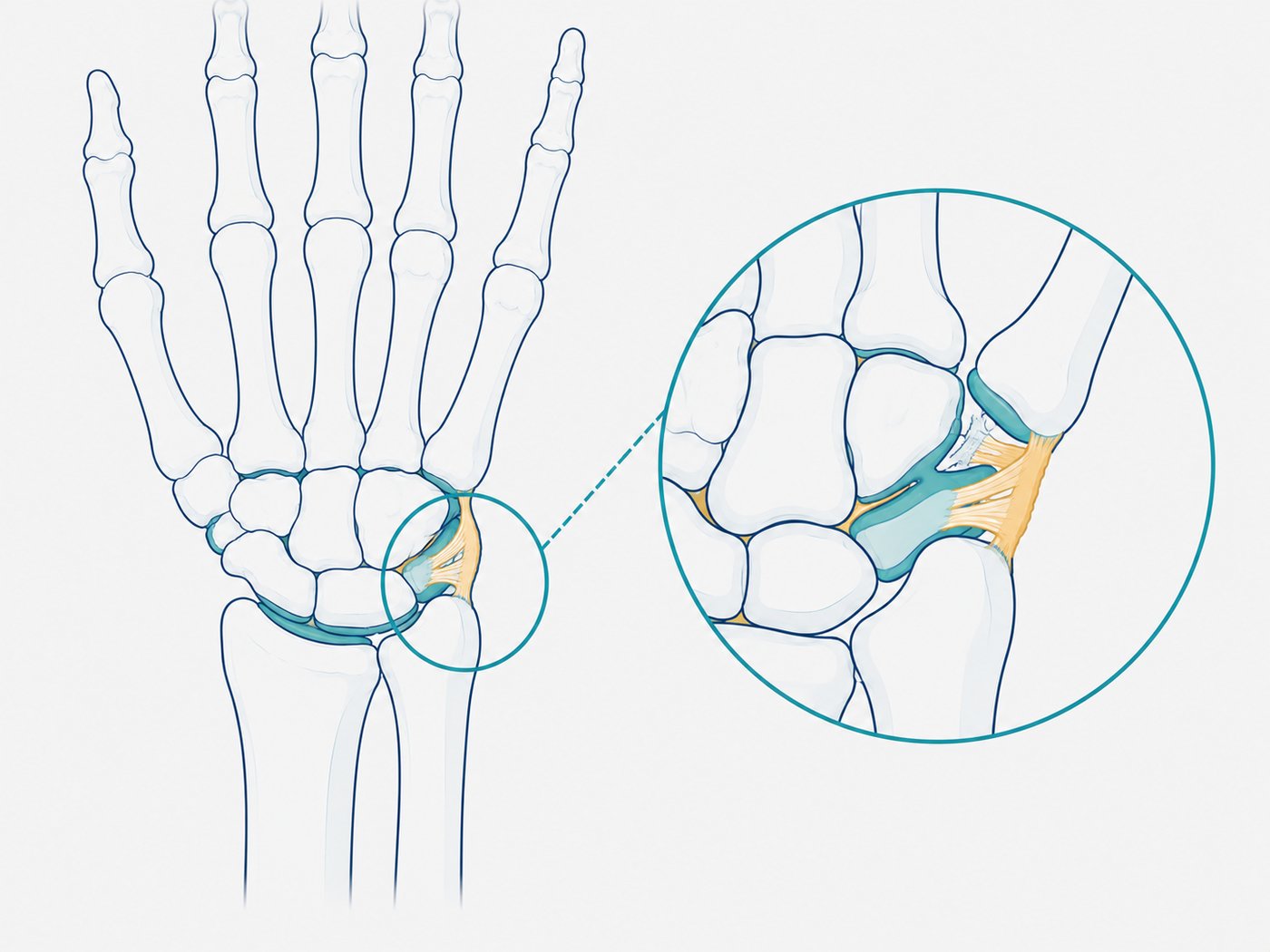
A sprain is damage to the ligaments that stabilize the joint, whereas a fracture is damage to the bone itself. In both situations pain, swelling and restricted movement can appear, which is why imaging is sometimes needed to reach an accurate diagnosis - clinical examination alone isn’t always enough to distinguish the two with confidence.
- A visible deformity of the wrist
- You can’t move the fingers at all
- Significant numbness or loss of sensation
- Severe pain that isn’t relieved at all
How does it usually feel?
- Pain in the wrist.
- Local swelling.
- Difficulty gripping.
- Pain when moving the hand.
- Tenderness to touch.
Even if the X-ray came back normal and it is “only” a sprain, don’t be quick to return to full activity - ligaments need their own healing time, and structured rehabilitation shortens the road back considerably.
How can physiotherapy help?
Once the area is safe to load, and according to medical guidance, rehab focuses on restoring range of motion, gradual strengthening, improving function, and a safe return to work, sport, and daily activity - including treating the stiffness that sometimes remains after long immobilization.
Frequently asked questions
Not in every case - but if there’s strong pain, swelling, or difficulty using the hand, get assessed rather than assume it’s “just a knock”.
The return depends on the type of injury, the pace of recovery and the guidance of the treating team - not on a fixed period of time that applies to everyone in the same way.
Stiffness after immobilization is an extremely common phenomenon - the joint “forgets” a little how to move after weeks without movement, and physiotherapy can help rehabilitate the movement gradually and safely.
What’s worth remembering?
Early diagnosis and appropriate rehabilitation can shorten recovery time and help you return safely to full function.
- A sprain damages the ligaments, a fracture damages the bone itself - in both cases similar pain, swelling and restricted movement can appear.
- A visible deformity, inability to move the fingers at all, or significant numbness require going straight to an emergency department.
- Even if the X-ray came back normal and it is “only” a sprain, don’t rush back to full activity without appropriate rehabilitation.
Not sure if this is your situation? I’d be happy to give you a professional assessment and build a treatment plan that fits you.
Book a consultation callYou might also be interested in:
 Pain somewhere else?
Return to the interactive body map and pick an area
←
Pain somewhere else?
Return to the interactive body map and pick an area
←