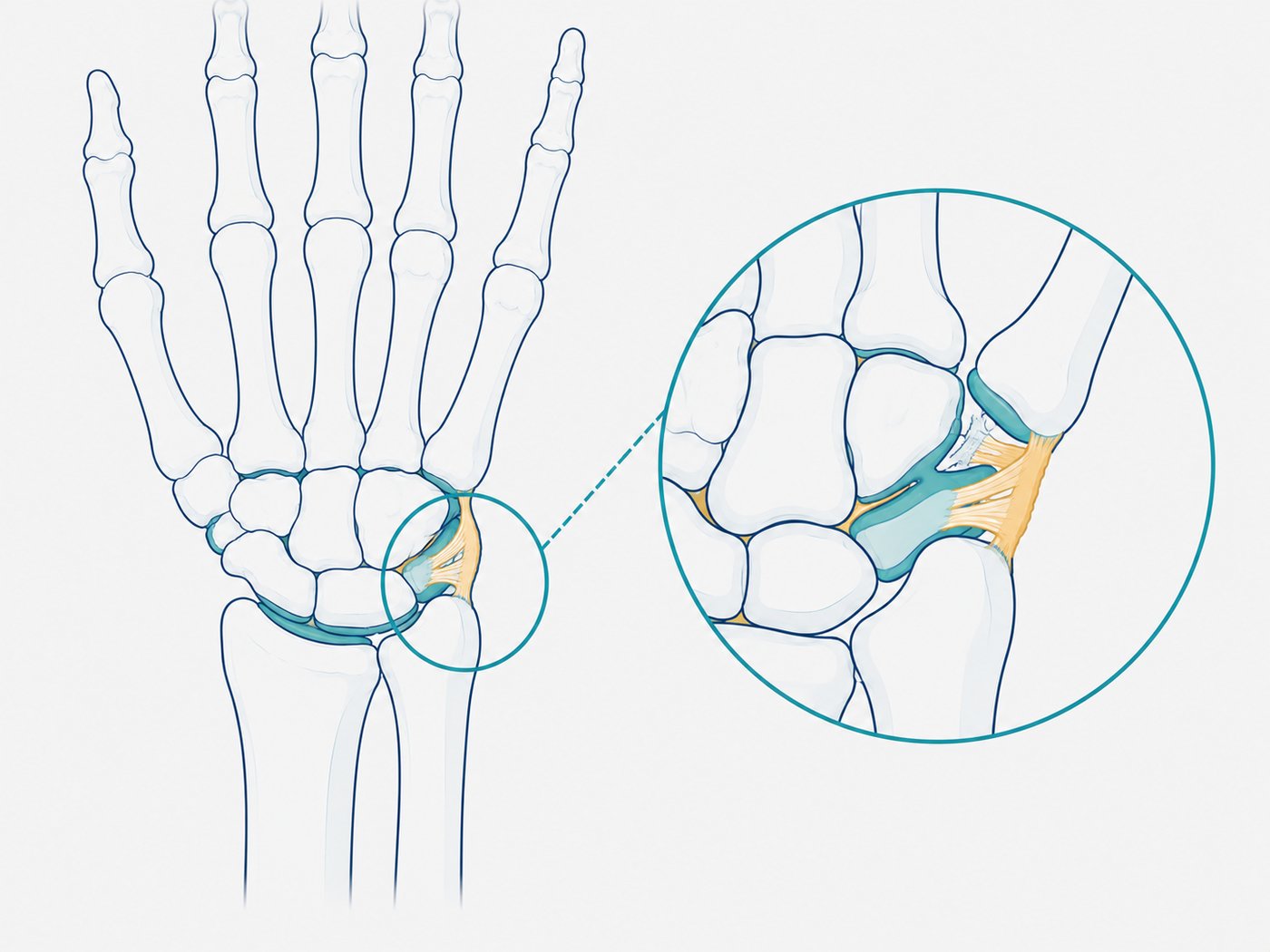
TFCC injury: pain on the pinky side of the wrist
Pain on the little finger side of the wrist that worsens with rotation - common in racket sports and tennis.
A TFCC injury is a common cause of wrist pain that tends to be missed, because it isn’t on the list of “classic” problems such as carpal tunnel or De Quervain’s.
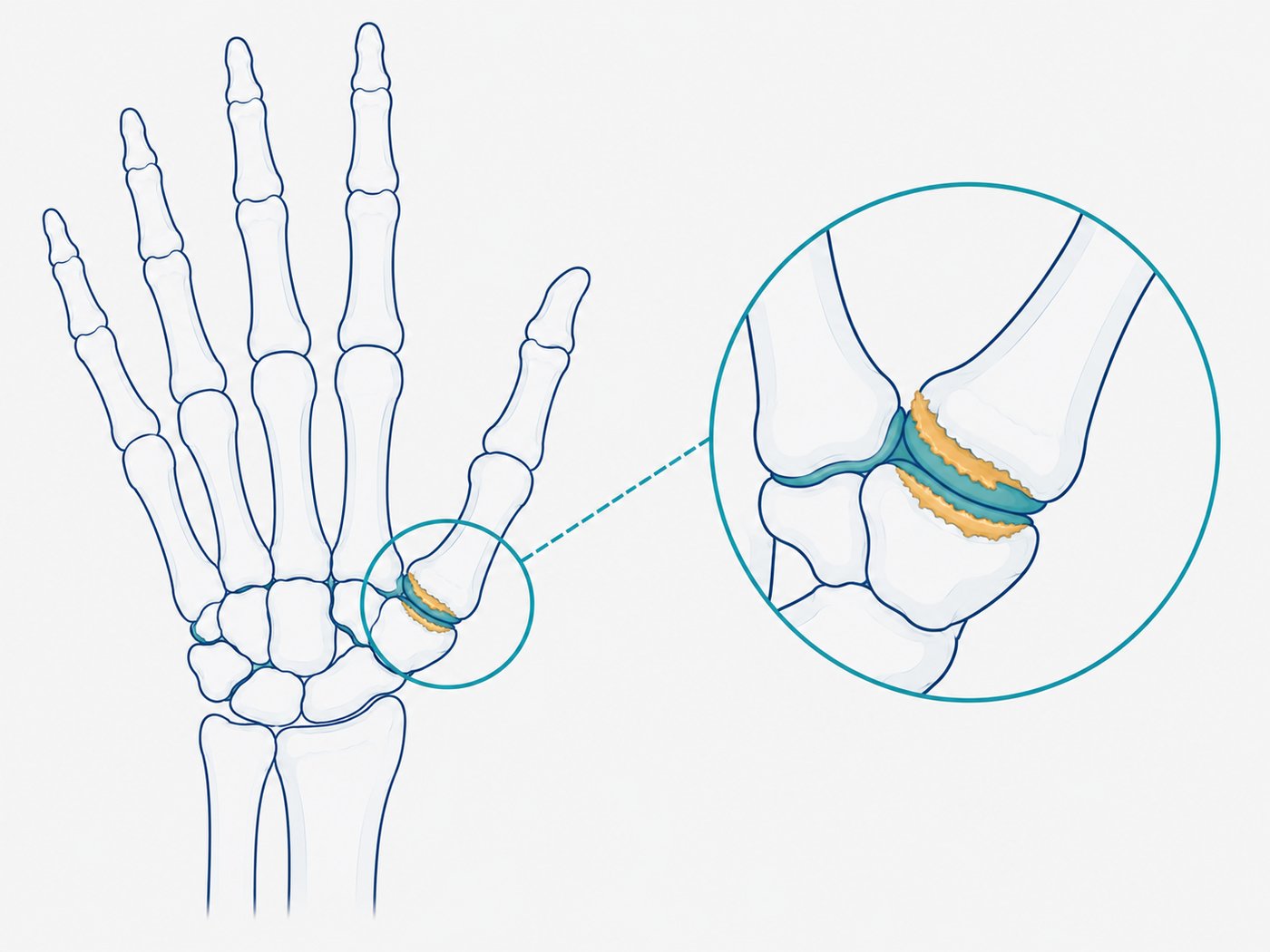
If you have pain located specifically on the little finger side of the wrist, which worsens when rotating the hand or leaning on it, this may be a TFCC injury (Triangular Fibrocartilage Complex) - a small cartilage and ligament structure that supports the stability of the joint between the forearm and the wrist.
This is a common cause of pain on that side of the wrist which tends to be missed, because it isn’t included on the list of “classic” problems such as carpal tunnel or De Quervain’s.
How does it usually feel?
Symptoms can vary, but many describe:
- Focal pain on the little finger side of the wrist.
- Significant worsening when rotating the hand, such as opening a bottle or turning a key.
- Pain when leaning on the hand, for example in press-ups.
- Sometimes a “clicking” sensation or slight instability.
- Pain that worsens when gripping a racket or hitting a tennis ball.
If the pain worsens specifically with a rotating movement of the wrist rather than with ordinary gripping - that is precise information pointing toward the TFCC rather than a tendon problem.
What causes a TFCC injury?
It usually involves repetitive load on the wrist in rotational movements, common in racket sports such as tennis and table tennis, but also from a fall onto an outstretched hand with the wrist rotated. Degenerative changes with age can also damage the cartilage fibres of the structure.
How can physiotherapy help?
In mild to moderate injuries, treatment includes temporarily reducing load on the wrist, gradual strengthening of the stabilizing muscles around the hand, and sometimes a supportive splint in the early period. Most injuries respond well to conservative treatment when it is started early.
When should you get checked?
If the wrist feels really unstable, the pain doesn’t improve after several weeks of conservative treatment, or a large tear is suspected - see a hand surgeon and consider precise imaging.
Frequently asked questions
Usually not - an X-ray mainly rules out a fracture. Accurate diagnosis of the injury itself usually requires an MRI.
At first, reduce the load - but in most cases you can return gradually once the symptoms improve.
No, most injuries respond well to conservative treatment. Surgery is reserved for cases with significant instability or where conservative treatment has failed.
What’s worth remembering?
A TFCC injury is a common but less well-known cause of pain on the little finger side of the wrist - and identifying it accurately saves valuable treatment time.
- The TFCC is a small cartilage and ligament structure that supports the stability of the joint between the forearm and the wrist.
- It’s identified by focal pain on the little finger side of the wrist that worsens with rotation or leaning on the hand.
- Pain that worsens specifically with a rotating movement, rather than with ordinary gripping, points to the TFCC rather than a tendon problem.
Not sure if this is your situation? I’d be happy to give you a professional assessment and build a treatment plan that fits you.
Book a consultation callYou might also be interested in:
 Pain somewhere else?
Return to the interactive body map and pick an area
←
Pain somewhere else?
Return to the interactive body map and pick an area
←