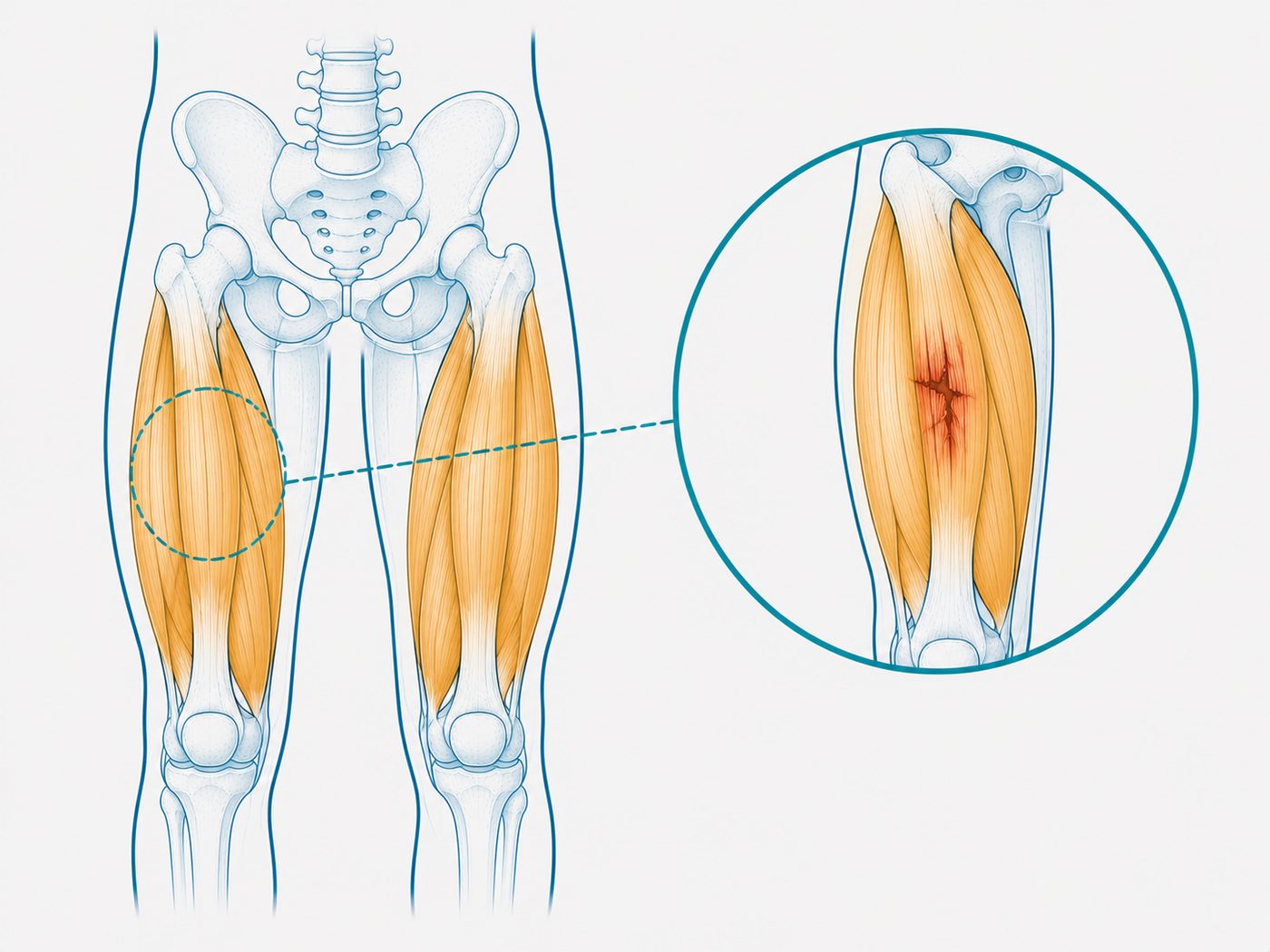
Quadriceps strain: pain that appears in a single moment
Pain that appears during sprinting, kicking, jumping or climbing stairs.
A quadriceps strain happens in a single sharp moment - a sprint, a hard kick or a jump - and can also appear in non-athletes after a sudden unusual effort.
Sometimes it happens during a sprint, sometimes with a hard kick at a ball or in a jump. In a single moment you feel sharp pain at the front of the thigh that makes it hard to continue the activity. A quadriceps strain is one of the most common muscle injuries in athletes, but it can also appear after an unusual effort in any active person - for example running fast after a bus that is pulling away.
What is a quadriceps strain?
The quadriceps is made up of four muscles at the front of the thigh and its job is to straighten the knee and help with movements such as walking, running, jumping and climbing stairs. When too great a load is applied to it - particularly when the muscle has not yet properly “warmed up” - a strain or tear of varying severity can occur.
In the first days after the injury, avoid strong pressure or aggressive massage over the area of the tear - this can slow recovery. Gentle cooling and light movement within a pain-free range are preferable at this stage.
How does it usually feel?
- Sharp pain at the front of the thigh.
- Difficulty running or kicking.
- Pain climbing stairs.
- Tenderness to touch.
- Sometimes swelling or bruising appears.
How can physiotherapy help?
After a full examination, we build a rehab plan: restoring range of motion, progressive strengthening, better movement control, and preparing for a safe return to sport or daily activity - at a pace that respects where the muscle is in its healing.
Frequently asked questions
In most cases, reduce the load temporarily and let the muscle recover before returning fully - that doesn’t mean complete rest, just a sensible adjustment.
The return is determined by the function and capacity of the muscle and not only by the number of days that have passed - two people with the same injury can need different timelines.
Full rehabilitation, appropriate strengthening and gradually increasing loads reduce the risk - exactly as skipping these stages increases it.
What’s worth remembering?
A quadriceps strain doesn’t require a long break from activity. The right assessment, a tailored rehabilitation plan and a graded return to load can help you get safely back to what you love doing.
- The quadriceps straightens the knee and is involved in almost every movement - walking, running, jumping and climbing stairs.
- Too great a load, mainly when the muscle has not yet properly “warmed up”, can cause a strain or tear of varying severity.
- In the first days after the injury, strong pressure or aggressive massage over the area of the tear can actually slow recovery.
Not sure if this is your situation? I’d be happy to give you a professional assessment and build a treatment plan that fits you.
Book a consultation callYou might also be interested in:
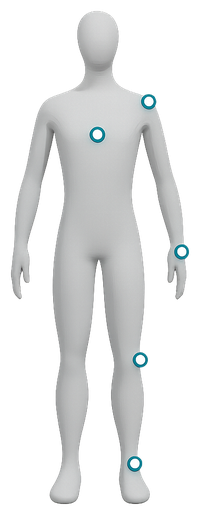 Pain somewhere else?
Return to the interactive body map and pick an area
←
Pain somewhere else?
Return to the interactive body map and pick an area
←