Rotator cuff tear: does every tear require surgery?
Pain or weakness in the shoulder that appears when lifting the arm or carrying objects.
When the MRI comes back with the words “tendon tear”, the first fear is that improvement is impossible without surgery - but partial and even full-thickness tears exist in plenty of people with no symptoms at all.
Shoulder pain is one of the most common complaints in the clinic. Sometimes the pain appears after a fall, but quite a few people say it started gradually, with no clear event. When the MRI comes back with the words “tendon tear”, the first fear is that improvement is impossible without surgery. I watch faces fall the moment the word “tear” is said, and it takes me a few sentences to explain that this is really not the ending they think it is.
In practice, the reality is more complex.
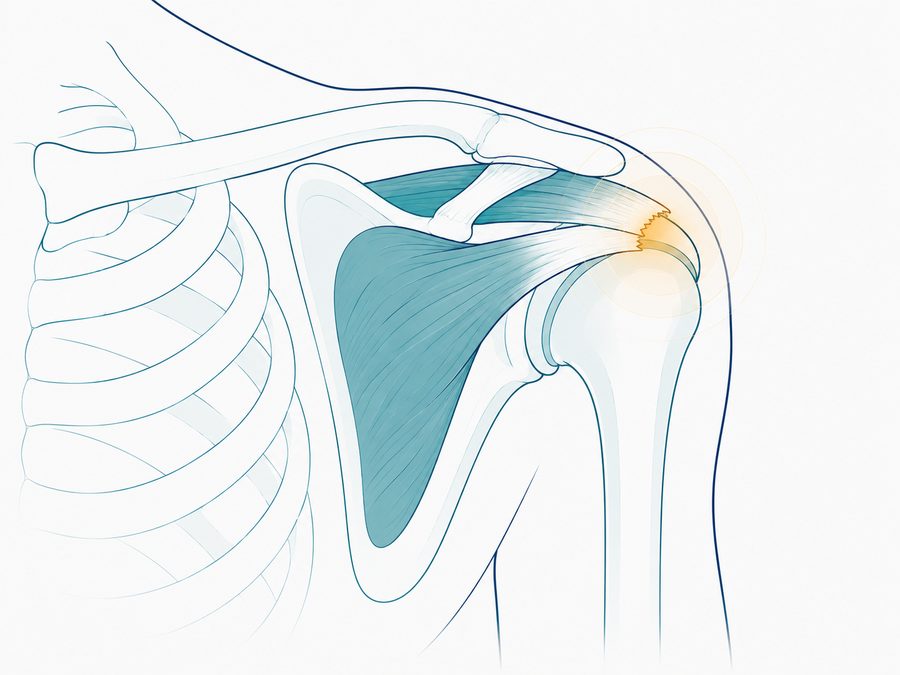
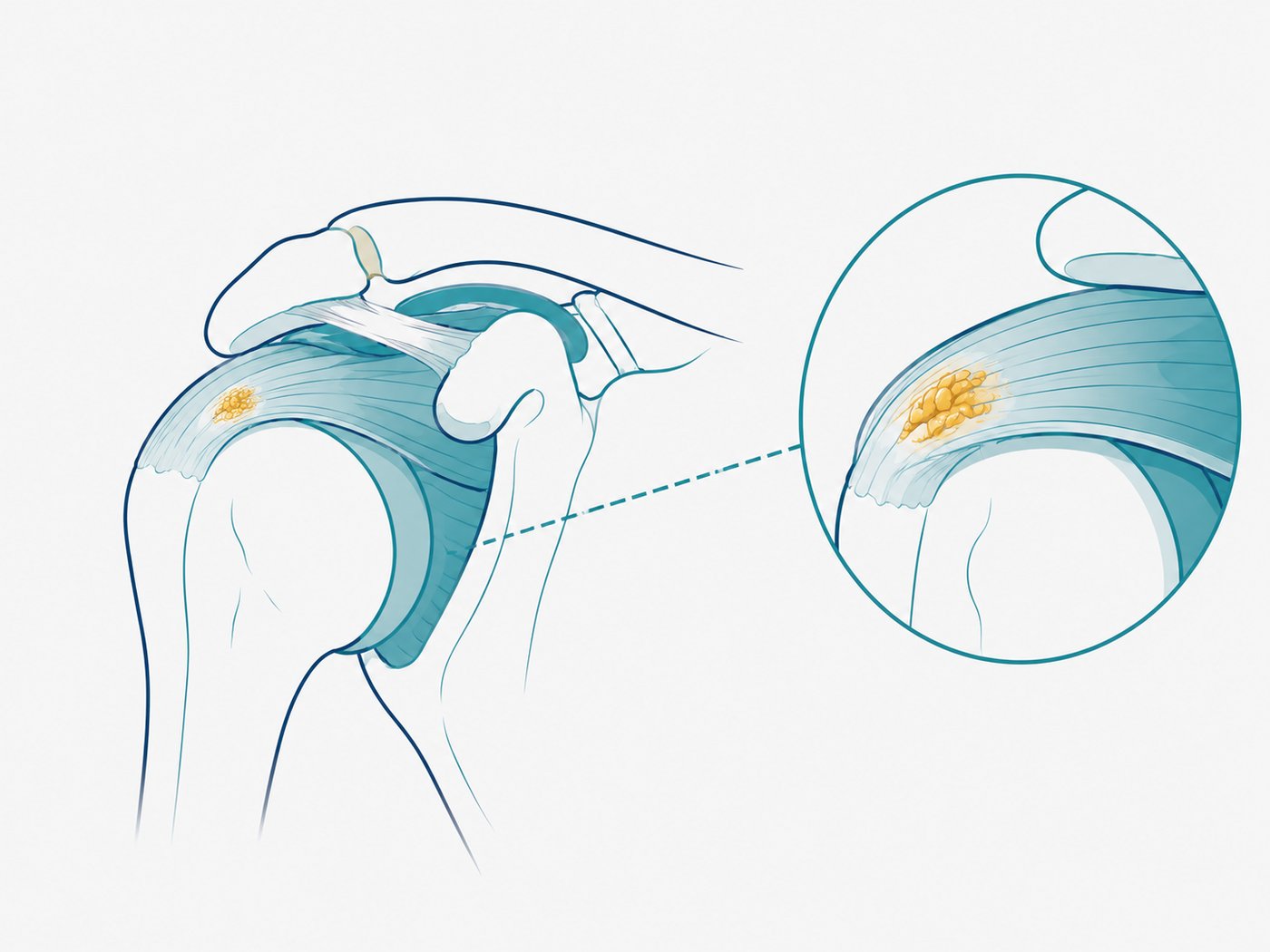
What is the rotator cuff?
The rotator cuff is a group of four tendons that stabilize the shoulder and let it lift the arm and make precise movements. Damage to one of them can cause pain, weakness, and limited movement - but partial and even full-thickness tears exist in plenty of people with no symptoms at all, especially as we age.
If the pain comes with significant weakness when lifting the arm out to the side (not just pain), that is important information that affects the clinical decision - worth noticing and describing precisely during the assessment.
How does it usually feel?
- Pain when lifting the arm.
- Difficulty reaching a high shelf.
- Weakness when carrying objects.
- Pain when lying on the shoulder.
- Pain that appears during simple everyday activities.
Does every tear require surgery?
No. Many people achieve significant improvement with conservative treatment. The decision depends on the size of the tear, your level of function, your age, your activity level and your personal goals - not only on what the imaging report says.
How can physiotherapy help?
The aim is to reduce pain, improve shoulder movement, strengthen the surrounding muscles (which can sometimes partly compensate for the damaged tendon) and restore confidence in using the arm. The treatment plan is personally tailored and changes according to the findings and the goals.
How long does it take to improve - and does the tear need to heal?
One of the first questions after discovering a tear is: can the tear close on its own?
In full-thickness degenerative tears, the tendon usually does not reattach anatomically by itself. But that does not mean the shoulder cannot improve.
Pain, strength, and function do not depend only on what imaging shows. Many people with a rotator cuff tear achieve meaningful improvement in pain and in the ability to use the arm through rehab, even while the tear itself is still visible on imaging.
With conservative care, change is usually measured over weeks and months, not after a handful of sessions. Improvement often starts to be felt during the first 6-12 weeks, and from there you keep building strength, endurance, and the capacity for the loads that matter to you.
If surgical repair is chosen, the recovery path is completely different: the repair is protected at first, and then movement, strength, and finally full activity are restored gradually, according to the type of tear and the surgeon's protocol.
When is an earlier surgical consult worth considering? For example, after a traumatic tear with significant loss of strength, in a young and active person, or when a meaningful limitation remains after an adequate period of conservative care.
Worth remembering: a change in pain is not a "snapshot" of the tendon: pain that continues does not necessarily mean the tear has grown, and improvement in pain does not prove the tear has changed anatomically. Decisions are made from the whole picture - your story, strength, function, the type of tear, imaging, and your goals.
Frequently asked questions
It depends on the type and size of the tear. That’s why function matters, not just the imaging result - some people function excellently even with a tear that never “closed”.
No. Keep moving the shoulder within your limits, with professional guidance - long immobilization only adds stiffness.
In many cases, yes, after appropriate rehabilitation and gradual loading - including strength training, matched to the size of the tear and to your goals.
Yes. In many people, pain and function improve meaningfully with rehab even while the tear is still visible on imaging - because how well the shoulder works does not depend only on what the scan shows.
What’s worth remembering?
A rotator cuff tear doesn’t necessarily mean you will need surgery. An accurate assessment, tailored treatment and a proper rehabilitation process can help many people return to activity and daily life.
- The rotator cuff is a group of four tendons that stabilize the shoulder and allow the arm to lift and move precisely.
- Significant weakness when lifting the arm out to the side, not just pain, is important information that affects the clinical decision.
- Tears become more common with increasing age, and not every tear requires surgery to function well.
Not sure if this is your situation? I’d be happy to give you a professional assessment and build a treatment plan that fits you.
Book a consultation callYou might also be interested in:
 Pain somewhere else?
Return to the interactive body map and pick an area
←
Pain somewhere else?
Return to the interactive body map and pick an area
←