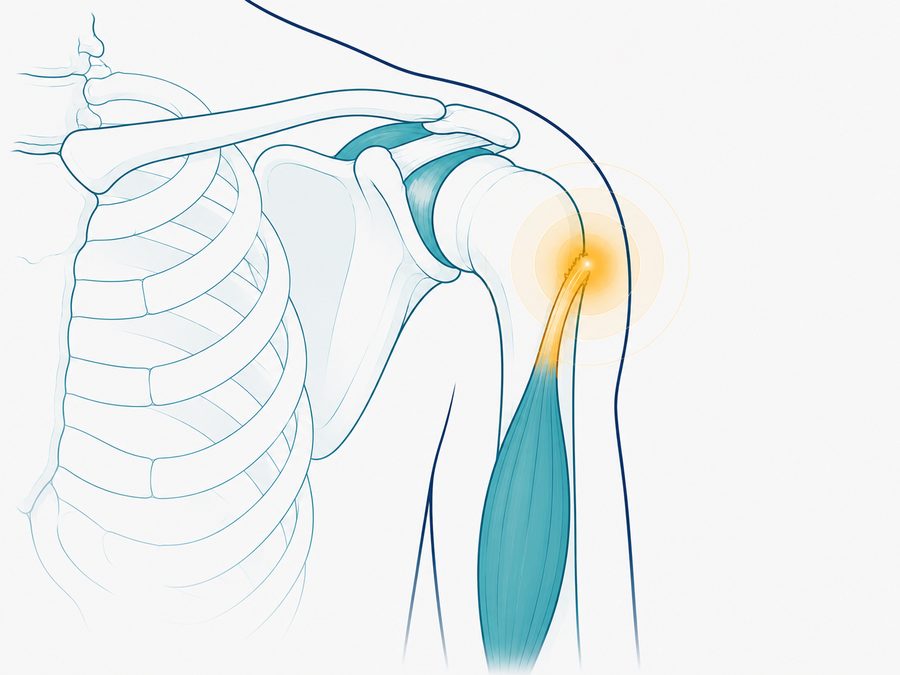
Biceps tendinopathy: when the pain sits right at the front of the shoulder
Pain at the front of the shoulder that appears with lifting, carrying or overhead movements.
Pain at the front of the shoulder doesn’t always come from the joint itself - sometimes the source is the biceps tendon, a specific point that is easy to miss in a superficial assessment.
Pain at the front of the shoulder doesn’t always come from the muscles or from the joint itself. In many cases the source of the pain is the biceps tendon, particularly in people who perform repetitive overhead movements, lift weights or play sport. Quite a few patients come to me after already having their “shoulder” treated in general terms without success - because the pain sits at one specific point that is easy to miss in a superficial assessment.
What is biceps tendinopathy?
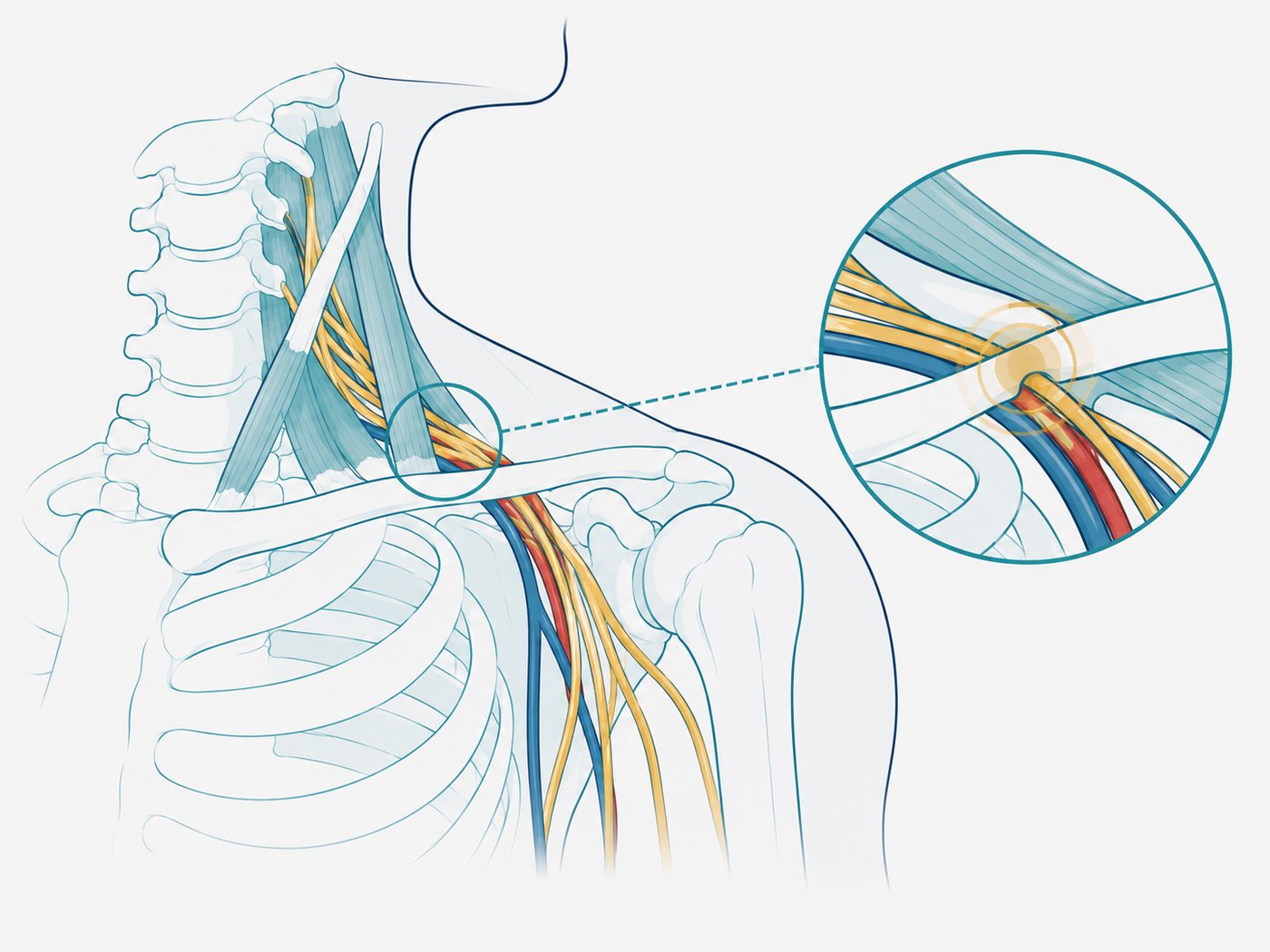
The biceps tendon runs through the front of the shoulder and contributes to movement of both the shoulder and the elbow. When repetitive or prolonged load is applied to it - whether from strength training, sport or even working with the hands above shoulder height - pain and tenderness can appear in the area. Keep in mind that in most cases this isn’t classic “inflammation” but a process of overload on the tendon that requires gradual management, not just rest.
Try pressing gently on the bony prominence at the front of the shoulder, around 5 cm below the joint - if that is exactly the tender spot, it points toward a diagnosis of the biceps tendon and is worth telling me about.
How does it usually feel?
- Pain at the front of the shoulder.
- Pain when lifting the arm.
- Tenderness to touch.
- Pain when lifting weight.
- Discomfort with overhead movements.
How can physiotherapy help?
After an accurate assessment, I build a plan that includes adjusting loads - not stopping completely, but a temporary reduction to a level the tendon can cope with - progressive strengthening exercises that rebuild the tendon’s tolerance to load, and guidance on returning gradually to activity. The aim is to reduce the pain and improve shoulder function for the long term, not just to settle it temporarily.
Frequently asked questions
Not always. It’s usually possible to make temporary adjustments - avoiding overhead movements, for example - and continue with suitable activity.
Sometimes it improves, but if the pain lasts beyond a few weeks or returns every time you go back to activity - get assessed and start structured treatment.
In most cases yes, after rehabilitation and gradual loading - and in most cases part of your training can be maintained during treatment as well.
What’s worth remembering?
Pain at the front of the shoulder isn’t something worth ignoring. Early assessment and appropriate treatment can help you return to activity safely, usually without needing a long break from sport.
- The biceps tendon responds to repetitive or prolonged load from strength training, sport or working with the hands above shoulder height.
- It’s identified by focal pain and tenderness at the bony prominence at the front of the shoulder, around 5 cm below the joint.
- Treatment focuses on gradually adjusting loads rather than stopping activity completely.
Not sure if this is your situation? I’d be happy to give you a professional assessment and build a treatment plan that fits you.
Book a consultation callYou might also be interested in:
 Pain somewhere else?
Return to the interactive body map and pick an area
←
Pain somewhere else?
Return to the interactive body map and pick an area
←