Shoulder impingement: why does this exact movement hurt?
Pain that appears mainly when raising the arm out to the side or overhead.
Shoulder impingement syndrome is a common condition that causes pain when raising the arm. Professional understanding of it has been updated in recent years: the best-supported treatment is structured exercise and strengthening, and surgery has not shown an advantage over it in most cases.
Quite a few people say the shoulder barely hurts at rest, but the moment they try to take a glass out of the cupboard, hang laundry or raise the arm: the pain appears. One possible reason for this is shoulder impingement syndrome. This is exactly the kind of pain that leads people to “work around it” and find ways to avoid the painful movement, which usually only postpones dealing with the problem itself.
What is impingement syndrome?
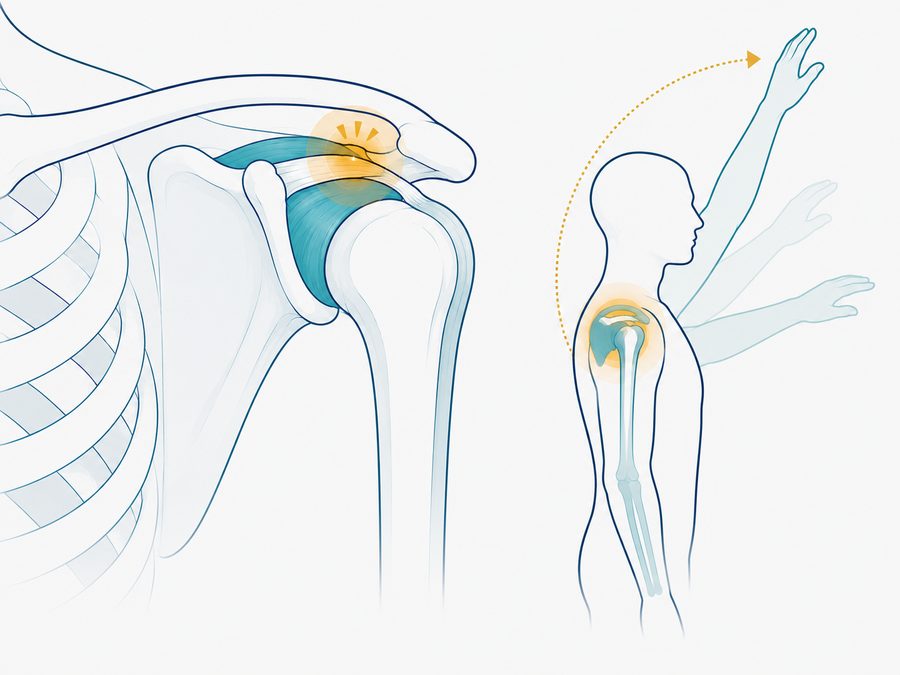
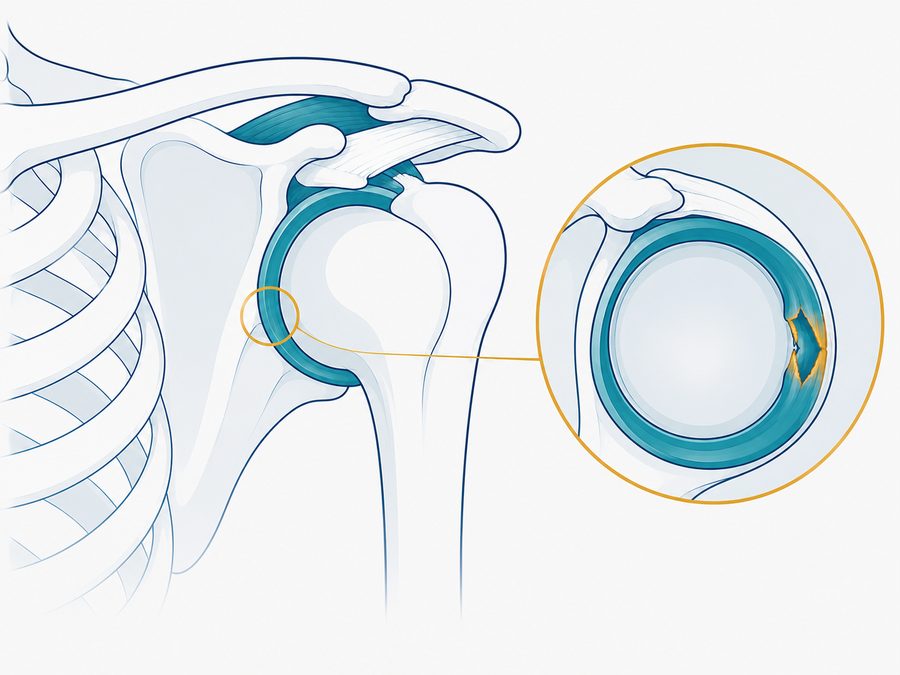
This is a condition in which the tissues passing through the upper part of the shoulder are compressed during certain movements, mainly in the range between raising the arm out to the side and raising it overhead.
The condition can develop gradually from repetitive load and weakness in the shoulder muscles that are meant to stabilize the joint during movement, but also after an acute injury.
One thing worth updating: this explanation has changed in recent years. It used to be thought this was mainly bone compressing tendon, but the picture is more complex. Studies found the space in the area isn’t smaller in people with pain than in people without it - which is why many professionals now prefer the term “rotator cuff related shoulder pain” over “impingement”. The familiar name stays in use because it describes the pain pattern well, but it doesn’t necessarily describe the cause.
And why does this matter to you in practice? Because the treatment approach follows from it: surgery to widen the space has not shown an advantage over structured exercise or over placebo surgery in high-quality studies. In other words, in most cases the right direction is to strengthen, improve movement control and increase loads gradually, rather than rushing to the operating theatre.
Notice whether the pain appears mainly in the mid-range (roughly shoulder height) and less at the ends of the movement - that is a pattern characteristic of impingement, and important information worth sharing with me.
How does it usually feel?
The area marked in gold is the range in which pain is most common - roughly shoulder height.
How can physiotherapy help?
Treatment begins with understanding the source of the pain and the movements that make it worse, through an accurate assessment.
After that, we build a plan: improving range of motion, strengthening the rotator cuff muscles through personally tailored exercise, and guidance on returning safely to activity.
Frequently asked questions
No. Other conditions can cause similar symptoms - like tendinopathy or a problem in the joint itself - so it’s better to get assessed than to assume it’s always the same thing.
Not always. Sometimes it is enough to adjust the type of exercises and the load - avoiding the movements that hurt and continuing with the rest.
In many cases, yes, especially when appropriate treatment starts in good time - most cases respond well to structured conservative treatment.
What’s worth remembering?
Shoulder pain doesn’t have to become a chronic problem. Early assessment, load adjustment and physiotherapy can help you return to safe movement and daily activity.
- Impingement syndrome is compression of tissues in the shoulder during movement, mainly in the range between raising the arm out to the side and raising it overhead.
- It’s identified mainly by pain when raising the arm, putting on a shirt or lying on the shoulder.
- If the pain keeps recurring or doesn’t improve, an assessment is advisable - early diagnosis significantly improves the chances of recovery.
Not sure whether this really is impingement syndrome? I’d be happy to give you a professional assessment and build a treatment plan that fits you.
Book a consultation callRead more on the subject
 Pain somewhere else?
Return to the interactive body map and pick an area
←
Pain somewhere else?
Return to the interactive body map and pick an area
←