Shoulder labral tear: not all shoulder pain comes from the muscles
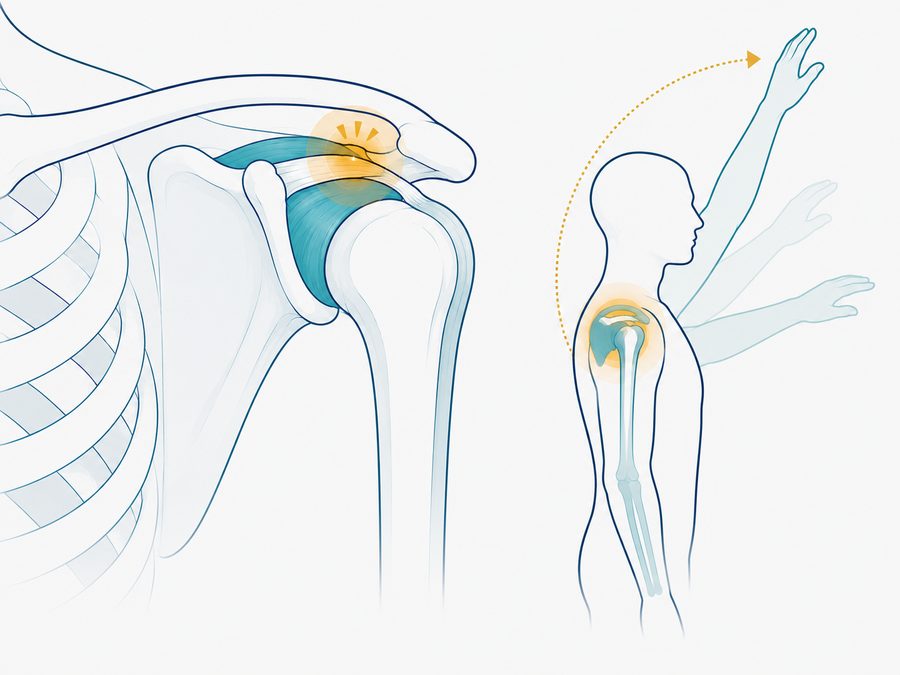
Deep shoulder pain that appears when raising the arm, throwing or with overhead movements.
Labral pain is hard to “point at” with a finger - deep, diffuse, and it isn’t always clear what exactly provokes it; quite a few people come in after months of pain before the source is identified.
Quite a few people come for assessment after months of shoulder pain. They feel clicking, a lack of confidence or pain that appears mainly when raising the arm or during sport. Sometimes the source of the problem isn’t in the tendons, but rather in the labrum: a ring of cartilage that helps stabilize the shoulder joint. This is exactly the kind of pain that is hard to “point at” with a finger - deep, diffuse, and it isn’t always clear what exactly provokes it.
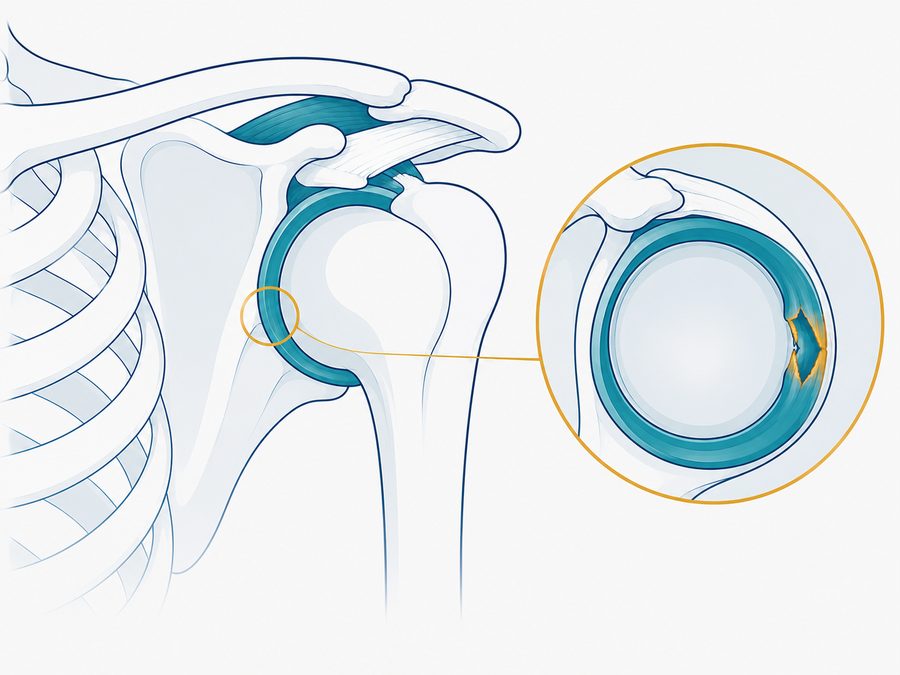
What is the labrum?
The labrum is a ring of cartilage that surrounds the socket of the shoulder joint and contributes to its stability, similar to the role the labrum also plays in the hip joint. Damage to it can appear after a fall, a shoulder dislocation, or following repetitive load in people who perform a lot of overhead movements - such as throwing, swimming or lifting weights overhead.
If the pain or the catching sensation appears mainly with a rotating movement combined with elevation (such as throwing a ball), that points toward the labrum rather than only the tendons - an important detail to tell me during the assessment.
How does it usually feel?
- Deep pain inside the shoulder.
- Clicking or a “catching” sensation.
- Pain when throwing or raising the arm.
- Weakness or a lack of confidence in movement.
- Difficulty with sporting activity.
Does every tear require surgery?
No. Some people manage to return to full function with conservative treatment and physiotherapy, and not every tear visible on an MRI is symptomatically active. The decision about surgery depends on the type of tear, your activity level, your age and your personal goals.
How can physiotherapy help?
The goal is less pain, a more stable shoulder, stronger muscles around it, and confidence in movement again. We tailor the rehab program to each patient, based on the examination and their goals - no two patients with a “labral tear” get exactly the same program.
Frequently asked questions
In some cases yes, after adjusting the load and the exercises - complete avoidance of activity is usually not required and doesn’t always help.
An MRI helps a lot, but combine it with a clinical examination - small tears also show up in people with no symptoms at all.
Sometimes it improves, but if the pain doesn’t pass or gets in the way of daily life - get assessed rather than wait with endless patience.
What’s worth remembering?
A labral tear isn’t the end of the road. The right assessment, a suitable rehabilitation program and patience can help many people return to work, training and daily activity.
- The labrum is a ring of cartilage that stabilizes the shoulder joint, similar to its role in the hip joint.
- Damage to it can appear after a fall, a dislocation, or repetitive load in people who perform a lot of overhead movements such as throwing or swimming.
- Pain or a “catching” sensation with a rotating movement combined with elevation (such as throwing a ball) points toward the labrum rather than only the tendons.
Not sure if this is your situation? I’d be happy to give you a professional assessment and build a treatment plan that fits you.
Book a consultation callYou might also be interested in:
 Pain somewhere else?
Return to the interactive body map and pick an area
←
Pain somewhere else?
Return to the interactive body map and pick an area
←