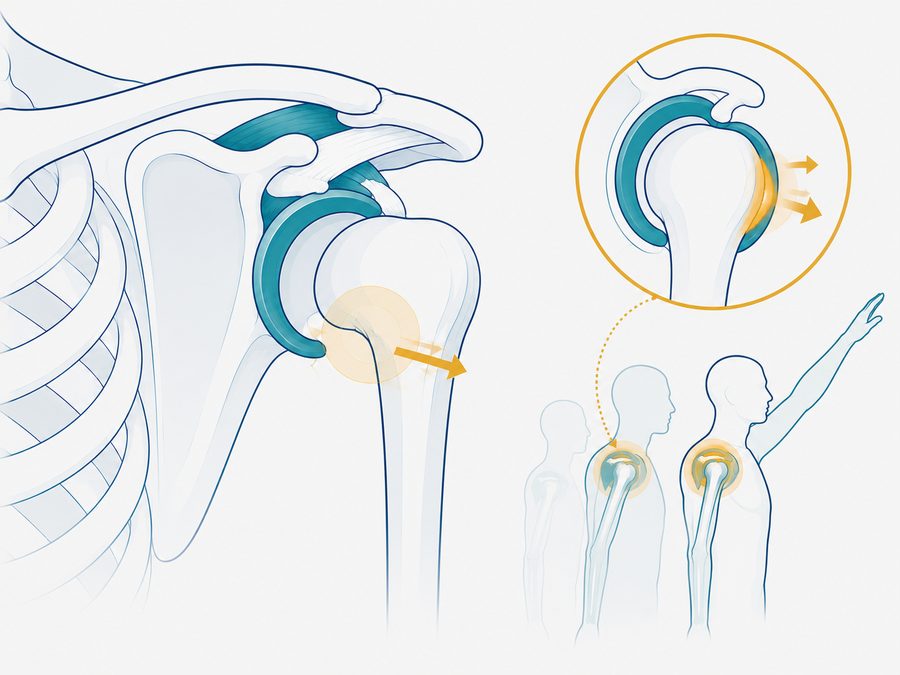
Shoulder instability: when confidence in movement is lost
A feeling that the shoulder gives way, pain or fear of performing certain movements after a dislocation.
After a first shoulder dislocation, the fear of “what if it happens again” sometimes limits people more than the pain itself - and working on confidence in movement is a central part of rehabilitation, not just strengthening muscles.
After a first shoulder dislocation, some people return to their routine without difficulty, while others start to feel that the shoulder “gives way” or is about to come out again. A feeling of instability can also appear without a full dislocation and affect work, sport and daily activities. That fear - “what if it happens again” - sometimes limits people more than the pain itself, and I give it no less attention than the physical strength.
What is shoulder instability?
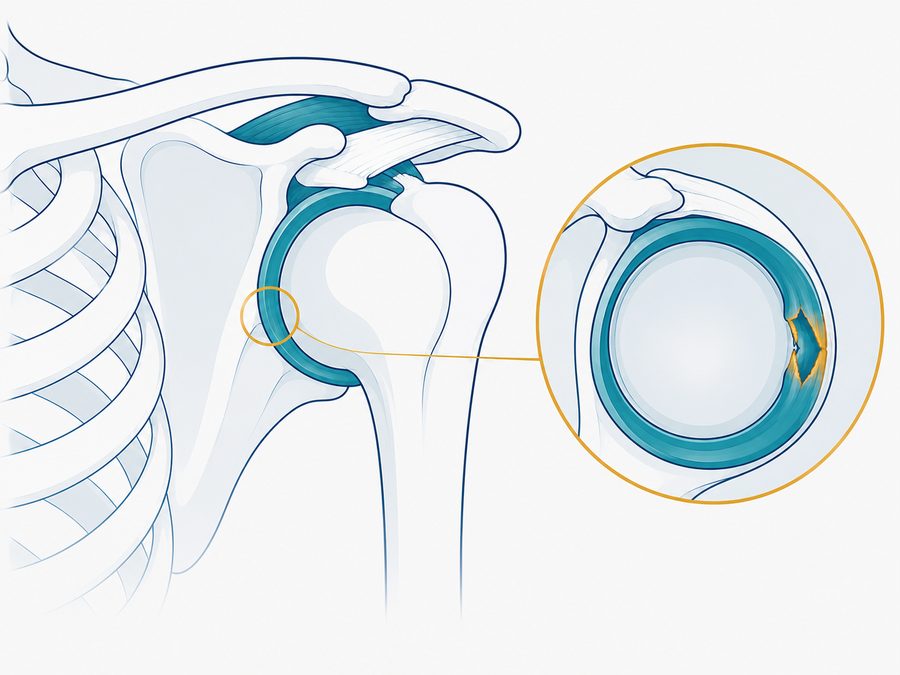
Instability is a condition in which the shoulder joint doesn’t feel as stable as it used to. It can appear after a dislocation, following an injury, or because of relative laxity of the tissues that stabilize the joint - the shoulder is a joint built for a large range of motion at the expense of structural stability, and so it depends heavily on the muscles to compensate.
If you systematically avoid certain movements (such as raising your arm overhead) out of fear, that matters no less than the physical sensation itself - working on confidence in movement is a central part of rehabilitation, not just strengthening muscles.
How does it usually feel?
- A feeling that the shoulder gives way.
- Fear of raising the arm.
- Pain with certain movements.
- A feeling of insecurity.
- Sometimes recurrent dislocations.
How can physiotherapy help?
The rehabilitation program focuses on strengthening the stabilizing muscles of the shoulder, improving movement control and restoring confidence in performing daily and sporting activities - gradually, so that confidence builds together with physical capacity rather than running too far ahead of it.
Frequently asked questions
Not necessarily, but in some people - particularly at younger ages and in certain sports - there is a higher risk of recurrent dislocations, which is why full rehabilitation matters so much.
In many cases, yes, after appropriate rehabilitation and depending on the type of activity - contact sports or those involving overhead movements usually require more comprehensive rehabilitation.
No. The decision depends on age, activity level, the type of injury and the number of dislocations - it is a shared decision with the medical team, not an automatic one.
What’s worth remembering?
A feeling of instability in the shoulder isn’t something worth ignoring. The right assessment and tailored rehabilitation can reduce the risk of recurrent dislocations and restore confidence in movement.
- The shoulder is a joint built for a large range of motion at the expense of structural stability, and so it depends heavily on the muscles to compensate.
- A feeling of instability can appear even without a full dislocation, and significantly affect work, sport and daily activities.
- Systematically avoiding certain movements (such as raising the arm overhead) out of fear is an important part of the clinical picture, no less than the physical sensation.
Not sure if this is your situation? I’d be happy to give you a professional assessment and build a treatment plan that fits you.
Book a consultation callYou might also be interested in:
 Pain somewhere else?
Return to the interactive body map and pick an area
←
Pain somewhere else?
Return to the interactive body map and pick an area
←