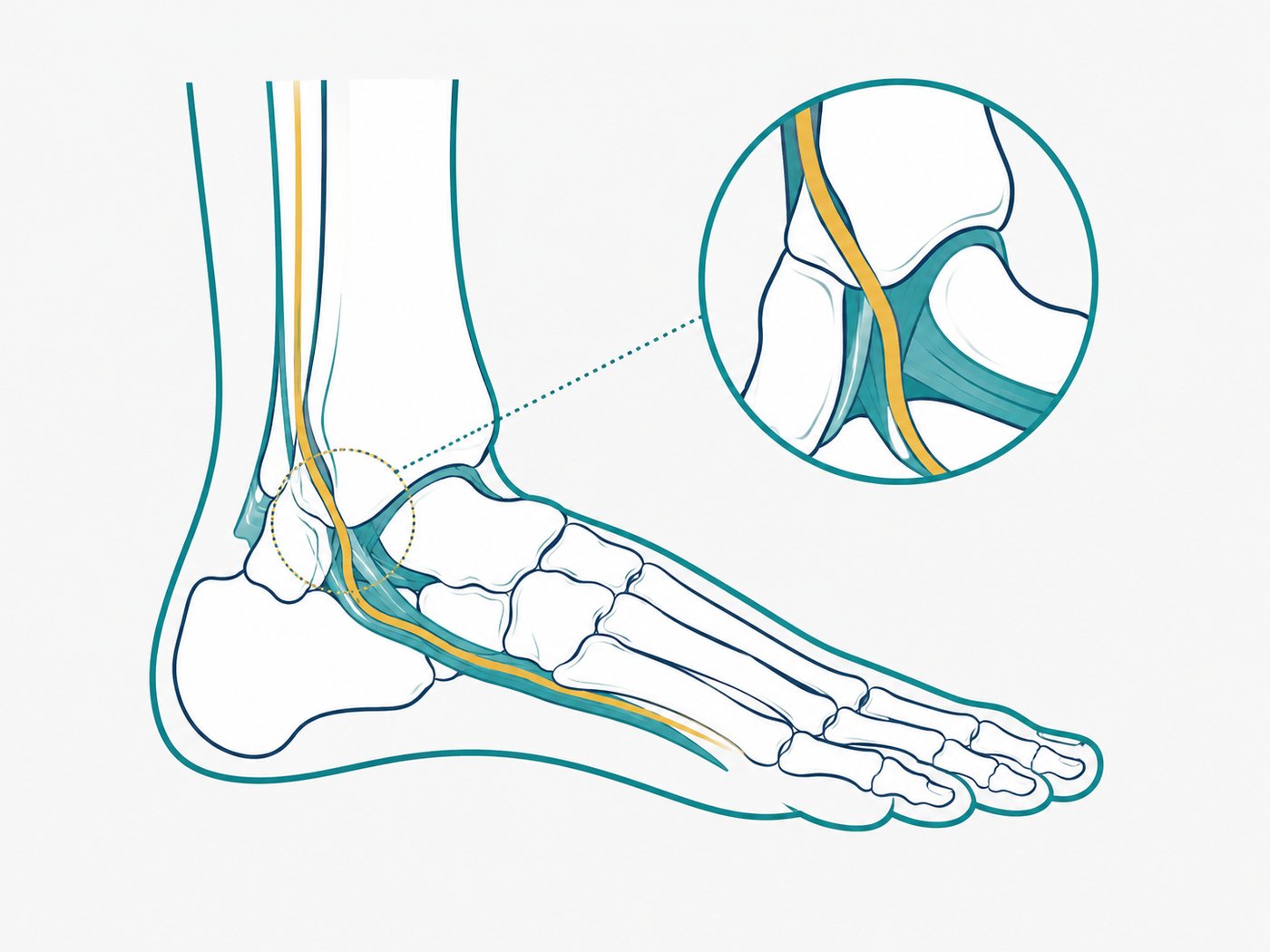
Tarsal tunnel syndrome: the foot’s 'Carpal tunnel'
Pressure on a nerve in a tunnel on the inner side of the ankle - a direct parallel to carpal tunnel syndrome, but in the foot.
Tarsal tunnel syndrome is the foot’s version of carpal tunnel syndrome - a nerve compressed inside a narrow tunnel, this time at the ankle.
If you have numbness, burning or tingling in the foot, mainly in the sole and the toes, that worsens with prolonged standing or walking - this may be tarsal tunnel syndrome: pressure on the tibial nerve as it passes through a narrow tunnel on the inner side of the ankle.
This is the same pattern as carpal tunnel syndrome at the wrist - a nerve compressed inside a narrow anatomical tunnel - only here it happens in the foot, which is why it’s sometimes called the “carpal tunnel of the foot”.
How does it usually feel?
Symptoms can vary, but many describe:
- Numbness, burning or tingling in the foot, mainly in the sole.
- Pain along the inner side of the ankle that can radiate into the foot.
- Worsening with prolonged standing or walking.
- Sometimes worsening at night too, similar to carpal tunnel in the hand.
- A mild “electric” sensation when tapping the inner area of the ankle.
Gentle tapping on the inner side of the ankle, behind the prominent bone, that produces an “electric” sensation radiating into the foot - this is an important, directive clinical sign for the tarsal tunnel.
What causes tarsal tunnel syndrome?
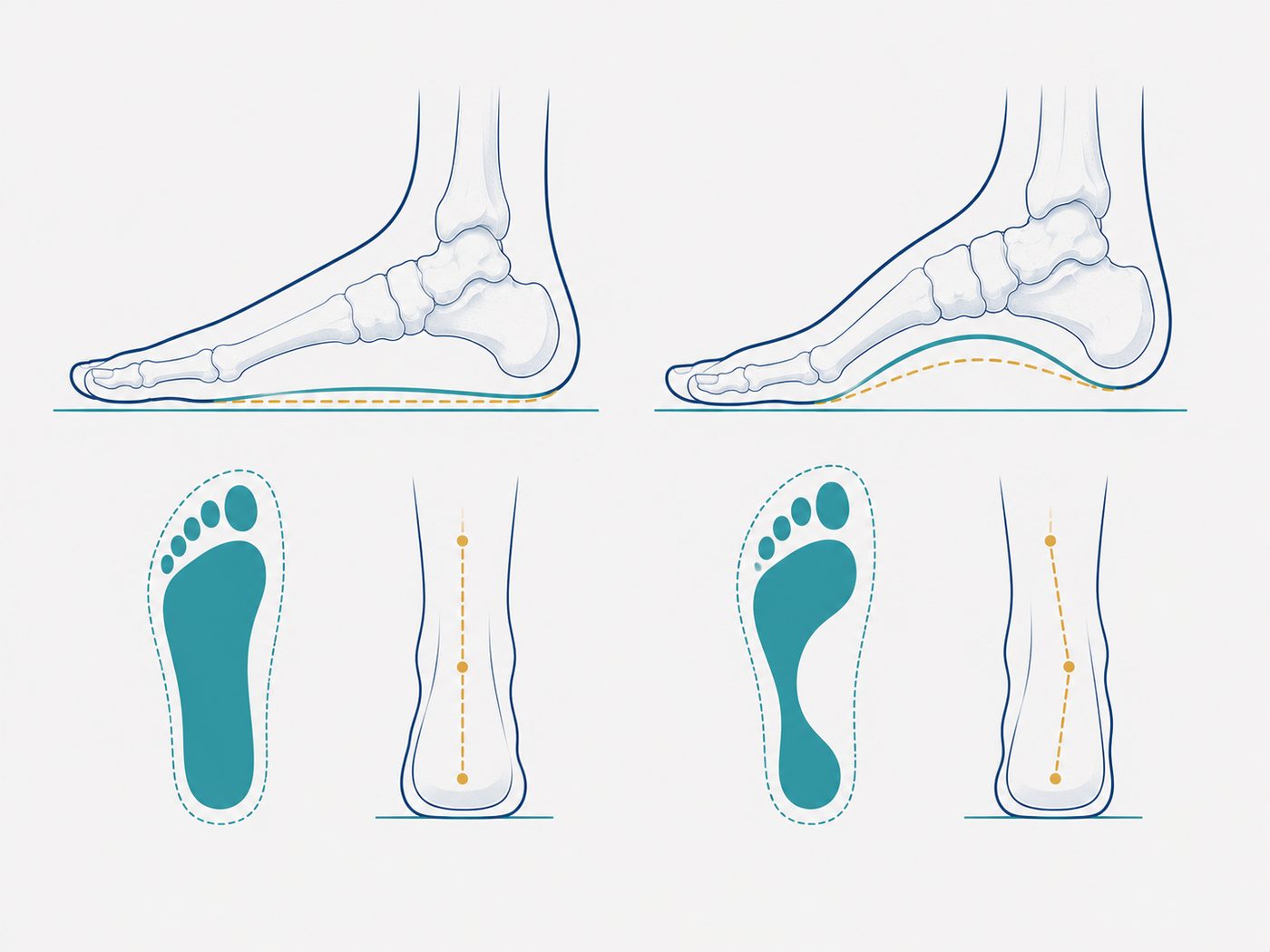
Anything that narrows this tight tunnel can cause pressure on the nerve - local swelling, a flat foot that changes the angle of the ankle, a small benign growth inside the tunnel, or simply repetitive, unsuitable load on the foot over time.
How can physiotherapy help?
Treatment focuses on reducing the pressure in the tunnel, usually by fitting an orthotic that corrects the angle of the ankle if there is a flat foot, gentle release of the tissues around the tunnel, and strengthening the muscles that support the arch of the foot. In most people there is significant improvement with targeted, early treatment.
When should you get checked?
If the numbness becomes constant, weakness develops in the foot muscles, or the symptoms don’t improve at all after several weeks of treatment - see an orthopedic specialist and consider nerve conduction studies.
Frequently asked questions
A very similar mechanism, only in a different location - here the tibial nerve at the ankle, there the median nerve at the wrist.
Yes, in many cases, mainly where there is a flat foot contributing to the pressure in the tunnel.
Only in cases that have not responded to prolonged conservative treatment, or where there is a clear cause inside the tunnel requiring surgical release.
What’s worth remembering?
Tarsal tunnel syndrome is the less well-known counterpart of the carpal tunnel - and identifying it early can prevent chronic, persistent symptoms.
- The tibial nerve is compressed in a narrow anatomical tunnel on the inner side of the ankle, similar to the mechanism in the carpal tunnel.
- It’s identified by numbness, burning or tingling in the sole of the foot that worsens with prolonged standing or walking.
- Gentle tapping on the inner side of the ankle that produces a radiating “electric” sensation is an important, directive clinical sign.
Not sure if this is your situation? I’d be happy to give you a professional assessment and build a treatment plan that fits you.
Book a consultation callYou might also be interested in:
 Pain somewhere else?
Return to the interactive body map and pick an area
←
Pain somewhere else?
Return to the interactive body map and pick an area
←