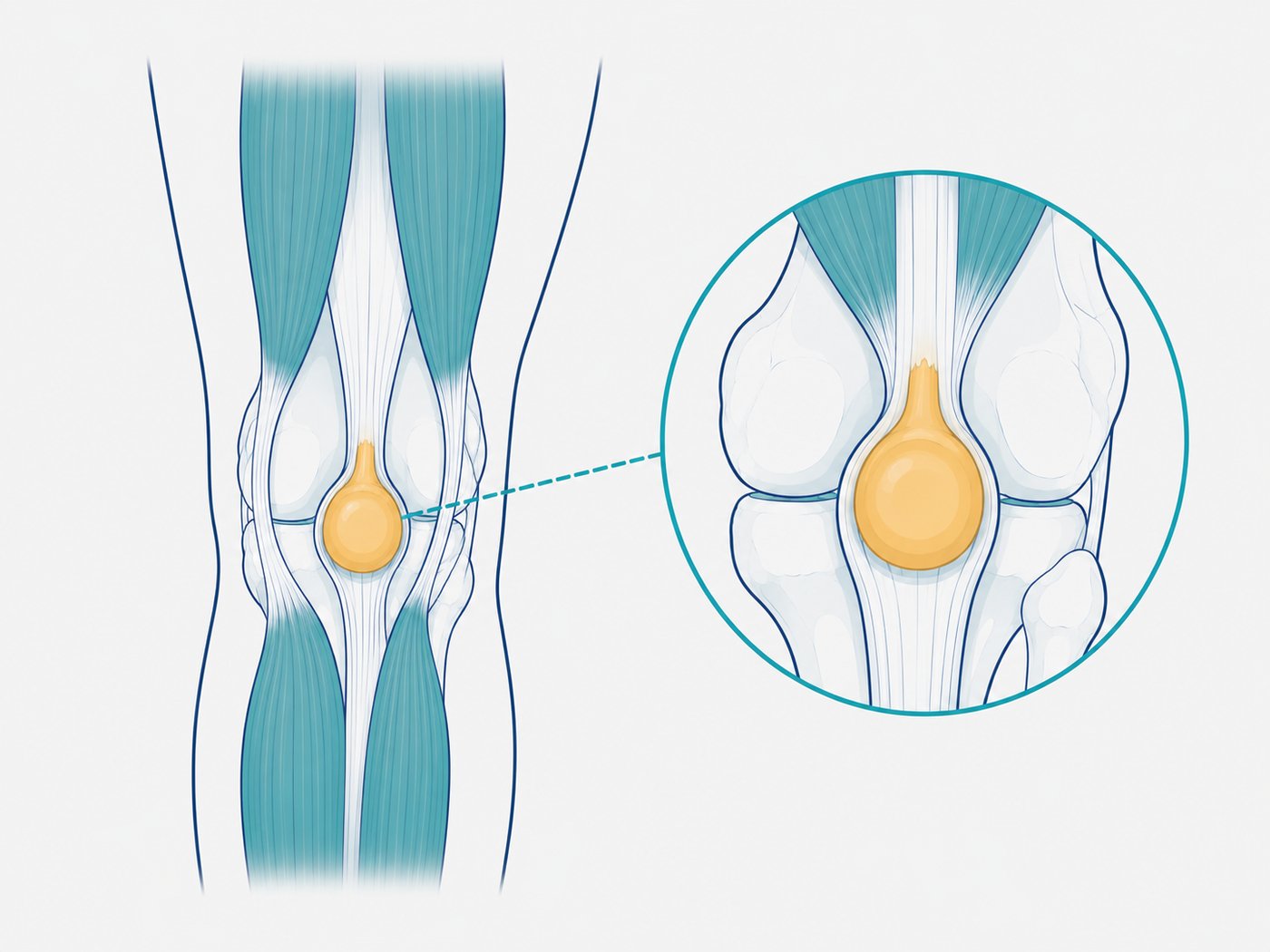
Baker’s cyst: the common swelling behind the knee
Soft swelling behind the knee that causes concern - in most cases it is the result of another problem in the knee rather than a problem in its own right.
A Baker’s cyst - soft swelling behind the knee - is in most cases the result of another problem inside the knee joint, rather than a problem in its own right.
If you have noticed a soft, prominent swelling behind the knee that causes a feeling of stretching or discomfort in full flexion - this is probably a Baker’s cyst: a fluid-filled sac that forms at the back of the knee.
This is one of the most common questions patients ask, and it is usually not a problem “in its own right” but the result of something else happening inside the knee joint - which is why it matters to understand the source.
How does it usually feel?
Symptoms can vary, but many describe:
- Soft, prominent swelling at the back of the knee.
- A feeling of stretching or pressure, mainly in full knee flexion.
- Sometimes mild discomfort with prolonged standing or walking.
- In most cases no sharp pain, but rather a dull sense of discomfort.
- Sometimes the cyst grows or shrinks in size over time.
If the cyst also comes with pain, swelling, or a locking sensation inside the knee itself - check what’s happening inside the joint, because the cyst is probably a result rather than the original cause.
What causes a Baker’s cyst?
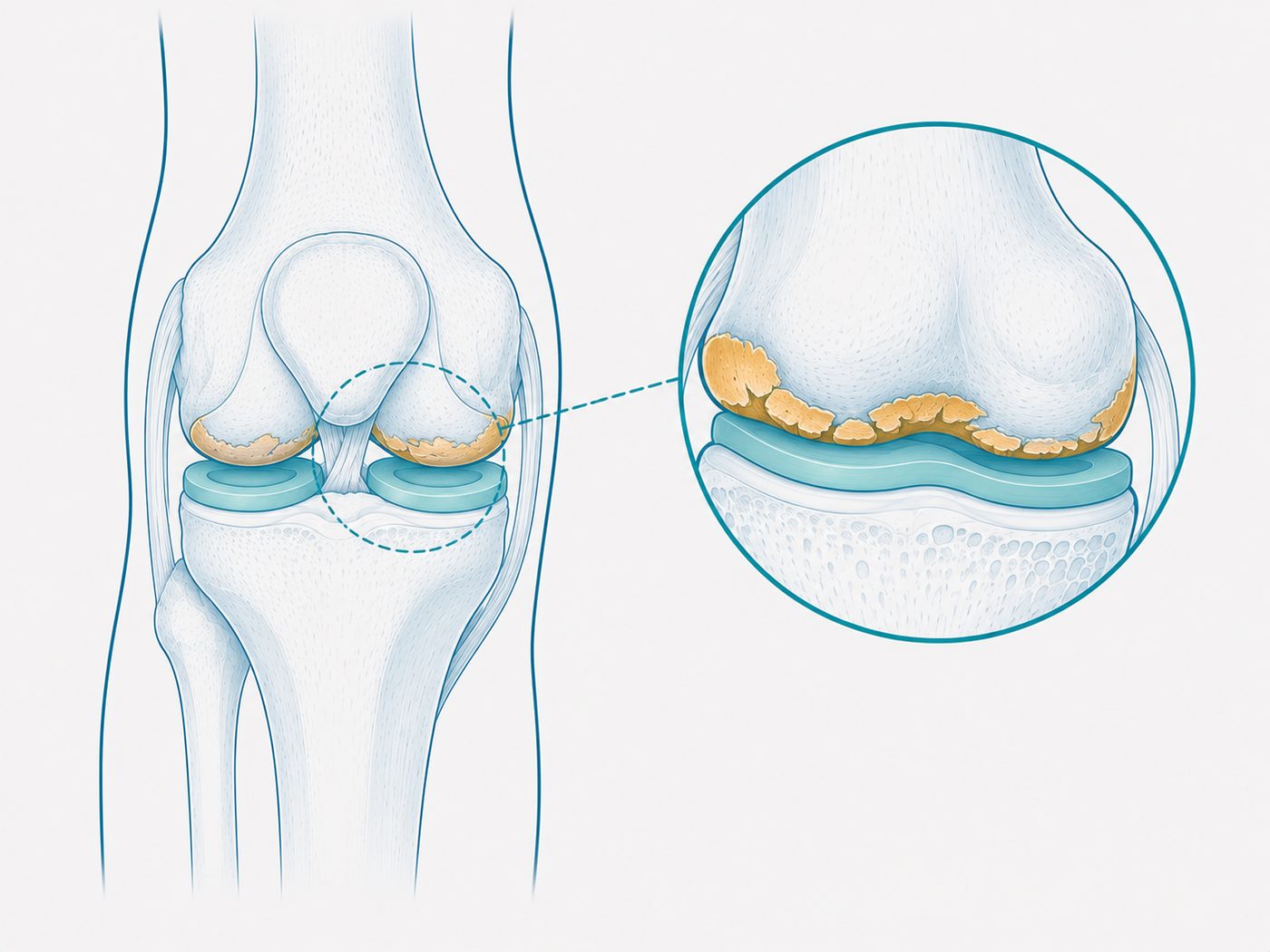
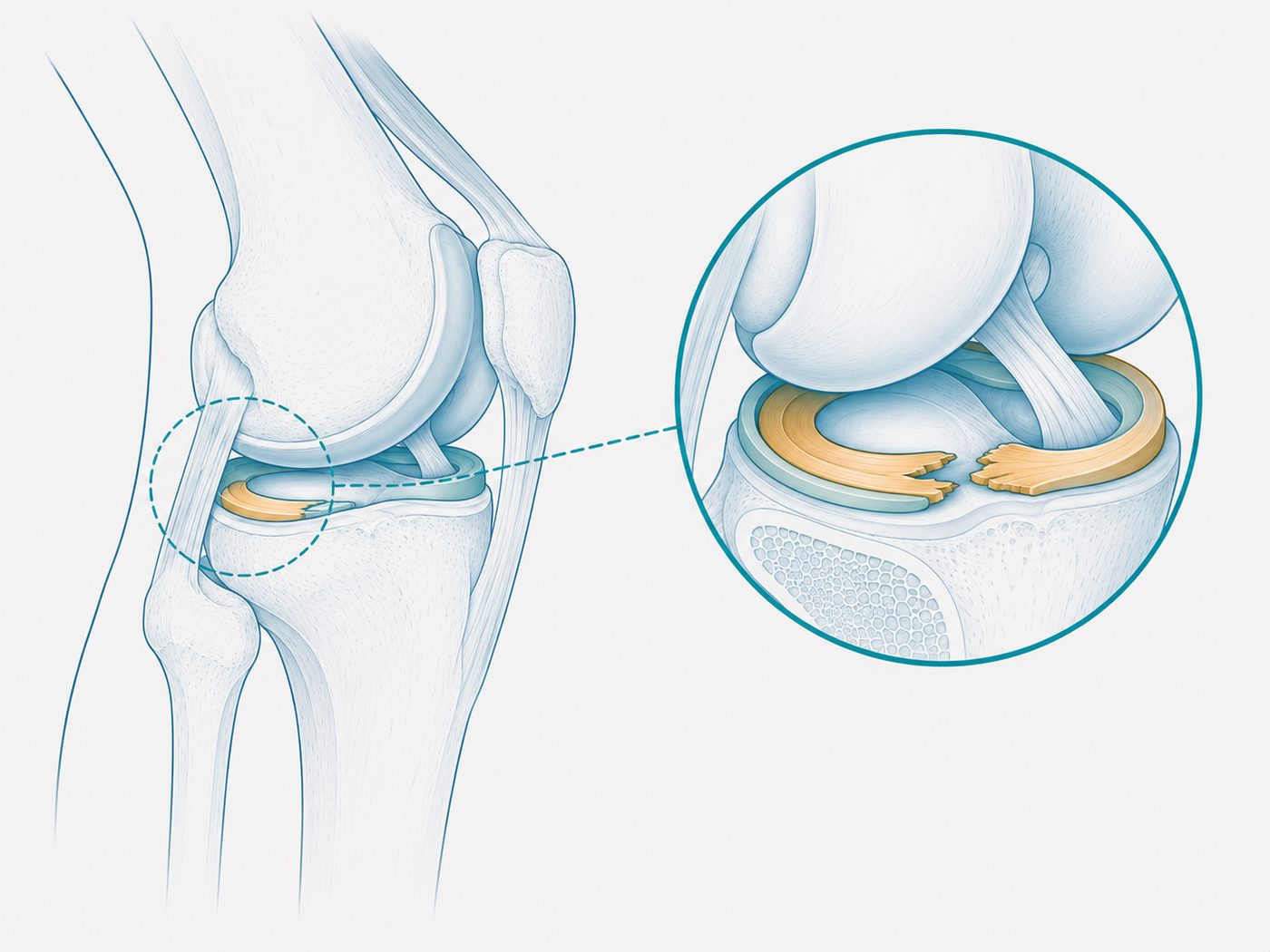
A Baker’s cyst usually forms as a result of excess fluid inside the knee joint, arising from another condition such as cartilage wear, a meniscus tear or internal inflammation in the joint. The fluid “leaks” into a natural sac at the back of the knee and creates the visible swelling.
How can physiotherapy help?
Because the cyst itself is usually the result of another problem, the most effective treatment focuses on assessing and treating the original cause inside the joint - for instance strengthening in cartilage wear, or rehabilitation after a meniscus injury. When the original cause is treated, the cyst tends to shrink on its own.
When should you get checked?
If the cyst grows rapidly, comes with significant local redness and heat, or there is sudden sharp pain in the calf - seek medical assessment, to rule out a ruptured cyst or another condition requiring urgent treatment.
Frequently asked questions
Sometimes yes for temporary relief, but without treating the original cause in the knee, the fluid tends to come back.
In most cases, no - but identify and treat what’s causing the excess fluid inside the joint.
If the original cause is treated successfully, yes - the cyst tends to shrink and gradually disappear.
What’s worth remembering?
A Baker’s cyst is in most cases the result of another problem inside the knee joint - the most effective treatment always focuses on the source rather than only on the cyst itself.
- The cyst forms from excess fluid in the knee joint arising from another condition, such as cartilage wear or a meniscus tear.
- The most effective treatment focuses on assessing and treating the original cause inside the joint, not the cyst itself.
- When the original cause is treated, the cyst tends to shrink on its own; rapid growth with redness and heat requires medical assessment.
Not sure if this is your situation? I’d be happy to give you a professional assessment and build a treatment plan that fits you.
Book a consultation callYou might also be interested in:
 Pain somewhere else?
Return to the interactive body map and pick an area
←
Pain somewhere else?
Return to the interactive body map and pick an area
←