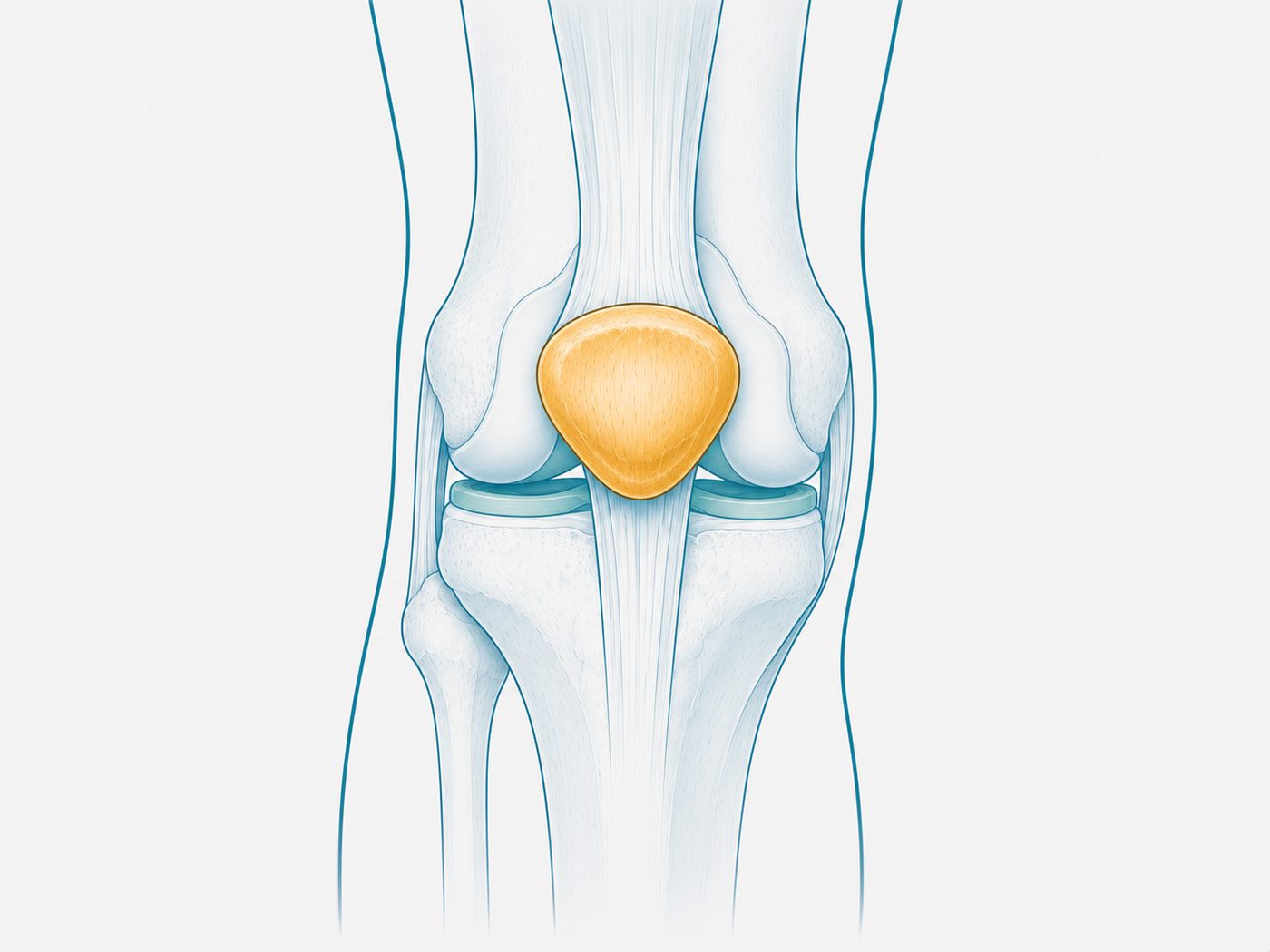
Pain at the front of the knee - why does it happen?
Pain at the front of the knee that shows up on stairs, when running or after sitting.
Pain at the front of the knee (patellofemoral pain) is one of the most common reasons people come to a physiotherapist - and contrary to what most people assume, in the majority of cases it has nothing to do with worn cartilage at all.
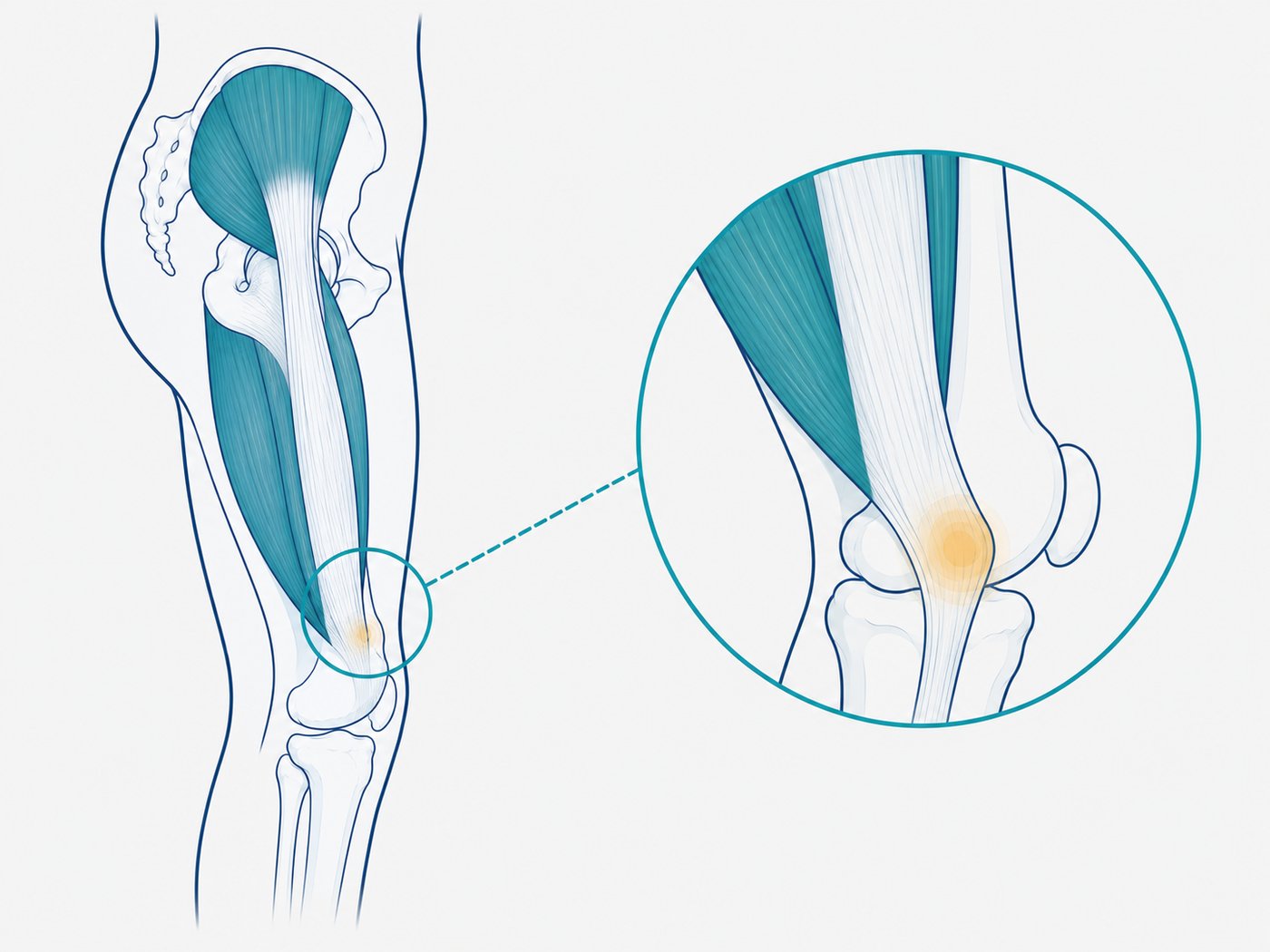
Pain at the front of the knee, also known as Patellofemoral Pain, is one of the most common reasons people come to a physiotherapist. The pain is usually felt around or behind the kneecap, and it shows up in runners, gym-goers, footballers and also in people who aren’t physically active regularly.
The pain typically increases with activities that load the patellofemoral joint, such as going up and down stairs, standing up after sitting for a long time, kneeling, squatting, jumping or running. Sometimes it appears only after activity, and in other cases it is felt during it as well.
What is actually causing the pain?
If the pain shows up going down stairs more than going up, that points precisely toward the patellofemoral joint - because descending requires eccentric braking, which loads this area more than any other movement.
One of the most common questions is: “What is actually hurting in there?” Contrary to what people tend to think, in most cases the pain doesn’t come from worn cartilage. In fact, articular cartilage itself contains no nerve endings and therefore isn’t a direct source of pain.
The pain usually comes from other tissues around the joint that do contain nerve endings and are sensitive to load. These include the lining of the joint, the fat pad below the kneecap, the ligaments, the tendons, and the bone beneath the cartilage. When these tissues are loaded beyond what they can handle, they become sensitive and start to hurt.
In most cases the problem isn’t a “worn-out knee” or a “kneecap out of place”, but rather a situation in which the load on the patellofemoral joint is greater than the tissues’ ability to adapt to it. This can follow a sharp increase in training volume or intensity, returning to activity too quickly after an injury, a change in the type of training, or even accumulated loads from daily life. When the tissues don’t have time to adapt to the load, they become more sensitive - and then activities such as climbing stairs, squatting, running or standing up from a chair can start to hurt.
One of the common mistakes is stopping all activity completely out of fear of making things worse. On the other hand, ignoring the pain and continuing at the same intensity can also delay recovery. In most cases the solution lies in the middle - adjusting loads, continuing activity at the right dose and performing exercises that help the tissues adapt again.
How can physiotherapy help?
During the assessment we look at when the pain began, which activities make it worse, and how your body handles load. Very often the source isn’t the knee itself, but weakness or poor control at the hip, pelvis, or ankle. That’s why treatment doesn’t focus only on the painful spot - it looks at the whole movement chain to find what led to the pain.
Physiotherapy can help reduce pain, improve strength and muscular control, and adjust loads so the tissues can go back to handling activity better. With a personal rehabilitation plan and a gradual return to activity, most patients can get back to sport and daily life without pain and without needing invasive treatments.
Pain at the front of the knee is common, but in most cases it can be treated successfully. An accurate assessment, understanding what’s driving the pain, and a tailored rehab plan are the keys to less pain, a safe return to activity, and keeping the problem from coming back.
- Articular cartilage itself contains no nerve endings and so isn’t a direct source of pain - the pain comes from other tissues around the patellofemoral joint.
- The pain increases with activities that load the patellofemoral joint - stairs, standing up from a chair, kneeling, squatting or running.
- Pain that appears going down stairs more than going up points precisely to the patellofemoral joint, because of the eccentric braking that descending requires.
Not sure if this is your situation? I’d be happy to give you a professional assessment and build a treatment plan that fits you.
Book a consultation callYou might also be interested in:
 Pain somewhere else?
Return to the interactive body map and pick an area
←
Pain somewhere else?
Return to the interactive body map and pick an area
←