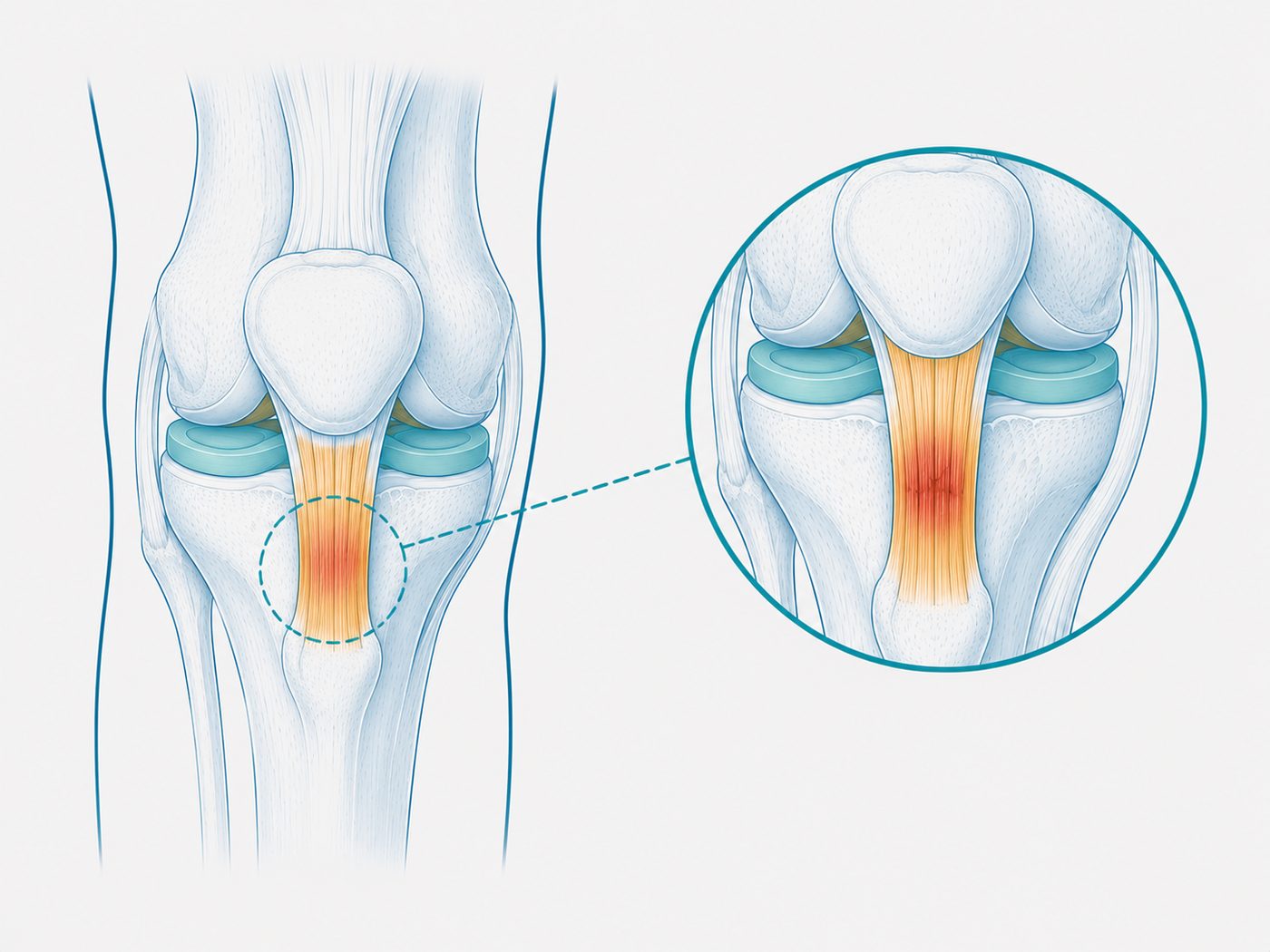
Patellar tendinopathy (jumper’s knee): pain that appears exactly when you push hard
Pain that appears when jumping, landing, running or going up and down stairs.
“Jumper’s knee” starts with pain only after training, but later appears already during the warm-up or when climbing stairs - a pattern characteristic of patellar tendinopathy in jumping athletes.
At first the pain is only felt after training. Later it appears already during the warm-up, when jumping or even climbing stairs. Patellar tendinopathy is one of the most common overload injuries in basketball, volleyball and football players and in people who do a lot of jumping and running - which is exactly why it is also known as “jumper’s knee”.
What is patellar tendinopathy?
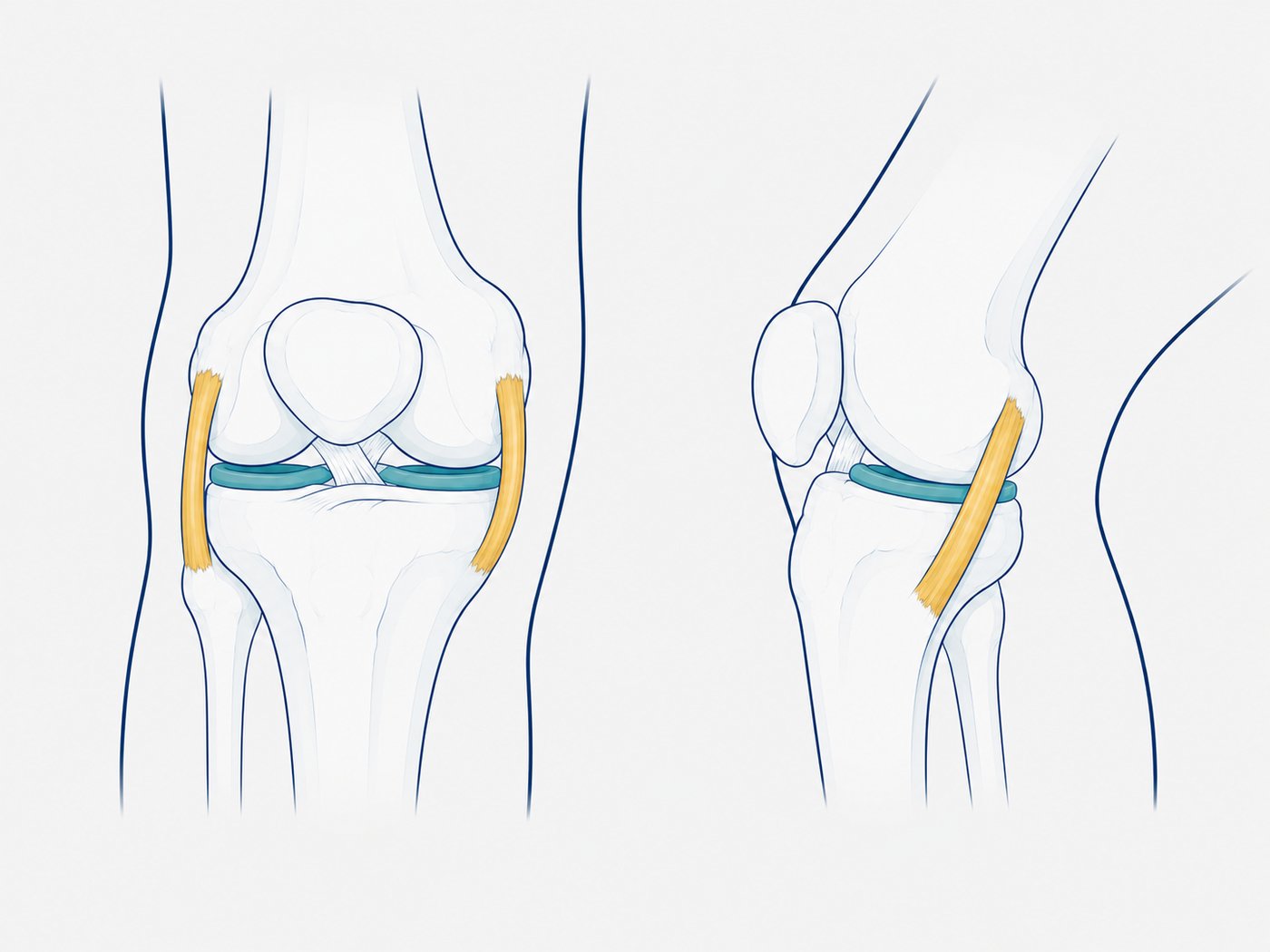
The patellar tendon connects the kneecap to the shin bone and transmits the force of the quadriceps muscle, mainly in braking movements such as landing from a jump. When the load on the tendon is greater than its capacity to cope - for instance a sudden increase in training volume - pain and tenderness can develop in the area.
Notice whether the pain “warms up” and eases a little during the session itself, but comes back stronger the next day - that is a classic pattern of patellar tendinopathy, and not a sign you can ignore the pain because it “went away” during training.
How does it usually feel?
- Pain below the kneecap.
- Pain when jumping or landing.
- Pain while running.
- Tenderness to touch.
- Pain going up or down stairs.
How can physiotherapy help?
After assessment, we build a rehab plan: load management, progressive strengthening of the tendon and the muscles around the knee (with an emphasis on isometric and eccentric exercises, which work especially well for tendons), and building the capacity to return safely to jumping, running, and sport.
Frequently asked questions
Not always. Sometimes load can be reduced while continuing with adapted activity - stopping completely doesn’t always speed up recovery, and can sometimes slow it down.
When the tendon is still not able to cope with the load, the symptoms can return - which is exactly why gradual, measured strengthening matters so much, not just rest.
In most cases yes, through load management, appropriate strengthening and gradual progression in training - especially at the start of a season or after a long break.
What’s worth remembering?
Patellar tendinopathy doesn’t require a long break from activity. The right treatment and load adjustment can help you return to sport safely.
- The patellar tendon transmits the force of the quadriceps muscle, mainly in braking movements such as landing from a jump.
- Pain that “warms up” and eases during the session itself but returns stronger the next day is a classic pattern - not a sign that it can be ignored.
- Treatment includes load management and progressive strengthening, with an emphasis on isometric exercises.
Not sure if this is your situation? I’d be happy to give you a professional assessment and build a treatment plan that fits you.
Book a consultation callYou might also be interested in:
 Pain somewhere else?
Return to the interactive body map and pick an area
←
Pain somewhere else?
Return to the interactive body map and pick an area
←