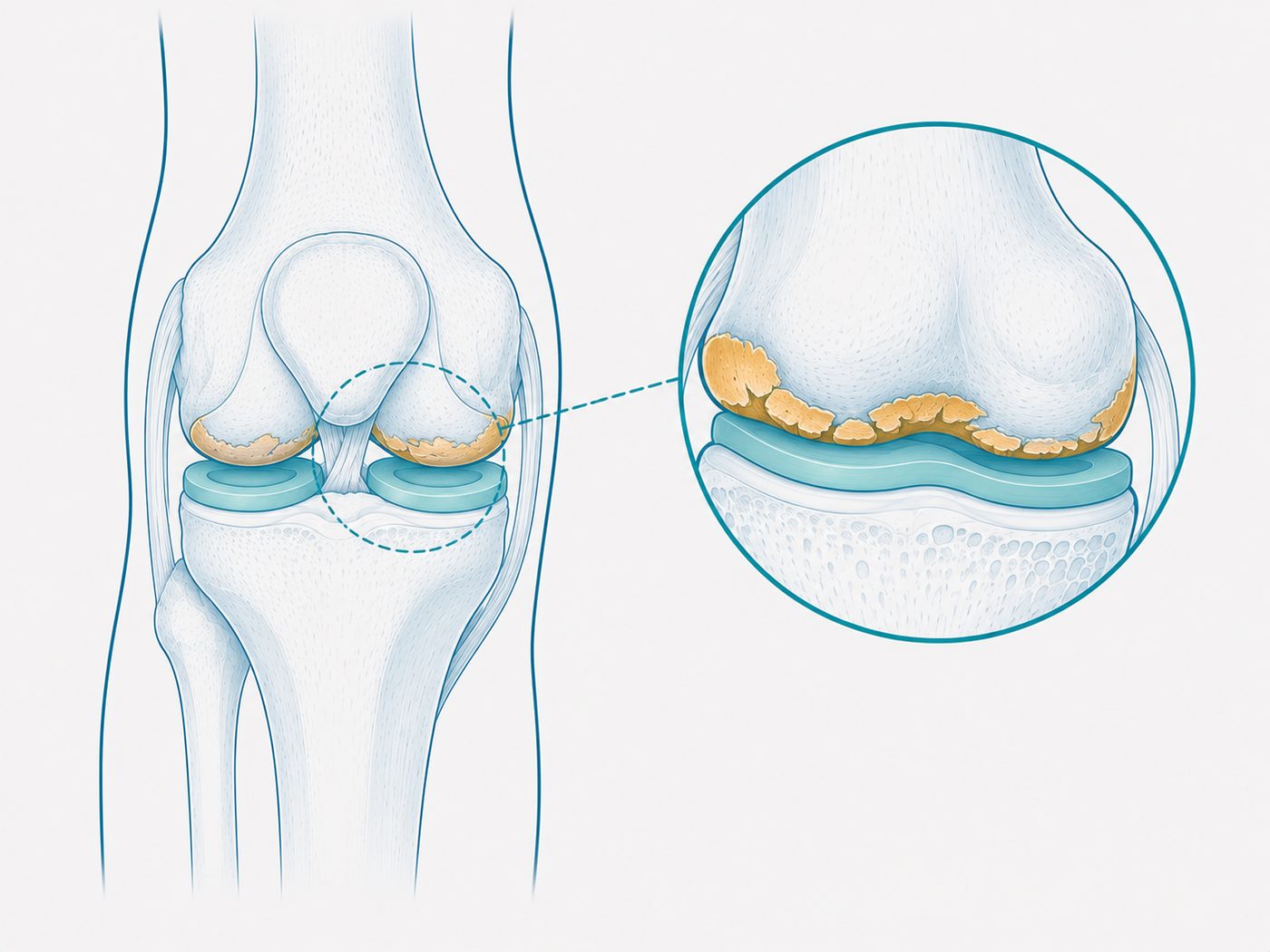
Knee osteoarthritis: is cartilage wear the end of the road?
Pain and stiffness that appear mainly after rest or when starting to walk.
“Cartilage wear, so there is nothing to be done” isn’t really the right conclusion - osteoarthritis is common with age, but it doesn’t mean you have to live with pain or stop being active.
One of the sentences I hear most often is: “They told me I have cartilage wear, so there is nothing to be done.”
The truth is more complex. Osteoarthritis is a common process with age, but it doesn’t mean you have to live with pain or stop being active. In many people, function can be significantly improved and pain reduced with the right treatment - that is exactly the message I most want you to leave the first appointment with.
What is osteoarthritis?
Osteoarthritis is a change in the joint that develops over the years. It can involve the cartilage, the bone, and the tissues around the joint. Not everyone with osteoarthritis feels pain - so what you feel matters, not just what shows on an X-ray. The gap between the imaging finding and the actual experience is significant.
Strengthening the hip and knee muscles (especially the quadriceps) is one of the most significant tools available for reducing knee pain with osteoarthritis - stronger muscles absorb part of the load that would otherwise fall directly on the joint.
How does it usually feel?
- Pain when starting to walk.
- Stiffness after sitting.
- Difficulty going down stairs.
- Pain after standing for a long time.
- Reduced confidence in movement.
Should I stop walking?
In most cases, quite the opposite. Adapted movement is one of the most important tools for coping with osteoarthritis - a lack of movement actually weakens the supporting muscles and makes things worse over the long term. The aim is to find the dose of activity that suits you rather than to avoid movement.
How can physiotherapy help?
The plan is personally tailored and can include muscle strengthening, improving balance, functional exercise and guidance on reducing loads. This combination often makes everyday activities considerably easier - and sometimes significantly delays the need for surgical intervention.
Frequently asked questions
Not necessarily. Many people manage to reduce pain and improve function despite the changes in the joint - progression isn’t always linear and not necessarily inevitable.
Not always. Sometimes adjusting the load and strengthening the muscles is enough to improve your capacity - complete avoidance only makes things harder over the long term.
No. Many people achieve significant improvement without surgery, and sometimes delay it by many years through consistent conservative treatment.
What’s worth remembering?
Knee osteoarthritis is a common condition, but it isn’t a sentence. The right assessment, adapted activity and physiotherapy can help you keep moving with confidence.
- There is a significant gap between imaging findings and the actual experience - not everyone with osteoarthritis will feel pain.
- Strengthening the hip and knee muscles, mainly the quadriceps, is one of the most significant tools for reducing pain - strong muscles absorb part of the load.
- The typical pain appears when starting to walk, with stiffness after sitting, and improves with movement.
Not sure if this is your situation? I’d be happy to give you a professional assessment and build a treatment plan that fits you.
Book a consultation callYou might also be interested in:
 Pain somewhere else?
Return to the interactive body map and pick an area
←
Pain somewhere else?
Return to the interactive body map and pick an area
←