Cervical radiculopathy: when neck pain radiates down the arm
Pain, numbness or weakness radiating from the neck into the shoulder, arm or fingers - a different pattern from general neck pain.
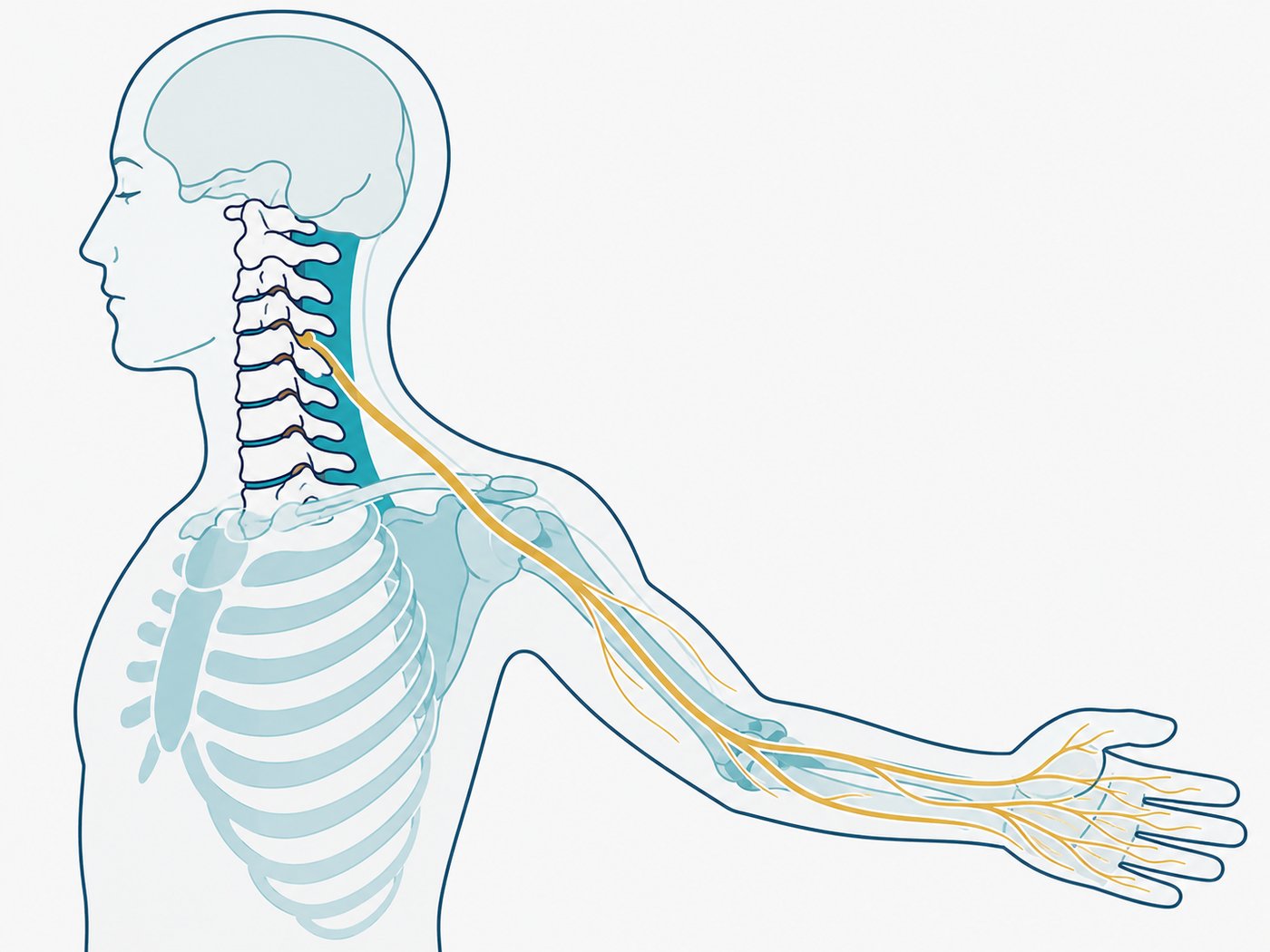
Unlike “ordinary” neck pain that stays local, cervical radiculopathy shows up as a precise pattern of radiation, numbness or weakness according to the specific nerve root involved.
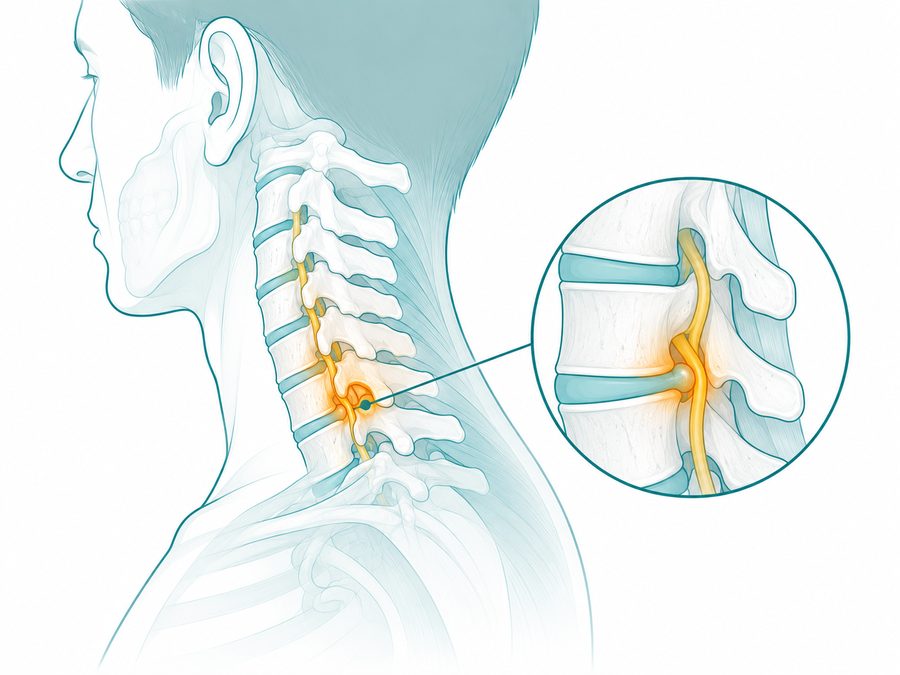
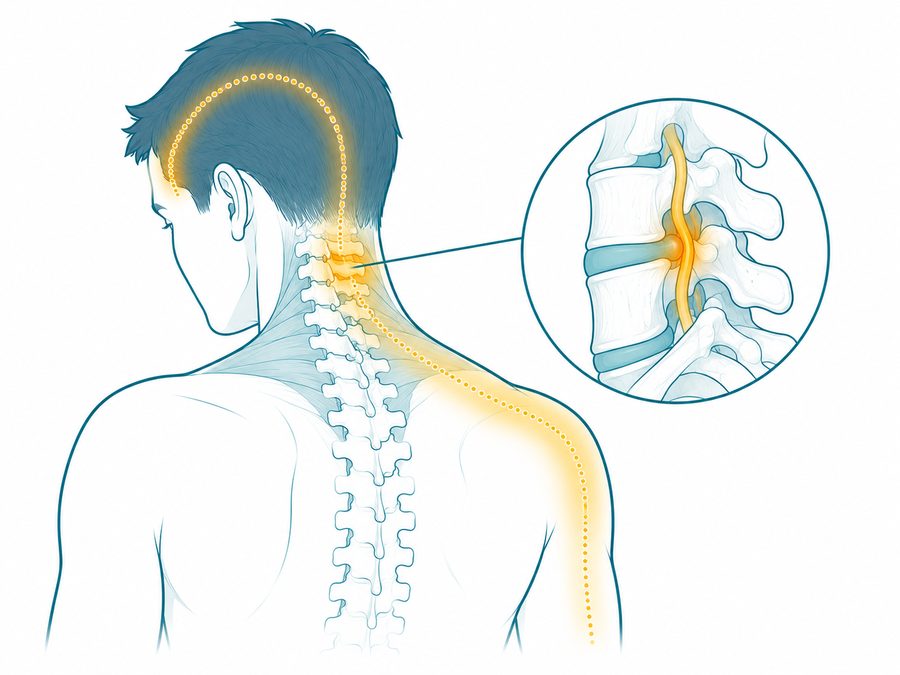
“Ordinary” neck pain usually stays local, whereas pain that clearly radiates into the shoulder, the arm or as far as the fingers, sometimes with numbness or weakness, points to something else: pressure on a specific nerve root emerging from the cervical spine, a condition called cervical radiculopathy.
This is a different diagnosis from a general “disc herniation”, because here there is a clear and precise pattern of symptoms according to the specific nerve root involved - and that is exactly what helps locate the precise source.
How does it usually feel?
Symptoms can vary, but many describe:
- Pain radiating from the neck into the shoulder, the arm or as far as specific fingers.
- Numbness or tingling in a defined area of the hand, according to the affected nerve root.
- Weakness in specific movements of the hand or fingers.
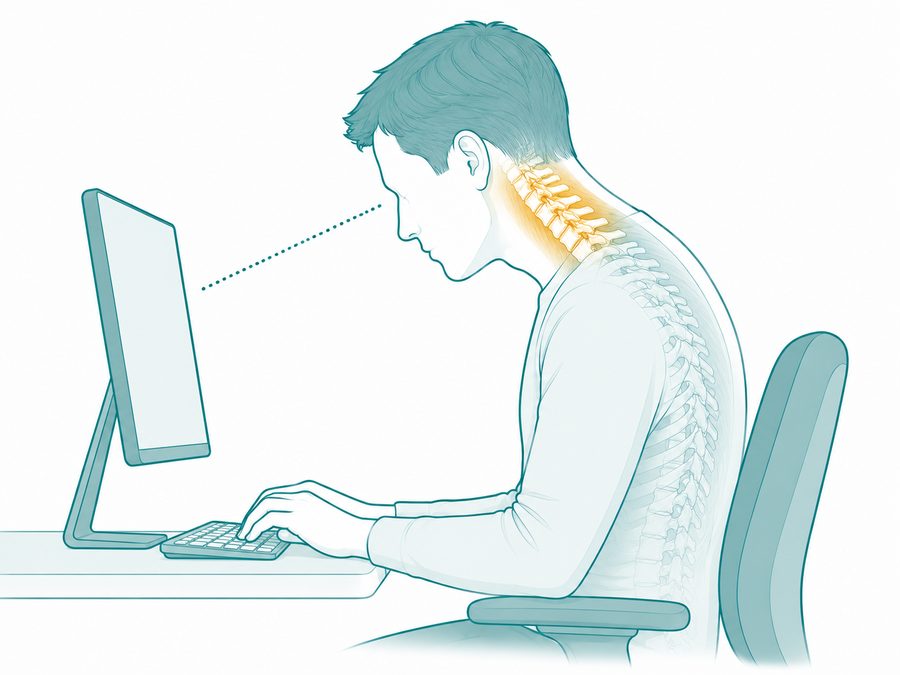
- Worsening when tilting the head toward the affected side or with prolonged sitting.
- Sometimes relief when resting the hand behind the head.
Notice which finger or area of the hand the numbness reaches - that is precise information which helps identify exactly which nerve root is involved and guides the examination.
What causes cervical radiculopathy?
A cervical disc herniation is a common cause, but narrowing of the canal through which the nerve root exits, due to degenerative changes, can create exactly the same clinical picture. The difference between these two causes matters, because it affects the expected pace of recovery and the choice of suitable treatment.
How can physiotherapy help?
Treatment focuses on reducing the pressure on the nerve root through targeted positions and exercises, improving the range of motion of the neck, and gradually strengthening the supporting muscles. In most people there is significant improvement within a few weeks with a personally tailored plan, without needing invasive intervention.
When should you get checked?
If significant, progressive weakness appears in the hand, difficulty with fine control of the fingers, or pain that doesn’t improve at all after several weeks of treatment - see a doctor and considering imaging for a more precise assessment.
Frequently asked questions
Related, but not identical. Radiculopathy is the specific clinical result of pressure on a nerve root, and a disc herniation is only one of its possible causes.
In most cases yes, with reduced pressure on the nerve root and tailored treatment, but it is a process that takes time and patience.
No. Controlled, adapted movement usually beats complete rest, which can slow recovery.
What’s worth remembering?
Cervical radiculopathy is a more precise diagnosis than a general “disc herniation”, and identifying the specific nerve root involved is the key to effective treatment.
- Cervical radiculopathy is caused by pressure on a nerve root, usually following a disc herniation or narrowing of the canal due to degenerative changes.
- It’s identified by pain radiating into the shoulder, arm or specific fingers, in a precise pattern matching the affected nerve root.
- Treatment focuses on reducing pressure on the nerve root through targeted positions and exercises.
Not sure if this is your situation? I’d be happy to give you a professional assessment and build a treatment plan that fits you.
Book a consultation callYou might also be interested in:
 Pain somewhere else?
Return to the interactive body map and pick an area
←
Pain somewhere else?
Return to the interactive body map and pick an area
←