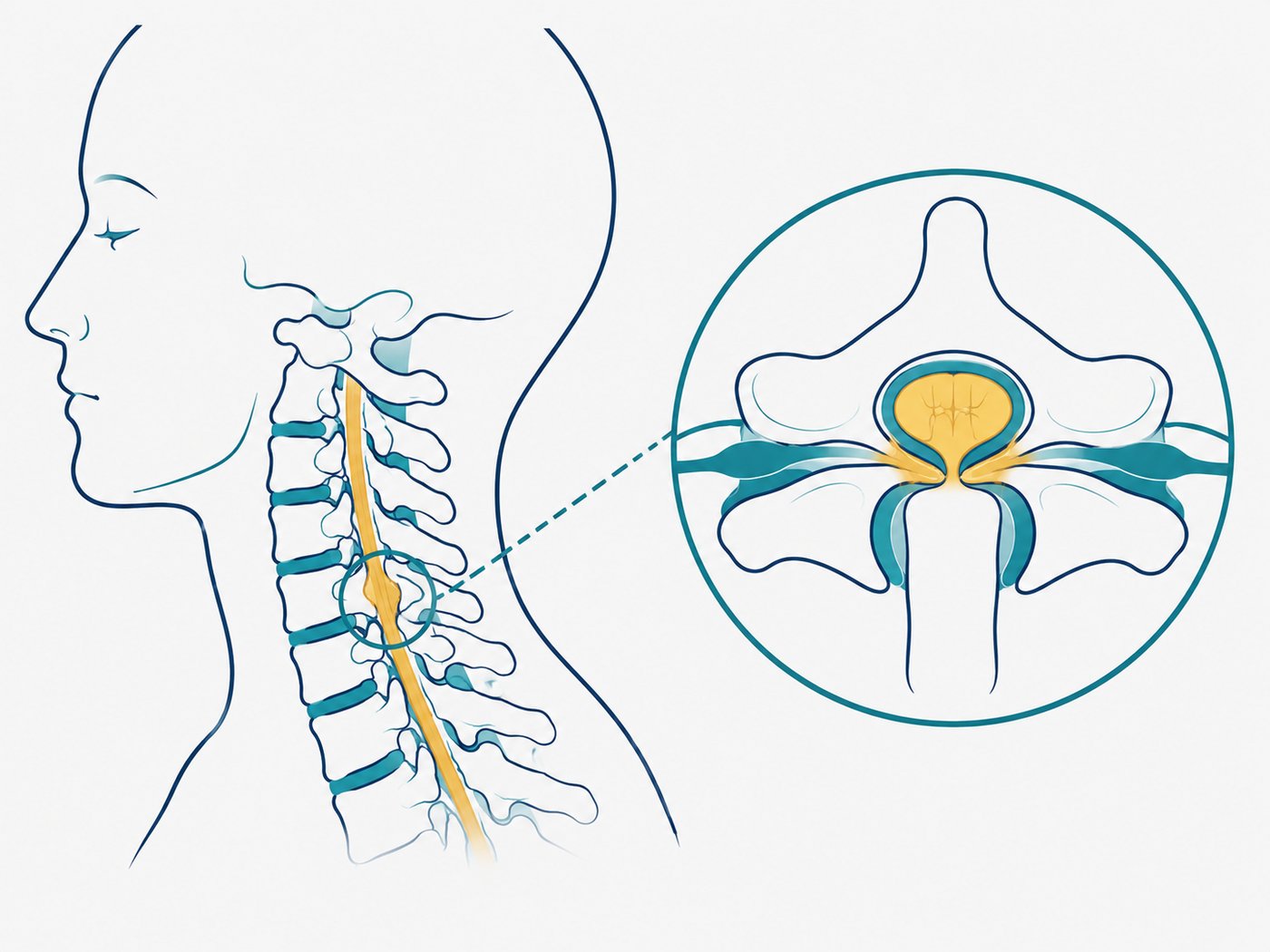
Cervical spinal stenosis: when pressure reaches the spinal cord itself
A condition in which the canal through which the spinal cord passes in the neck narrows - it can affect the hands and the legs together.
Cervical spinal stenosis is different from radiculopathy - here the pressure is on the spinal cord itself, and so the symptoms (clumsiness in the hands and unsteadiness when walking) can affect the hands and the legs together.
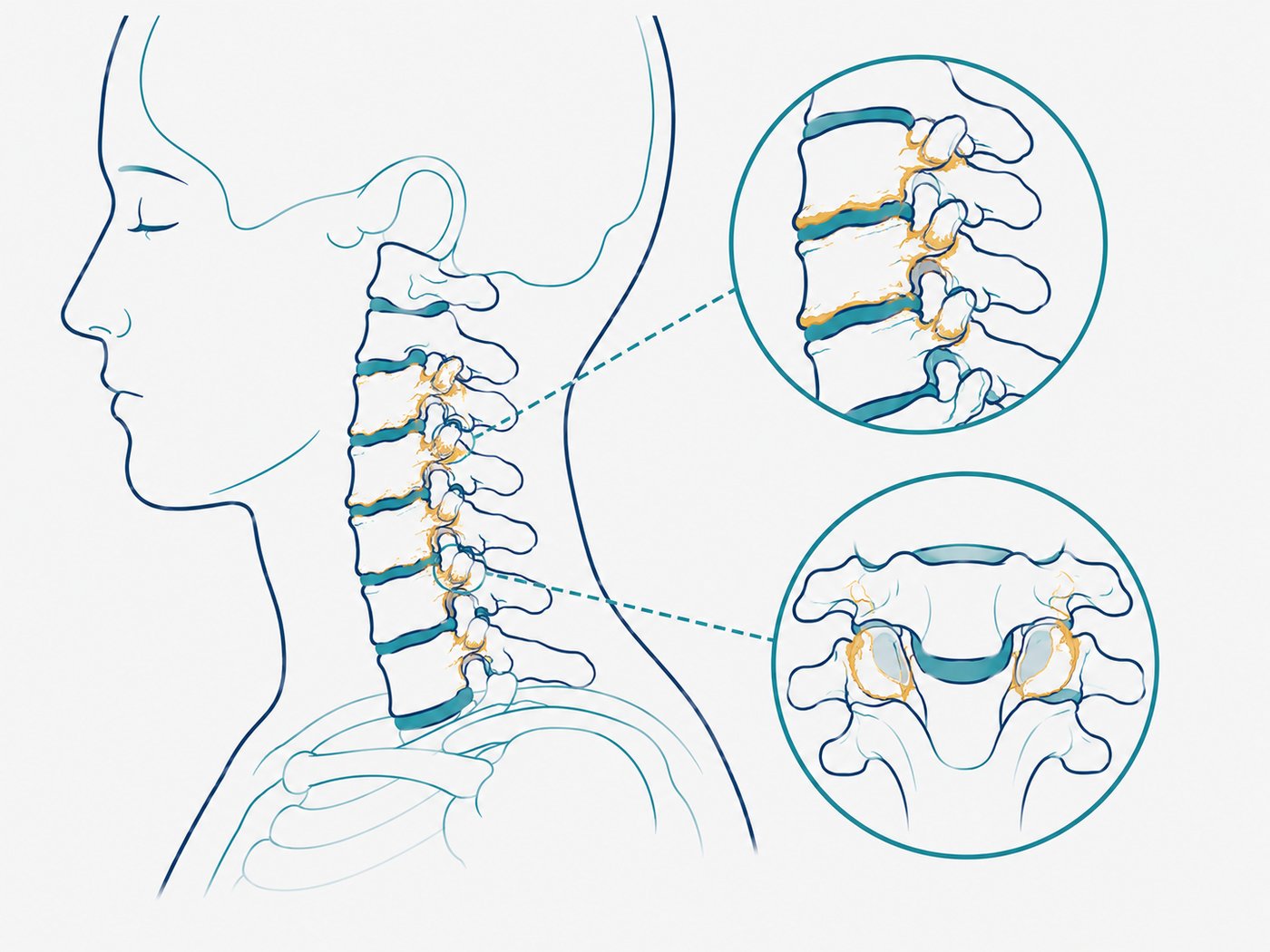
If, in addition to neck pain, you notice clumsiness in the hands, difficulty doing up buttons or writing, and perhaps also a feeling of unsteadiness when walking - this may be cervical spinal stenosis, a condition in which the canal through which the spinal cord itself passes becomes narrower.
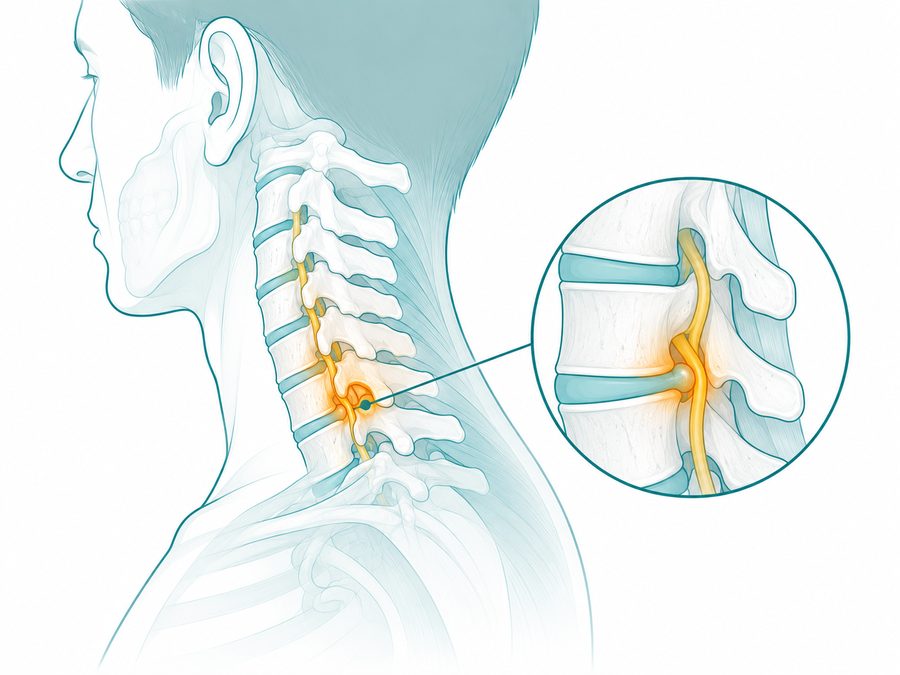
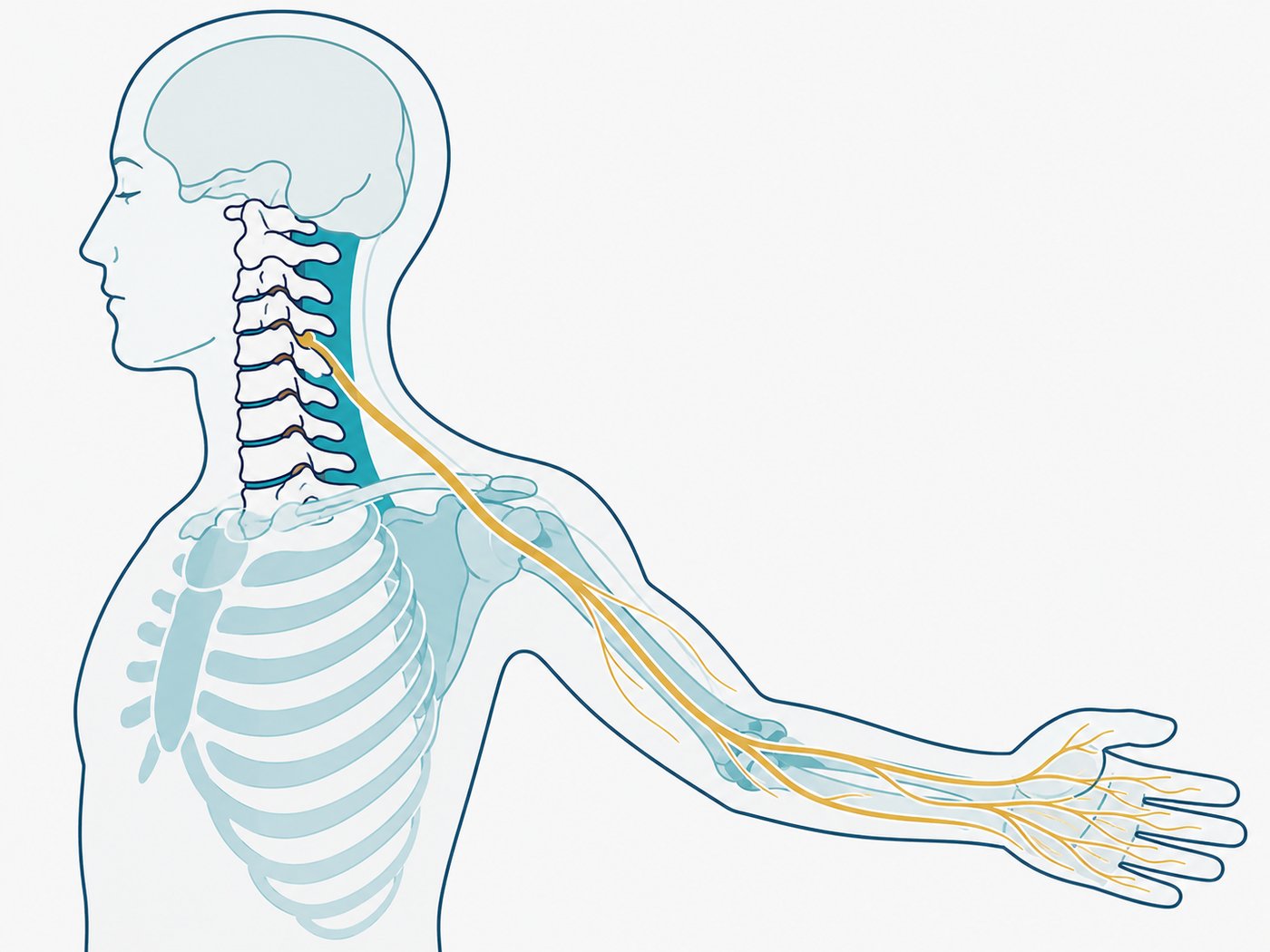
This is different from cervical radiculopathy, where the pressure is on a single nerve root. Here the pressure is on the whole spinal cord, and so the symptoms can affect the hands and the legs together.
How does it usually feel?
Symptoms can vary, but many describe:
- Clumsiness or reduced dexterity of the fingers, difficulty with fine tasks such as doing up buttons.
- A feeling of unsteadiness or uncertain balance when walking.
- Numbness or weakness that can appear in the hand and in the leg alike.
- Pain or stiffness in the neck, though not always the most prominent symptom.
- Sometimes an “electric” sensation down the back when bending the head forward.
A test I do in the clinic: asking the patient to write their name quickly, or fasten a small button. A sudden, noticeable decline in hand dexterity is an important sign that points toward a more thorough assessment.
What causes cervical spinal stenosis?
This usually involves degenerative changes accumulating over years - thickening of ligaments, disc bulges, and changes in the small joints that combine to narrow the canal. It’s more common in older age, and develops gradually over time rather than all at once.
How can physiotherapy help?
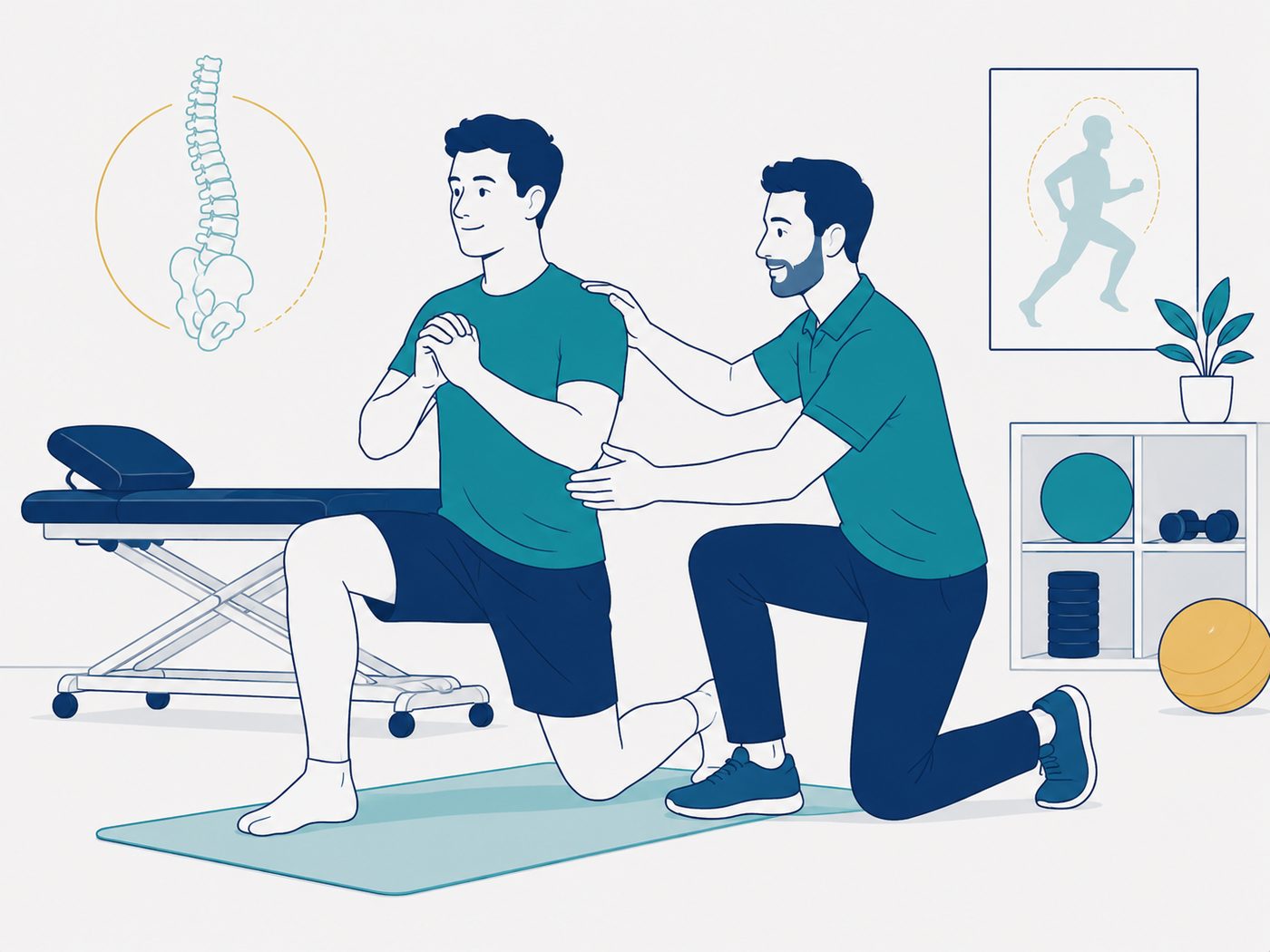
Physiotherapy focuses on preserving a safe range of neck movement, strengthening the supporting muscles, and improving balance and walking - especially important tools when balance is involved. In significant cases, physiotherapy is usually part of a broader plan together with a doctor - not a substitute for medical assessment.
When should you get checked?
If there is a rapid, progressive decline in hand dexterity, growing difficulty with walking or balance, or a change in bladder control - seek medical assessment without delay, because this is a condition requiring close medical monitoring and evaluation.
Frequently asked questions
No. In radiculopathy the pressure is on a single nerve root, and here on the whole spinal cord - which is why the clinical picture is broader and more significant.
Not necessarily, but it does require monitoring, because in some cases there is gradual progression that is important to identify early.
Depending on severity - mild cases yes, but this is a condition requiring medical involvement alongside physiotherapy to monitor its progression.
What’s worth remembering?
Cervical spinal stenosis differs from ordinary neck problems because it can affect both the hands and the legs - early identification and combined medical and physiotherapy care are particularly important.
- Cervical spinal stenosis is usually caused by accumulated degenerative changes - thickening of ligaments, disc bulges and changes in the small joints.
- It’s identified by clumsiness of the fingers, difficulty with fine tasks such as doing up buttons, and a feeling of unsteadiness when walking.
- A sudden decline in hand dexterity or growing difficulty walking require a thorough assessment.
Not sure if this is your situation? I’d be happy to give you a professional assessment and build a treatment plan that fits you.
Book a consultation callYou might also be interested in:
 Pain somewhere else?
Return to the interactive body map and pick an area
←
Pain somewhere else?
Return to the interactive body map and pick an area
←