Lumbar spinal stenosis: when walking becomes a challenge
Pain, numbness or weakness in the legs when walking that improves with rest or sitting.
Lumbar spinal stenosis has a distinctive pattern - walking for just a few minutes brings on pain or numbness in the legs, but a short sit allows you to carry on again.
Some people can walk only a few minutes before pain, heaviness or numbness appears in the legs, but after sitting briefly they can carry on again. This kind of pattern is sometimes characteristic of lumbar spinal stenosis. I hear quite a few patients describe it as “stopping every few minutes at a shop window” to give the legs a rest - and they don’t always connect it to the back, even though that is exactly the source.
What is spinal stenosis?
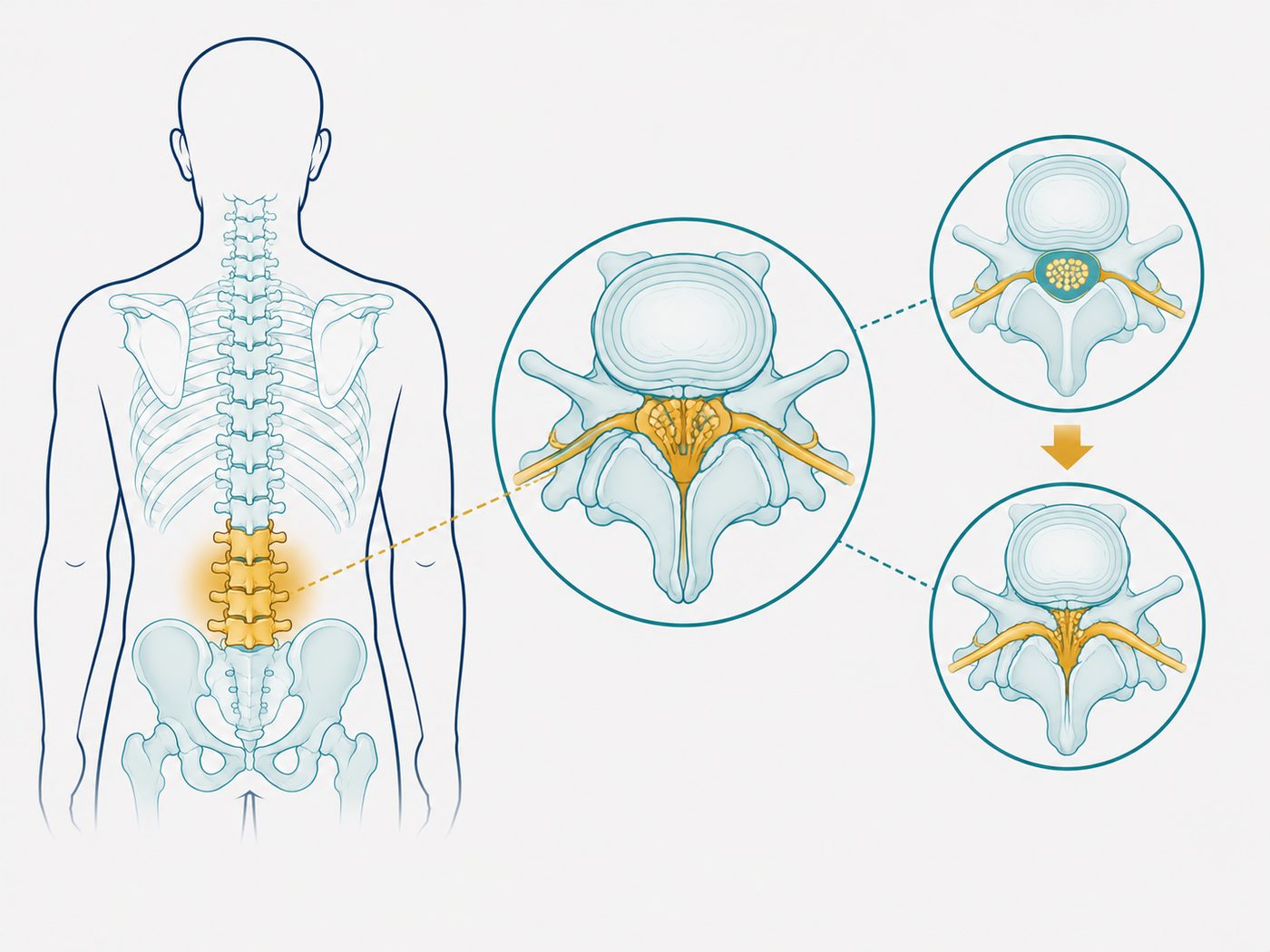
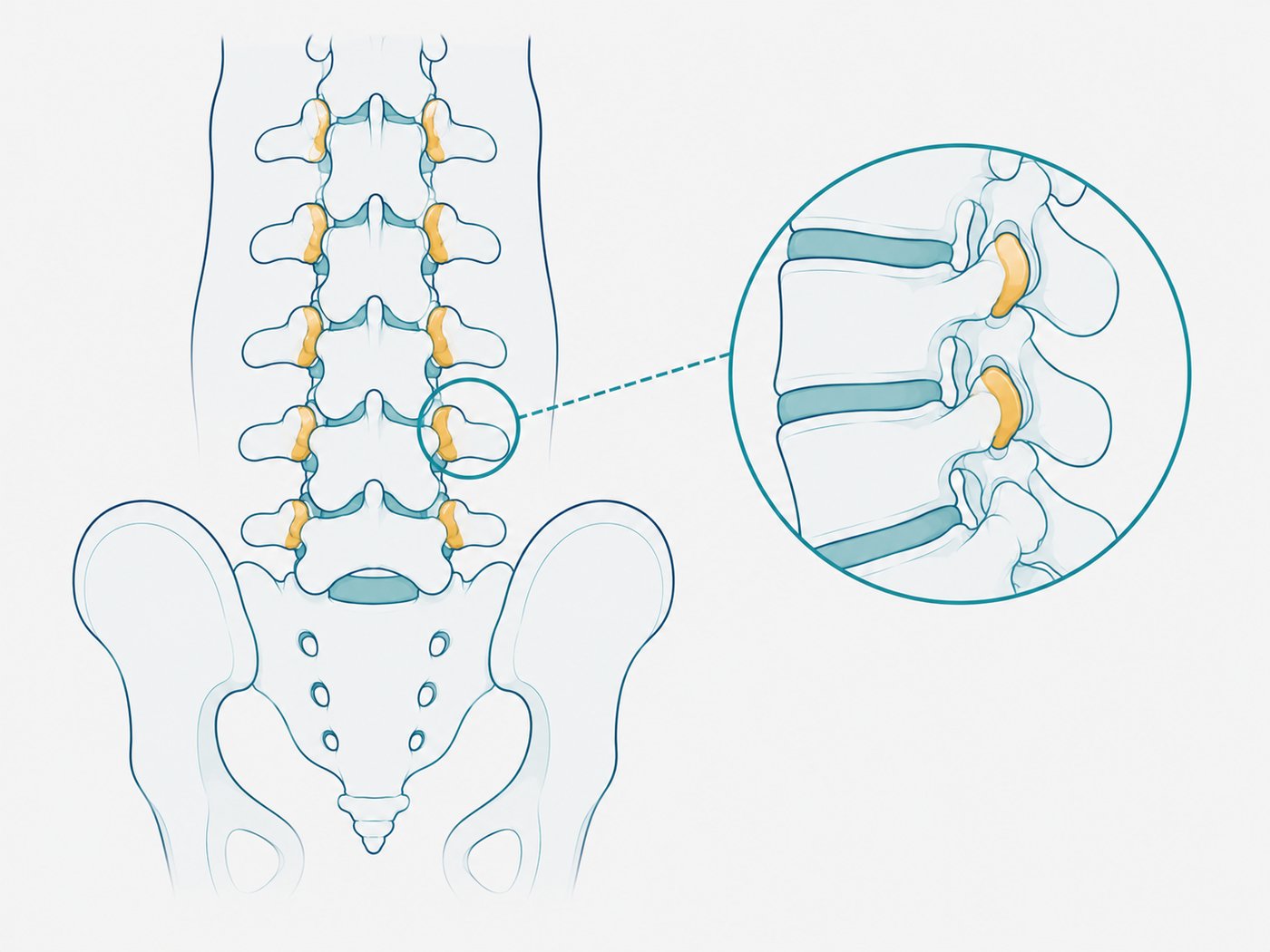
The spinal canal is the passage through which the spinal cord and nerve roots run. Over the years, changes can appear that reduce the space available to the nerves and may cause symptoms during standing and walking - when the back leans backward (as in upright standing) the canal narrows further, and that is exactly what explains why bending forward or sitting brings relief.
Walking with a slight forward lean, or while pushing a shopping trolley, brings relief to many people with stenosis - that is no coincidence, and it is also a diagnostic clue worth sharing with me.
How does it usually feel?
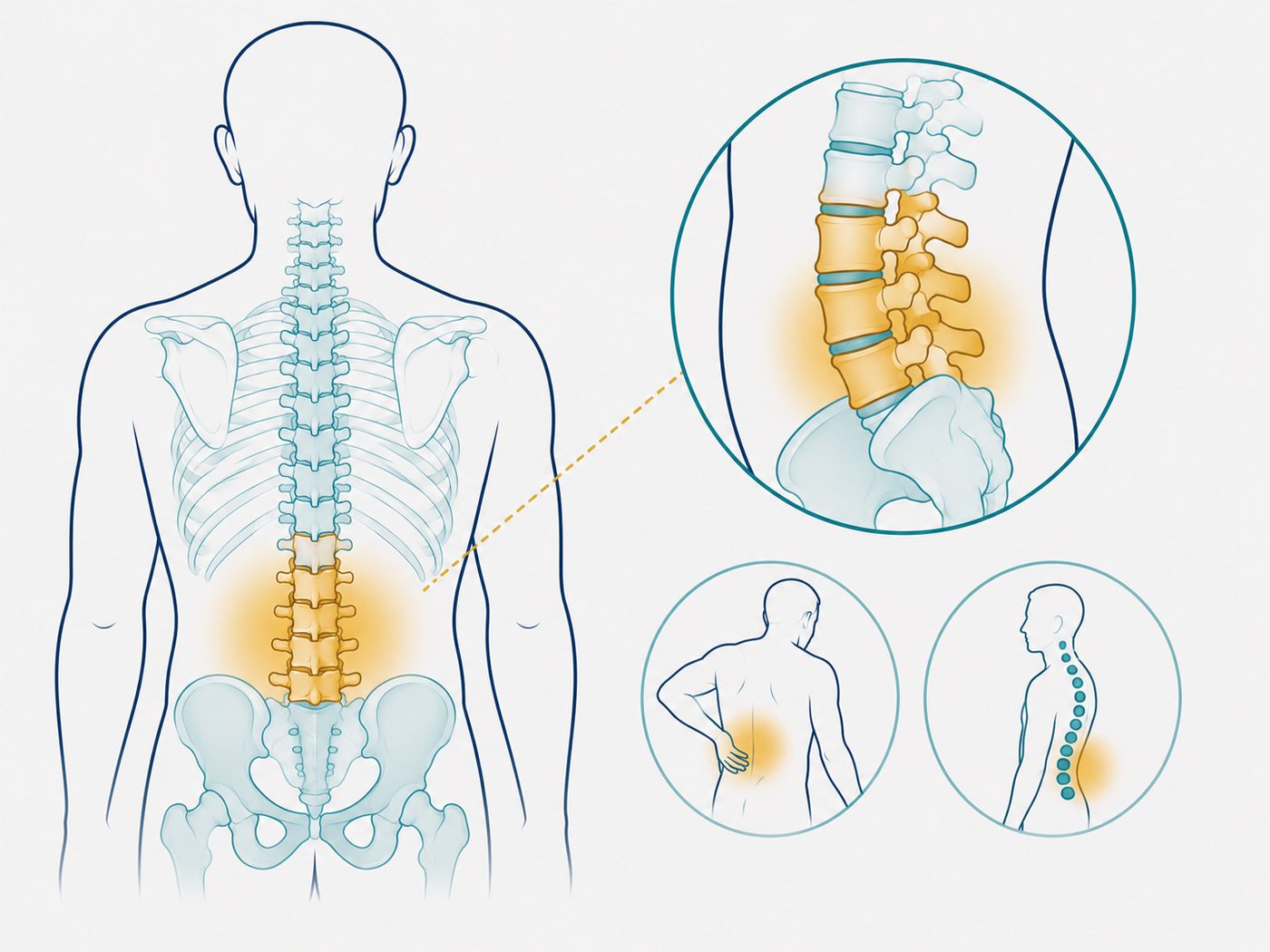
- Pain in the lower back.
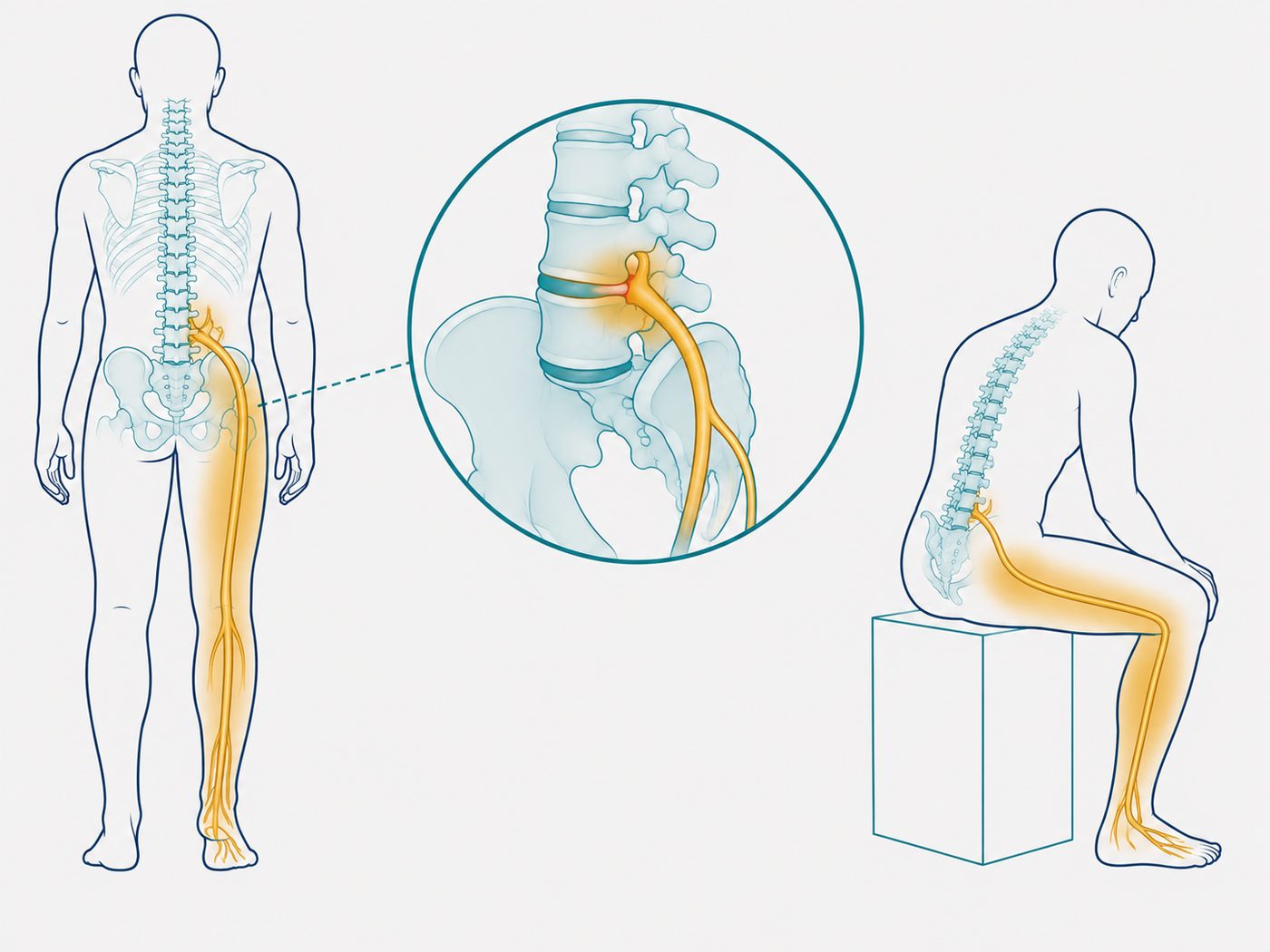
- Pain or numbness in the legs.
- Worsening when walking or standing.
- Relief when sitting or bending forward.
- A reduction in walking distance.
- Progressive weakness in the legs
- A change in bladder or bowel control
- Numbness in the saddle area (inner thighs and buttocks)
- A significant, sudden reduction in walking distance
How can physiotherapy help?
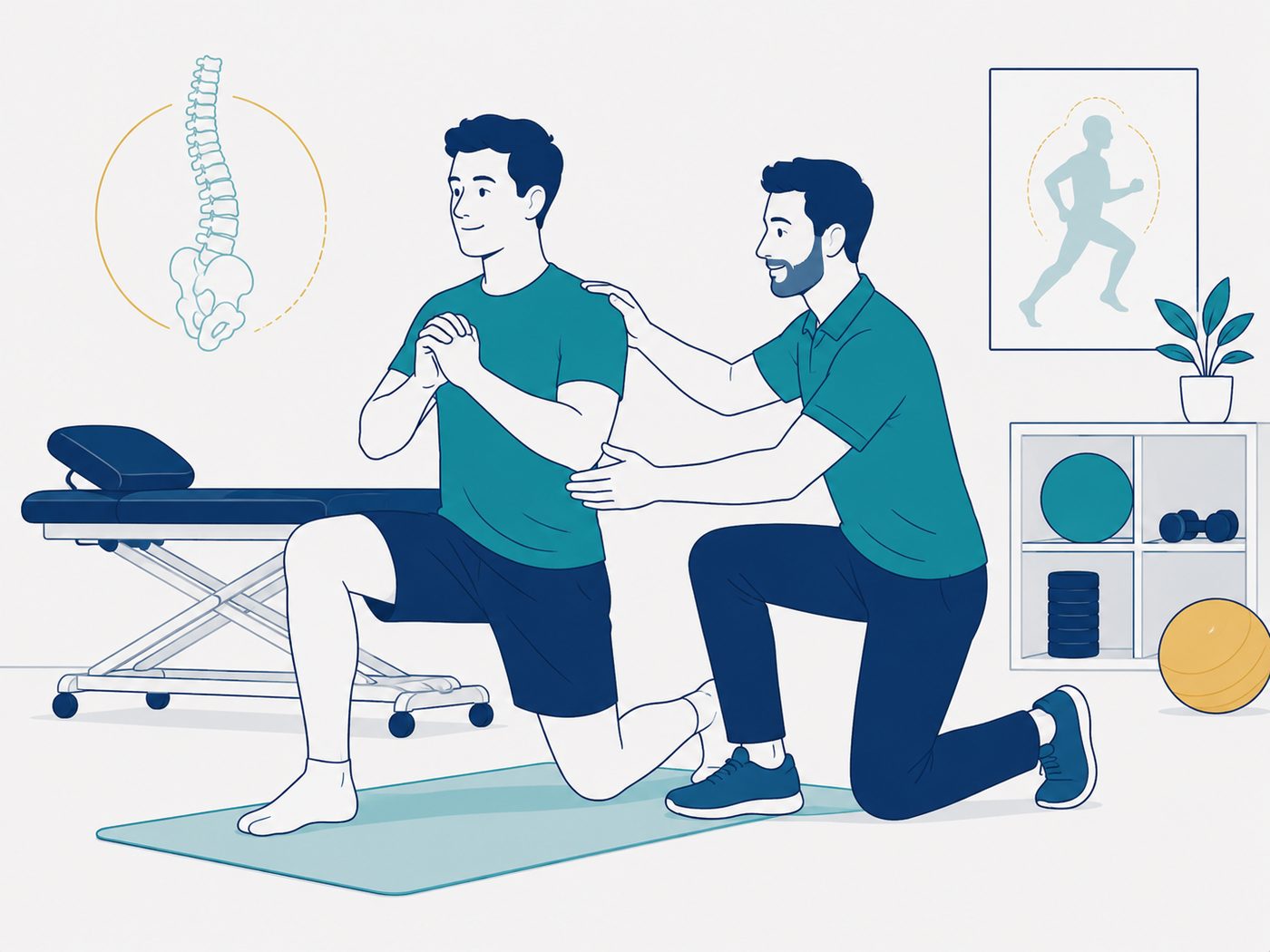
After assessment, we build a rehab plan: exercises to improve movement, muscle strengthening (mainly the core and abdominal muscles, which support a more comfortable spine position), building endurance, and guidance on managing loads to fit your capacity.
What to expect from treatment - and how progress is measured
The natural question is "how long until it goes away". With stenosis that is usually the wrong question: there is no single point in time at which the tissue can be said to have "healed". So success is measured mainly by function - how much you can walk, stand, and do.
Gradual improvement in walking and standing capacity over weeks to months. The pace is very individual, and the measures that matter come from life: walking to the store without stopping, standing through cooking a meal, a walk with the grandkids.
Not only how far you walk, but how quickly you can continue after a break. Someone who needed ten minutes of sitting after two hundred meters, and now needs only a minute or two, has genuinely improved - even if the maximum walking distance has not changed dramatically yet.
- Seated forward-lean break: sit, lean slightly forward, and rest your forearms on your thighs for 30-60 seconds when symptoms build while standing or walking.
- Split walking into short segments with planned sitting stops - a route with benches helps, and a shopping cart to lean on lightly at the store.
- A sitting break before symptoms build: if they start after a few minutes of standing or walking, a short stop early beats a long one late.
Good days and less good days are part of the picture, and fluctuation is not failure. The right comparison is against a month or two ago, not against yesterday. And the management tools - short sitting breaks, splitting walks into segments - are not "until it passes" but part of smart long-term management.
Good if you feel the same or better after the activity. Not good if the pain spreads further down your leg, new leg symptoms appear, or you stay significantly worse - in that case stop and do not repeat it for now. The guidance here is general, and not a substitute for an individual assessment.
When to consider more: if, despite a reasonable period of exercise, walking distance keeps shrinking consistently, or progressing leg weakness appears - that is the stage for a conversation about further options, including a surgical opinion. Here too, the decision follows function and trend, not an imaging finding.
Frequently asked questions
No. Many people manage to improve function with conservative treatment, and sometimes significantly increase their walking distance without needing surgical intervention.
In some people, sitting or bending forward reduces the load on the structures in the area and slightly widens the canal - that is the physiological explanation for a pattern so common in this condition.
When the pain or numbness limits walking or worsens over time.
With stenosis there is usually no point in time at which the tissue has "healed", so success is measured by function: gradual improvement in walking and standing capacity over weeks to months, and a shorter recovery time after effort. The right comparison is against a month or two ago, not against yesterday.
What’s worth remembering?
Even when spinal stenosis has been diagnosed, in many cases function and quality of life can be improved with an appropriate rehabilitation plan.
- When the back leans backward, as in upright standing, the canal narrows further - which explains why bending forward or sitting brings relief.
- Walking with a slight forward lean, or while pushing a shopping trolley, brings relief to many people with stenosis.
- A progressive reduction in walking distance or weakness in the legs requires prompt assessment.
Not sure if this is your situation? I’d be happy to give you a professional assessment and build a treatment plan that fits you.
Book a consultation callYou might also be interested in:
 Pain somewhere else?
Return to the interactive body map and pick an area
←
Pain somewhere else?
Return to the interactive body map and pick an area
←