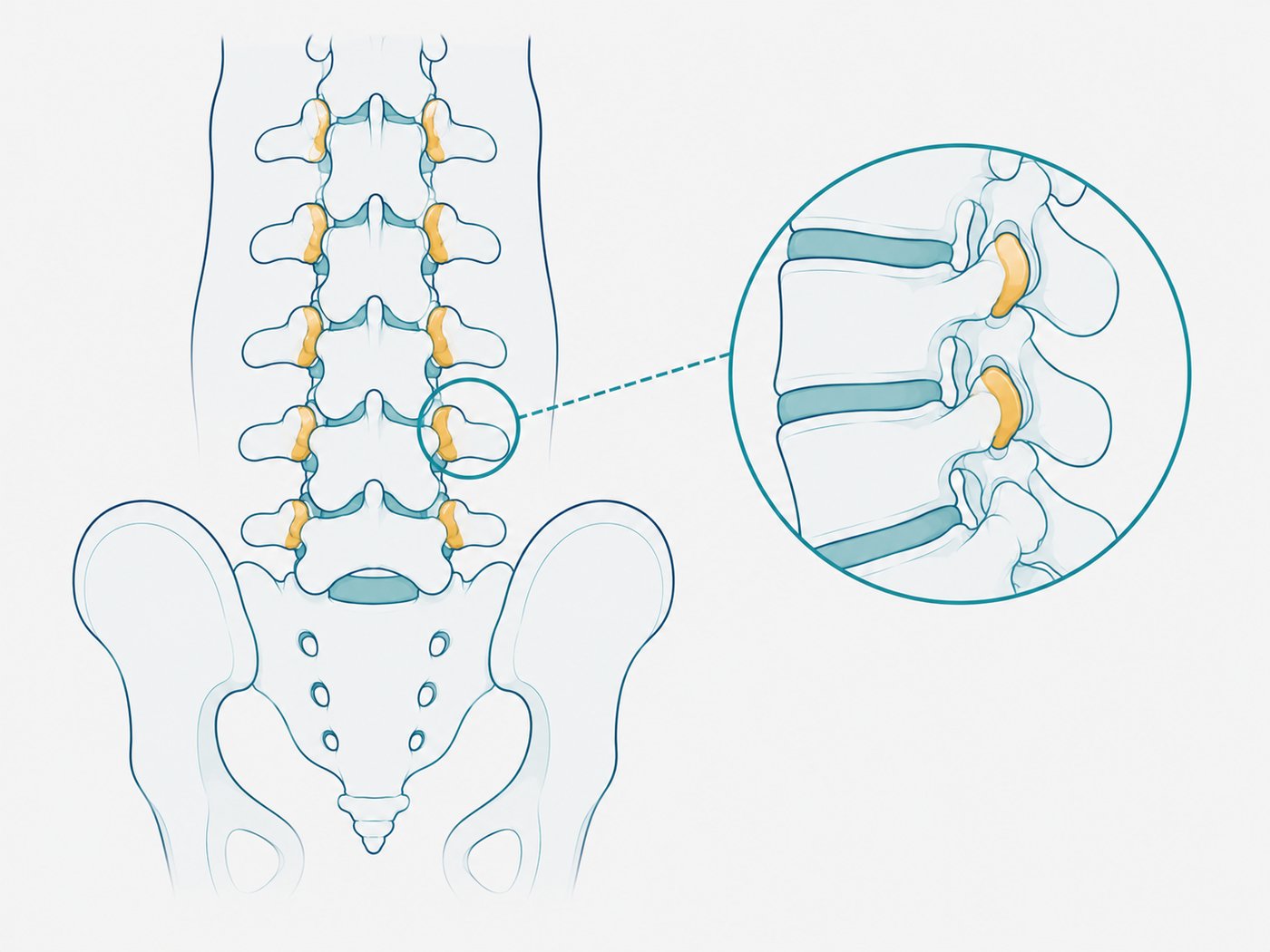
Facet joint syndrome: when bending backward hurts
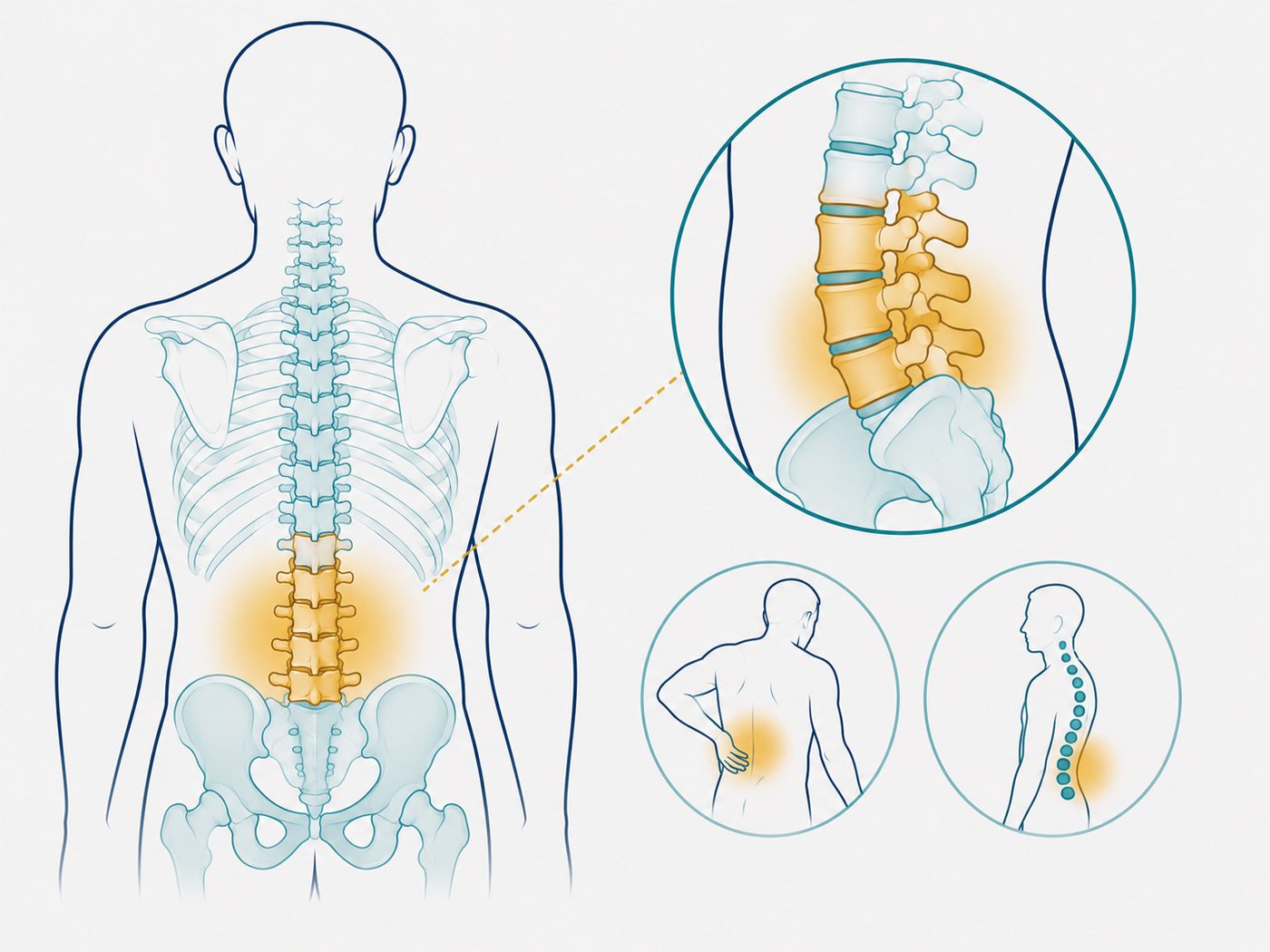
Lower back pain that worsens specifically when leaning backward or standing for a long time - different from the classic pattern of a disc herniation.
Not all lower back pain looks the same - facet joint syndrome worsens specifically with leaning backward and prolonged standing, unlike a disc herniation, which is usually worse with sitting and bending forward.
Lower back pain doesn’t all look the same. There is a specific pattern in which the pain worsens precisely when leaning backward, standing for a long time or walking, and improves with sitting or bending forward - and that pattern points to the facet joints, the pairs of small joints located along the spine.
Unlike a disc herniation, which is usually worse with sitting and bending, here the behavior is the opposite - and that is an important clinical difference which guides the direction of assessment and treatment.
How does it usually feel?
Symptoms can vary, but many describe:
- Lower back pain that worsens when leaning backward or standing for a long time.
- Relative relief with sitting or bending forward.
- Pain that tends to stay local in the back, without significant radiation into the leg.
- Stiffness that is more noticeable in the morning and improves with movement.
- Sometimes one-sided pain radiating a little into the buttock, but not below the knee.
If you can identify that the pain worsens specifically when you lean backward rather than when you bend forward - that is precise information which distinguishes facet joint syndrome from a disc problem.
What causes facet joint syndrome?
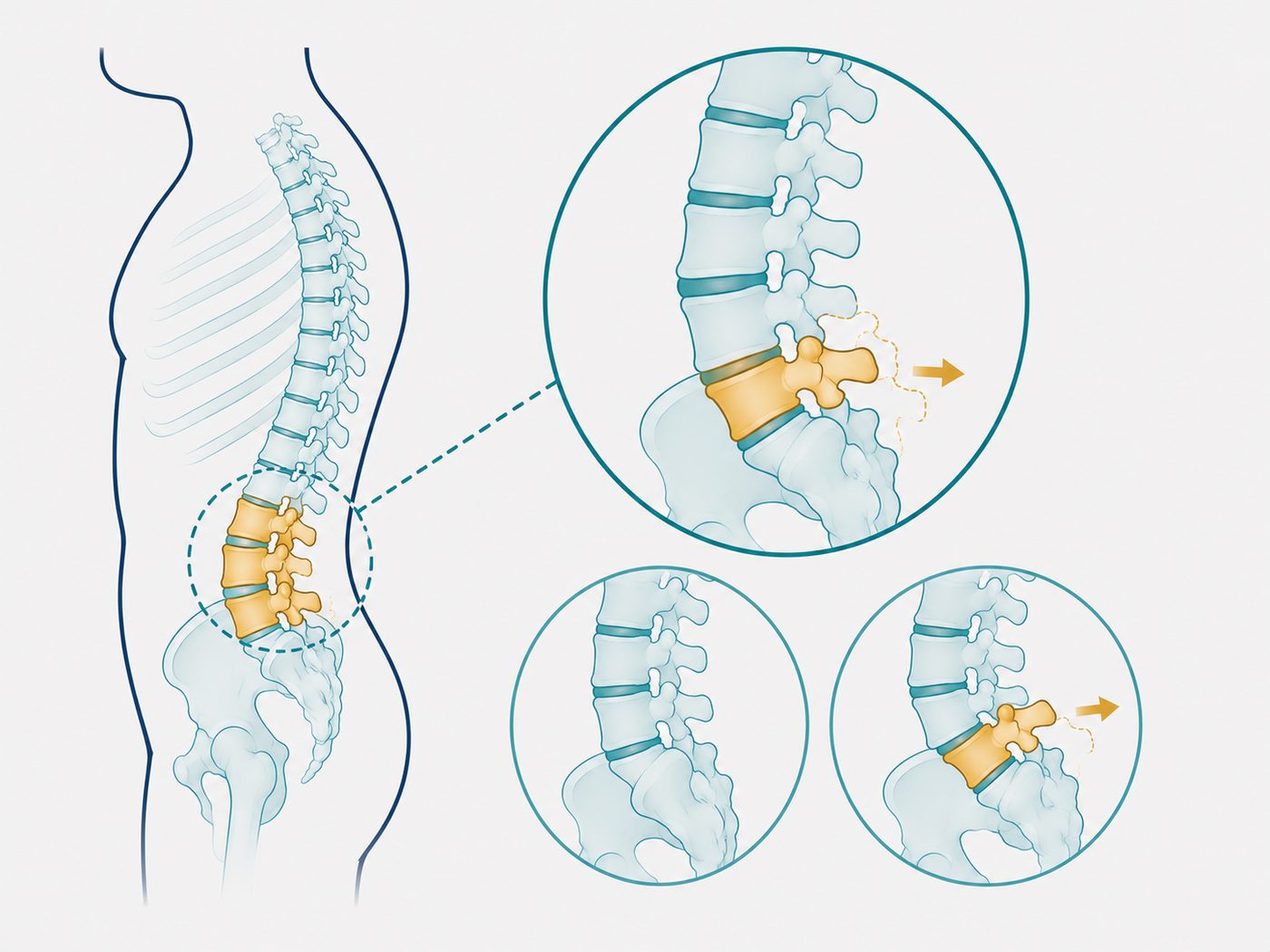
The facet joints, like any other joint in the body, can undergo wear with age or be affected by repetitive load, mainly in people doing activities involving a lot of backward bending, such as artistic gymnastics, backstroke swimming or physical work with repeated lifting. Instability in the core muscles can also transfer excess load to these joints.
How can physiotherapy help?
Treatment focuses on reducing the direct load on the joints by improving spinal posture, strengthening the core and deep abdominal muscles, and exercises that teach better control of the range of movement, particularly in backward bending. In most cases there is significant improvement within a few weeks.
When should you get checked?
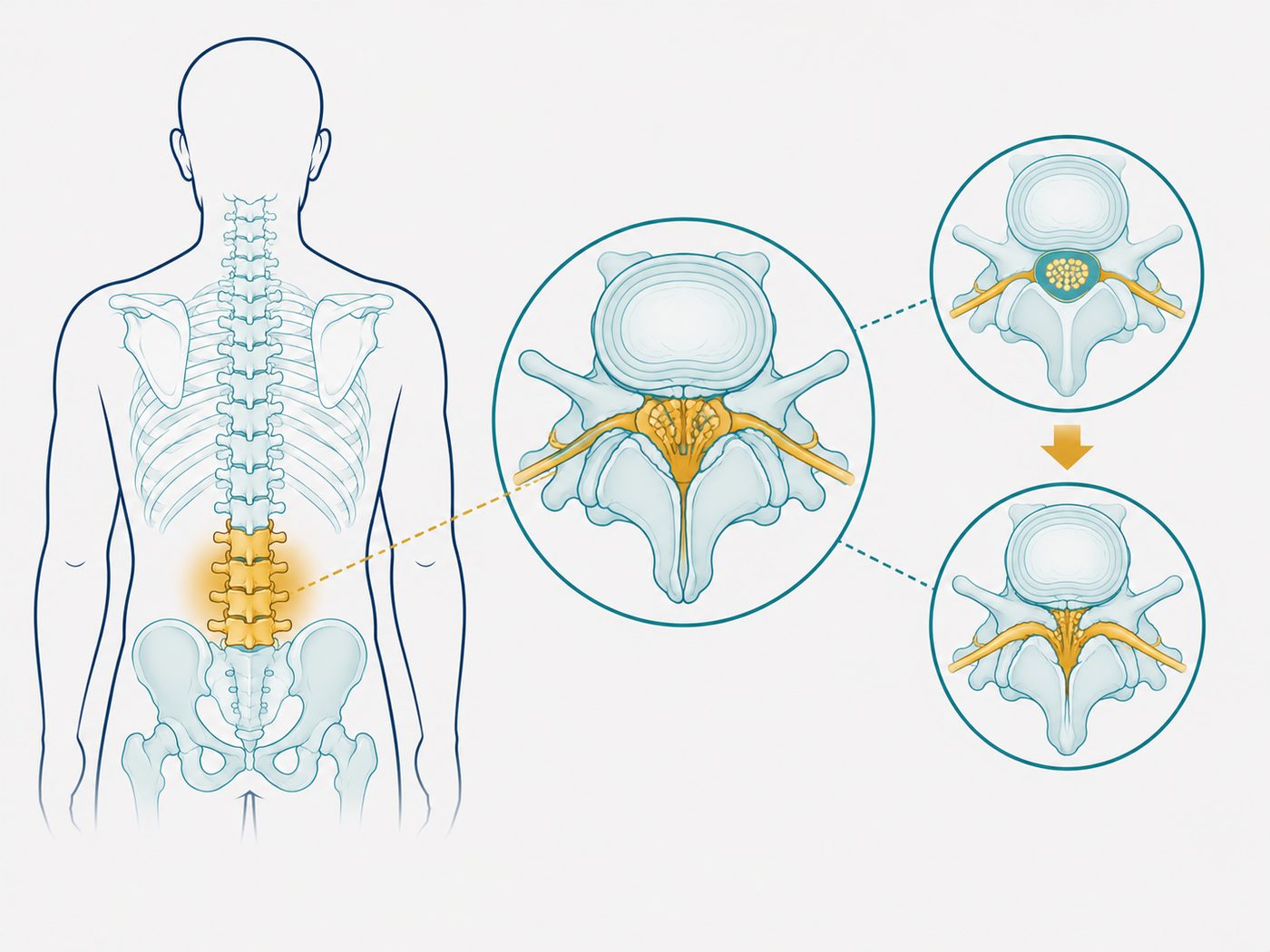
If the pain comes with numbness or weakness in the legs, if it clearly radiates below the knee, or if it doesn’t improve at all after prolonged treatment - get assessed to rule out involvement of a disc or a nerve root.
Frequently asked questions
The pattern in which pain worsens on leaning backward and eases on bending forward is a strong sign, but the final diagnosis requires a structured clinical examination.
In most cases yes, with a temporary adjustment of movements involving sharp backward bending, until the joint gets stronger.
If the cause is also addressed - usually core weakness - the chance of recurrence drops significantly.
What’s worth remembering?
Facet joint syndrome is an important differential diagnosis alongside a disc herniation, and identifying the right pattern of worsening and relief is the key to targeted treatment.
- The facet joints are pairs of small joints along the spine, which can undergo wear with age or be affected by repetitive load, mainly from repeated backward bending.
- It’s identified by pain that worsens with leaning backward and prolonged standing, and eases with sitting or bending forward.
- The pain tends to stay local in the back, without significant radiation below the knee - an important clinical difference from a disc herniation.
Not sure if this is your situation? I’d be happy to give you a professional assessment and build a treatment plan that fits you.
Book a consultation callYou might also be interested in:
 Pain somewhere else?
Return to the interactive body map and pick an area
←
Pain somewhere else?
Return to the interactive body map and pick an area
←