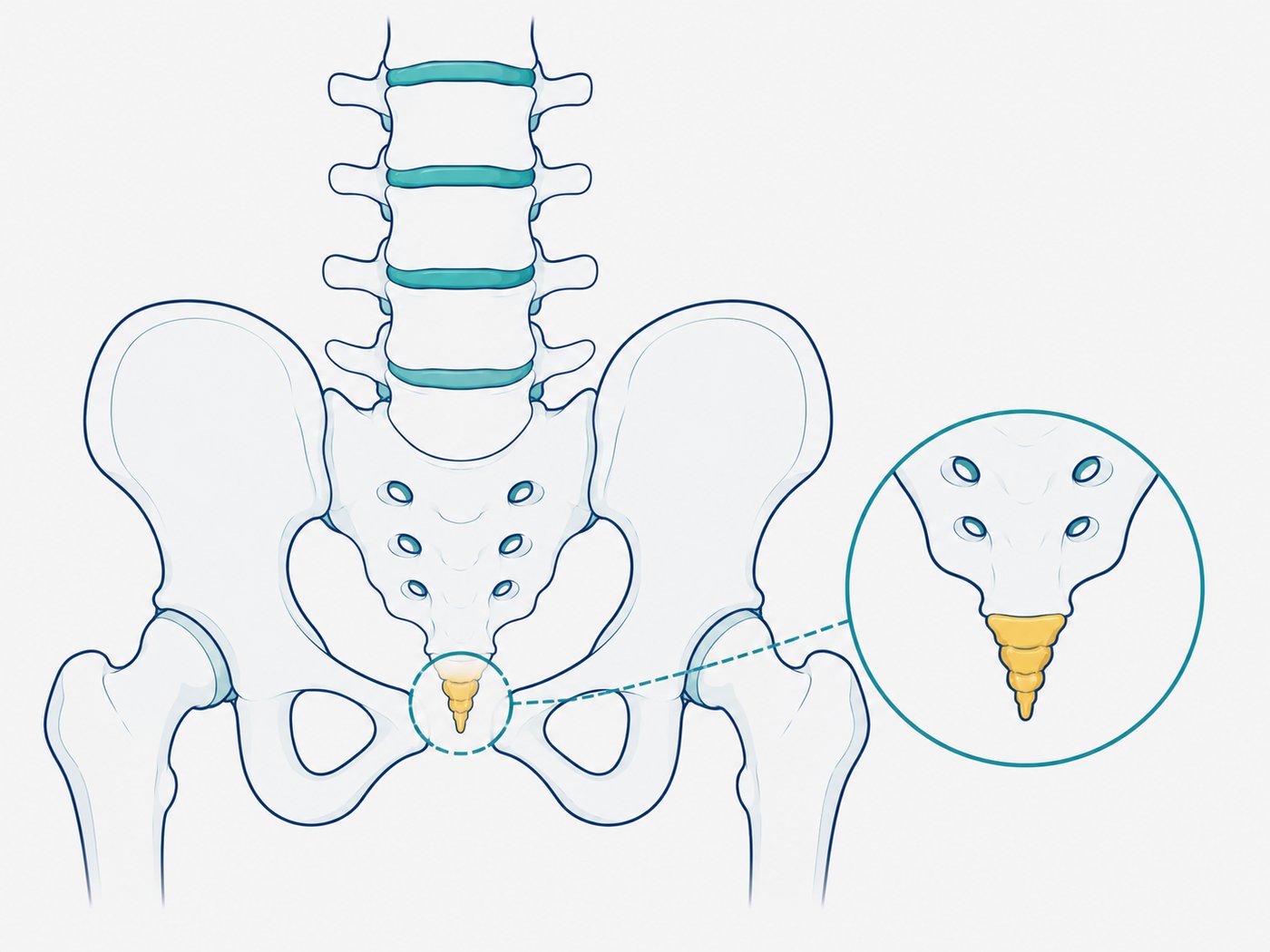
Tailbone pain: a focused pain that is hard to ignore
Pain in the tailbone area that worsens with sitting, usually following a direct fall, childbirth or prolonged sitting on a hard surface.
Tailbone pain is a very focused problem, usually with a clear story of onset - a direct fall, childbirth or prolonged sitting on a hard surface - and not just “back pain”.
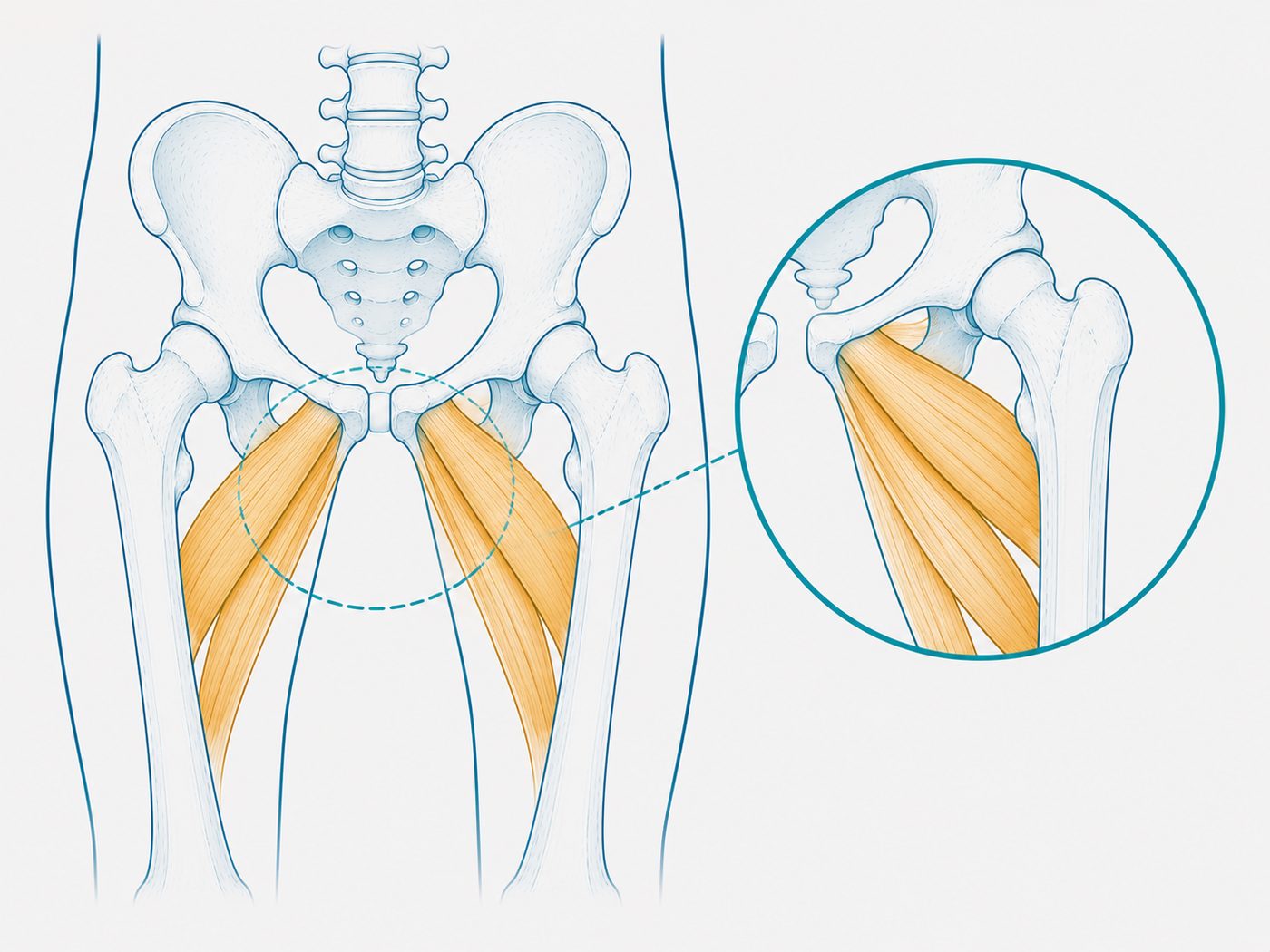
If you have focused, precise pain at the very lowest end of the spine, right in the area you sit on, which worsens with prolonged sitting or sitting on a hard surface - this may be coccydynia: pain in the tailbone.
This isn’t just “back pain”, but a very focused problem in a specific area, and it usually has a clear story of onset - a direct fall onto the buttocks, childbirth, or repeated prolonged sitting on a hard or uncomfortable surface.
How does it usually feel?
Symptoms can vary, but many describe:
- Focused, precise pain in the tailbone itself, at the lower end of the spine.
- Significant worsening with sitting, especially on a hard surface or when leaning back.
- Relative relief with standing or walking.
- Pain that worsens when standing up after prolonged sitting.
- Sometimes pain with bowel movements as well, if there is additional load on the area.
If the pain improves significantly when you change sitting position, for instance leaning forward or using a cushion with a hole in the middle - that is an important sign pointing directly to the tailbone itself rather than to a wider area of the back.
What causes tailbone pain?
The most common cause is a direct fall onto the buttocks, for example onto a hard surface or on stairs. Childbirth can also cause bruising or overstretching of the ligaments around the tailbone. Prolonged, repeated sitting on uncomfortable surfaces, common in people with desk jobs, can also cause accumulated irritation of the area.
How can physiotherapy help?
Treatment focuses first of all on reducing the direct pressure on the tailbone, usually with a dedicated seat cushion with a cut-out in the middle, alongside gentle release of the muscles and tissues around the area and exercises to improve pelvic and sitting posture. In most cases there is significant relief within a few weeks.
When should you get checked?
If the pain persists beyond a few months despite treatment, comes with unexplained weight loss, or there is blood in the stool - see a doctor to rule out other causes.
Frequently asked questions
Sometimes yes, but in most cases it is bruising or irritation of the tissues around the bone rather than an actual fracture.
Yes, significantly - it reduces the direct pressure on the tailbone while sitting, which is usually the main factor that aggravates the pain.
In most cases a few weeks to a few months with tailored treatment, but it depends on the severity of the original injury.
What’s worth remembering?
Tailbone pain is a focused problem and more common than people think, and it usually responds well to reducing direct pressure and targeted treatment - there’s no need to suffer in silence.
- Coccydynia is caused mainly by a direct fall onto the buttocks, childbirth, or prolonged repeated sitting on an uncomfortable surface.
- It’s identified by focused, precise pain in the tailbone that worsens with sitting and eases with standing or walking.
- Changing sitting position, such as leaning forward or using a cushion with a hole in the middle, can bring significant relief and help with the diagnosis.
Not sure if this is your situation? I’d be happy to give you a professional assessment and build a treatment plan that fits you.
Book a consultation callYou might also be interested in:
 Pain somewhere else?
Return to the interactive body map and pick an area
←
Pain somewhere else?
Return to the interactive body map and pick an area
←