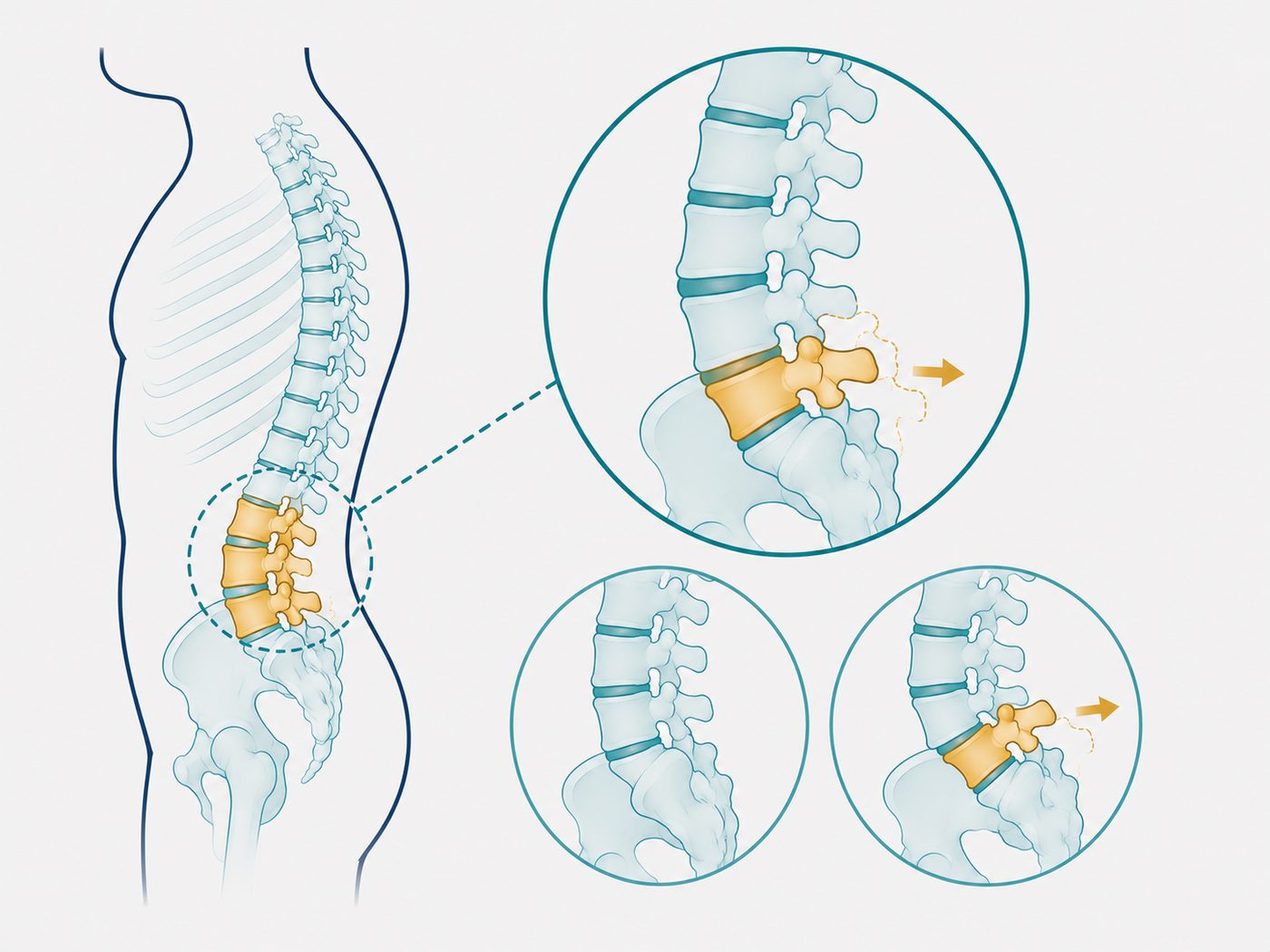
Spondylolisthesis: when a vertebra slips forward
Lower back pain and sometimes radiation into the legs following the slipping of one vertebra relative to another.
Spondylolisthesis - the slipping of one vertebra relative to another - is sometimes an incidental finding on imaging that causes no symptoms at all; treatment is determined by function, not by the word in the report.
Spondylolisthesis is a condition in which one vertebra slips relative to the one below it. Sometimes it’s an incidental finding that causes no symptoms; in other cases it can cause back pain, stiffness, or radiation into the legs. I often meet patients who arrive alarmed after seeing this word in an imaging report - but the imaging finding alone determines nothing, and many people live with such a slip without a single symptom.
What is spondylolisthesis?
The slipping of the vertebra can appear following degenerative changes, certain sporting loads (for instance artistic gymnastics or heavy weightlifting) or other factors. The severity of the imaging finding doesn’t always reflect the intensity of the pain or the level of function - this is a point clearly supported by current research, and I find that in itself, once understood, already removes some of the anxiety.
If you got an imaging report with the word “spondylolisthesis” - before you worry, remember that treatment is decided by your actual function and symptoms, not by the word in the report. That’s exactly why a full clinical assessment matters so much.
How does it usually feel?
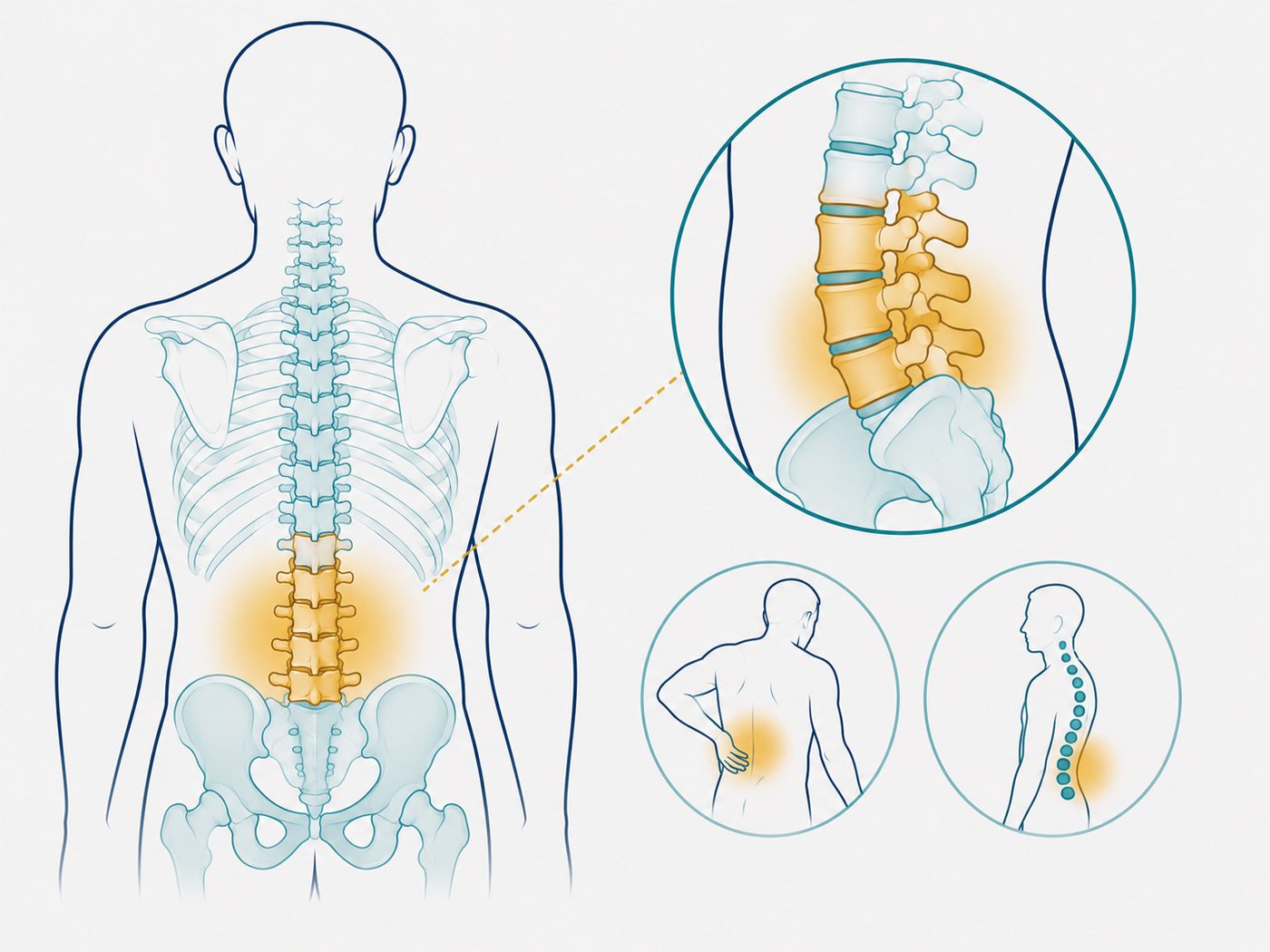
- Pain in the lower back.
- Stiffness after standing.
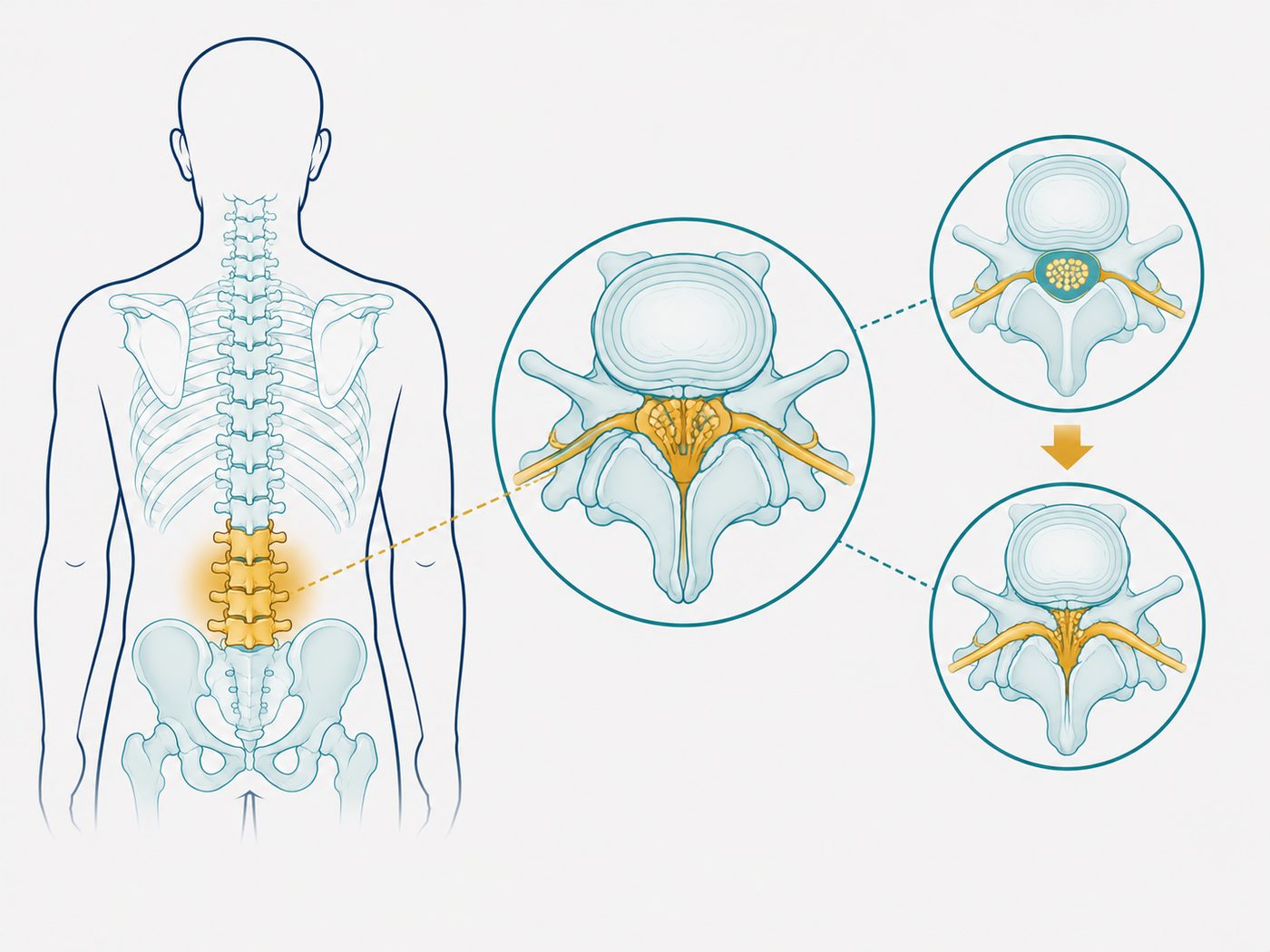
- Sometimes radiation into the leg.
- Pain during strenuous activity.
- Reduced tolerance for standing or walking.
- Progressive weakness in the legs
- A change in bladder or bowel control
- Numbness in the saddle area (inner thighs and buttocks)
- Pain that worsens significantly and suddenly
How can physiotherapy help?
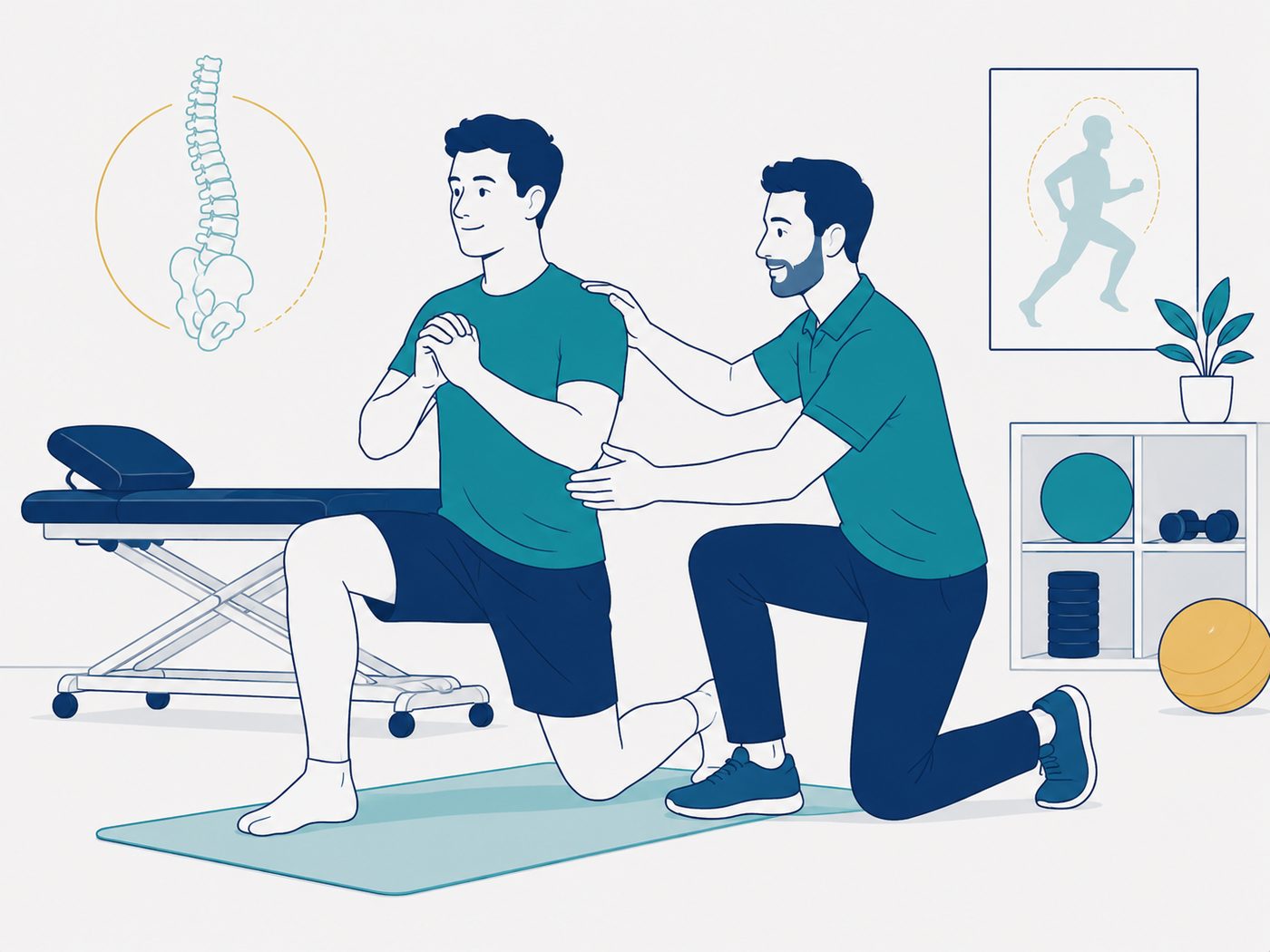
Treatment is personally tailored and includes exercises to improve control of the core muscles, gradual strengthening, improving movement and guidance on managing loads to allow a safe return to routine. In most cases the aim is to build stability and function, not to “fix” the slip itself.
Frequently asked questions
Really not. In many cases it can be treated conservatively and significant improvement in function achieved - surgery is usually reserved for cases with significant neurological symptoms that don’t respond to treatment.
Usually yes, after adjusting the activity and loads to suit the situation - complete avoidance of movement almost always worsens function in the long run.
If the pain persists, radiates into the leg or interferes with daily function.
What’s worth remembering?
Spondylolisthesis doesn’t necessarily limit quality of life. With the right assessment and a suitable rehabilitation plan, many people return to full activity - including competitive sport, depending on the case.
- The slip can appear from degenerative changes, certain sporting loads such as artistic gymnastics, or other factors.
- The severity of the imaging finding doesn’t always reflect the intensity of the pain or the level of function - as current research supports.
- It’s identified by lower back pain, stiffness after standing and sometimes radiation into the leg.
Not sure if this is your situation? I’d be happy to give you a professional assessment and build a treatment plan that fits you.
Book a consultation callYou might also be interested in:
 Pain somewhere else?
Return to the interactive body map and pick an area
←
Pain somewhere else?
Return to the interactive body map and pick an area
←