Cervical spondylosis: when the neck gradually changes with age
Degenerative changes in the cervical spine that are present in most people beyond a certain age - but only cause symptoms in some of them.
Cervical spondylosis - degenerative changes in the cervical spine - is present on imaging in most people aged 65 and over, but doesn’t always cause symptoms, and even when it does, in most cases it can be managed well.
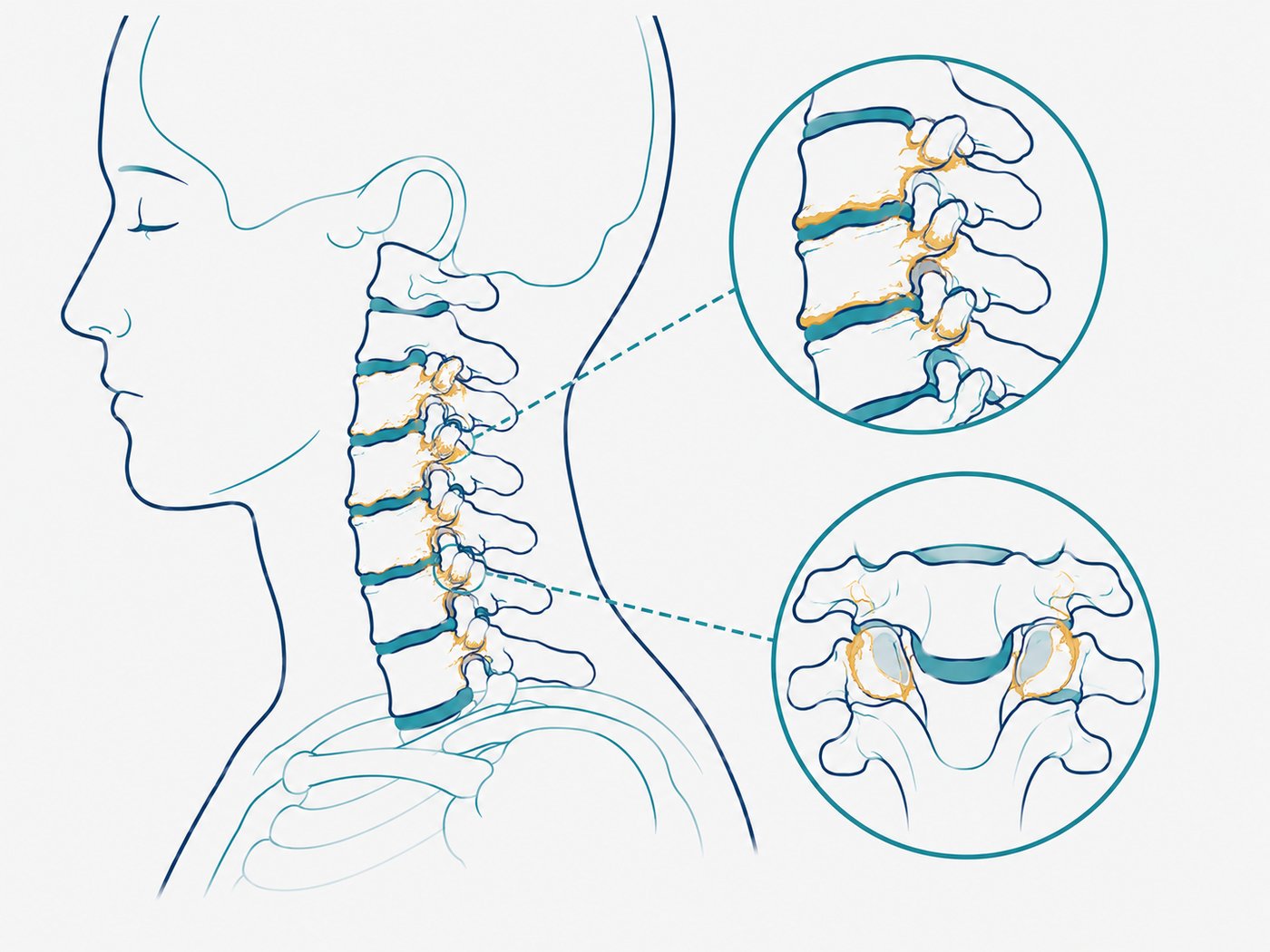
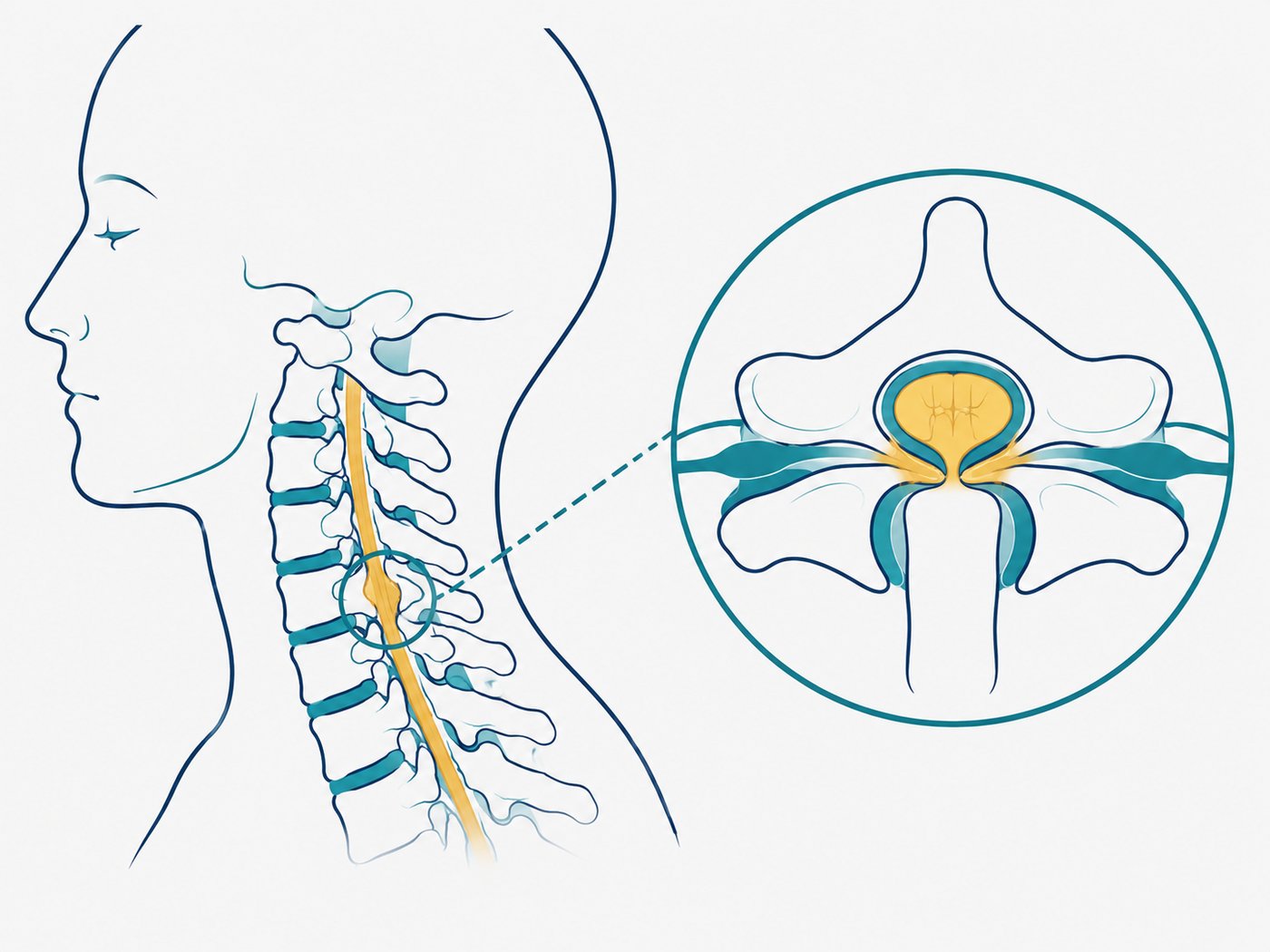
If you have chronic stiffness in the neck accompanied by a gradual reduction in the range of motion, mainly in turning the head to the sides, this may be cervical spondylosis - degenerative changes in the vertebrae, discs and small joints of the cervical spine that accumulate over the years.
This is one of the most common conditions in the spine - present on imaging in most people aged 65 and over. But it doesn’t always cause symptoms, and even when it does, in most cases it can be managed well.
How does it usually feel?
Symptoms can vary, but many describe:
- Chronic stiffness in the neck, mainly in the morning.
- A gradual reduction in the range of motion, especially in turning the head.
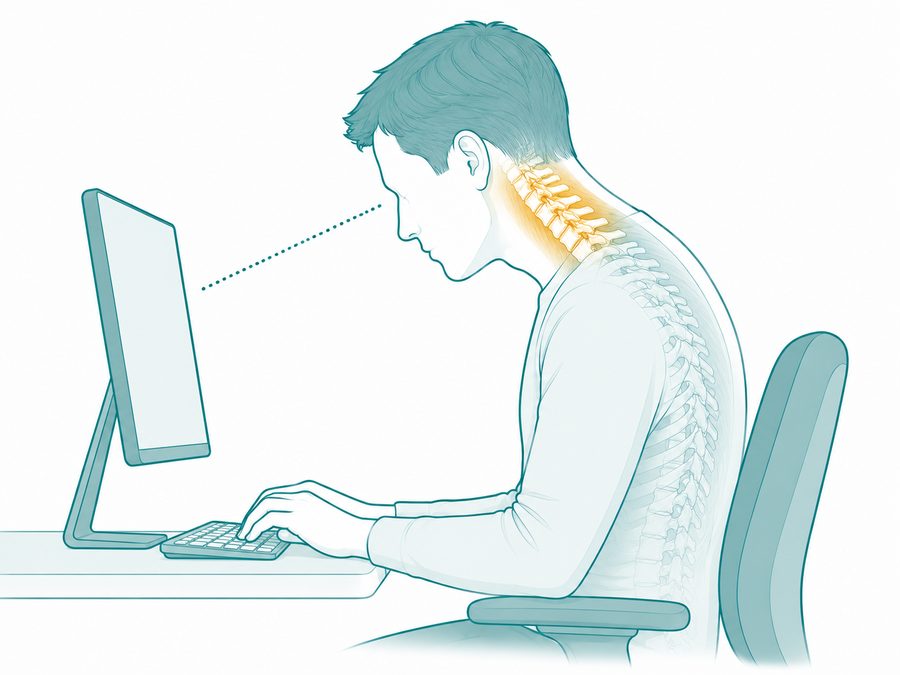
- Dull pain that worsens with prolonged sitting or at the end of the day.
- Sometimes “clicking” or a grinding sensation with neck movement.
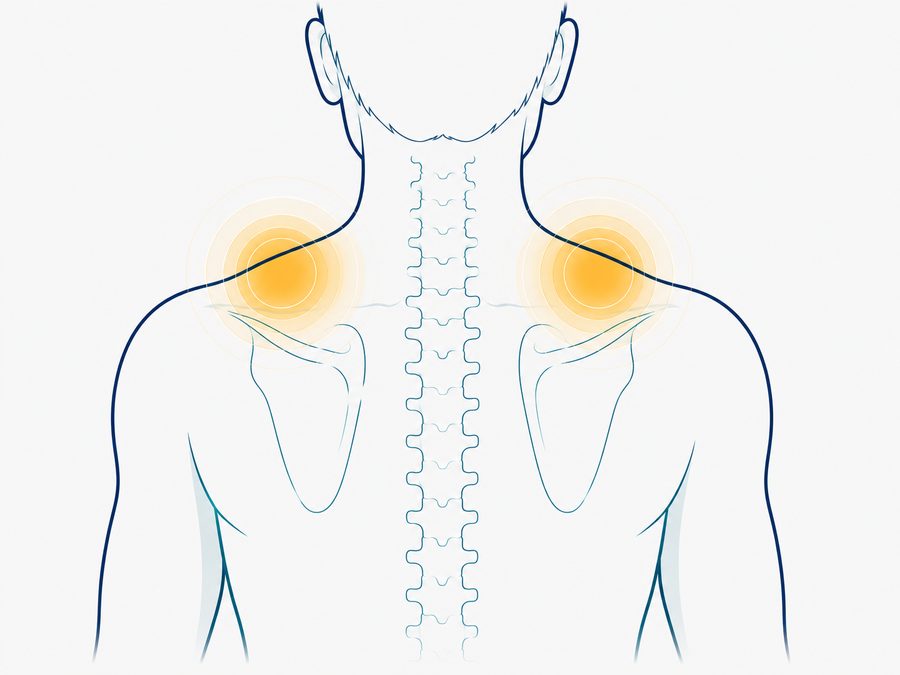
- Pain that can radiate mildly into the shoulders, without necessarily any numbness in the arm.
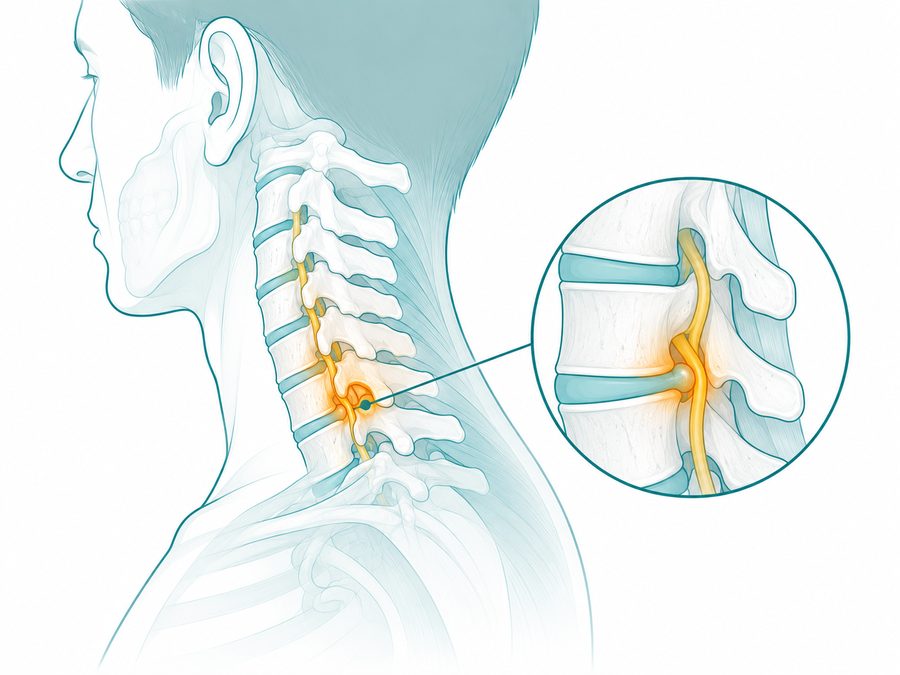
If the symptoms progress gradually over years rather than all at once, and without numbness or weakness in the arm - this is a typical pattern for cervical spondylosis rather than acute radiculopathy.
What causes cervical spondylosis?
These are changes that occur in the neck over the years, as a natural part of the ageing of the tissues. But here comes the most important fact to know: such changes are found on imaging in a large proportion of people over 40 who have no pain at all. That is, a finding of “cervical spondylosis” on an X-ray or MRI doesn’t on its own explain the pain, and the link between the severity of the finding and the intensity of the symptoms is weak.
What does have an effect? Mainly loads and movement habits: long hours in the same position without a break, a decline in the strength and endurance of the neck muscles, and periods of little activity. And as for posture: contrary to what is commonly said, “forward head” has not been shown to accelerate the process. The link found in studies between head position and neck pain is weak and heavily influenced by age. What burdens the neck is less the position itself, and more how long you stay in it without moving.
How can physiotherapy help?
Treatment focuses on preserving the existing range of motion, strengthening the deep neck muscles that support the spine, and gradually correcting postural patterns that load the area. The aim isn’t to “fix” the degenerative changes, but to manage them so that they don’t limit daily function.
When should you get checked?
If symptoms such as numbness or weakness in the arm, difficulty walking, or a change in finger dexterity are added - get assessed to rule out more significant involvement of a nerve root or of the spinal cord itself.
Frequently asked questions
Not necessarily. Many people with significant degenerative changes on imaging have no pain at all, and even those who do can manage it well with tailored treatment.
Existing degenerative changes can’t be reversed, but the progression can be significantly slowed and good function maintained through strengthening and appropriate movement.
Usually not essential for the initial diagnosis - a clinical examination is sufficient. Imaging is mainly needed where significant nerve involvement is suspected.
What’s worth remembering?
Cervical spondylosis is a natural and almost universal process with age - its presence on imaging doesn’t necessarily mean it is the source of the pain, and proper management can maintain good function for years.
- These are age-related changes, also found in many people with no pain at all: the imaging finding doesn’t on its own explain the symptoms.
- It’s identified by chronic neck stiffness, a gradual reduction in range of motion and dull pain that worsens with prolonged sitting.
- A pattern of gradual progression over years, without numbness or weakness in the arm, is characteristic of spondylosis rather than acute radiculopathy.
Not sure if this is your situation? I’d be happy to give you a professional assessment and build a treatment plan that fits you.
Book a consultation callYou might also be interested in:
 Pain somewhere else?
Return to the interactive body map and pick an area
←
Pain somewhere else?
Return to the interactive body map and pick an area
←