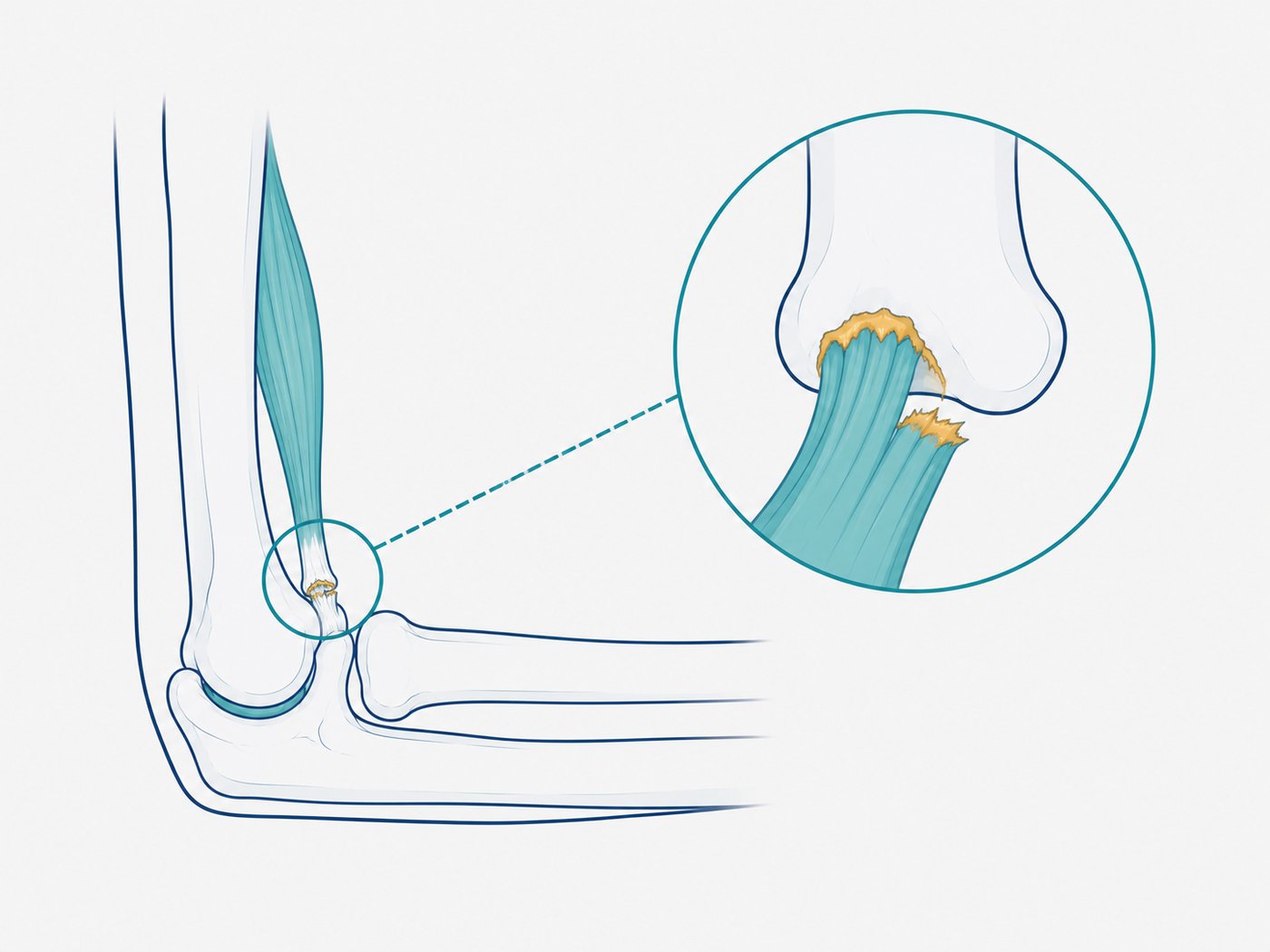
Distal biceps or triceps tear at the elbow: when the strength disappears suddenly
A tear of a tendon near the elbow, completely different from biceps tendinopathy at the shoulder - accompanied by a sudden, clear loss of strength.
A distal biceps or triceps tear near the elbow is completely different from biceps tendinopathy at the shoulder - it comes with a sudden, clear loss of strength, usually while lifting a heavy weight.
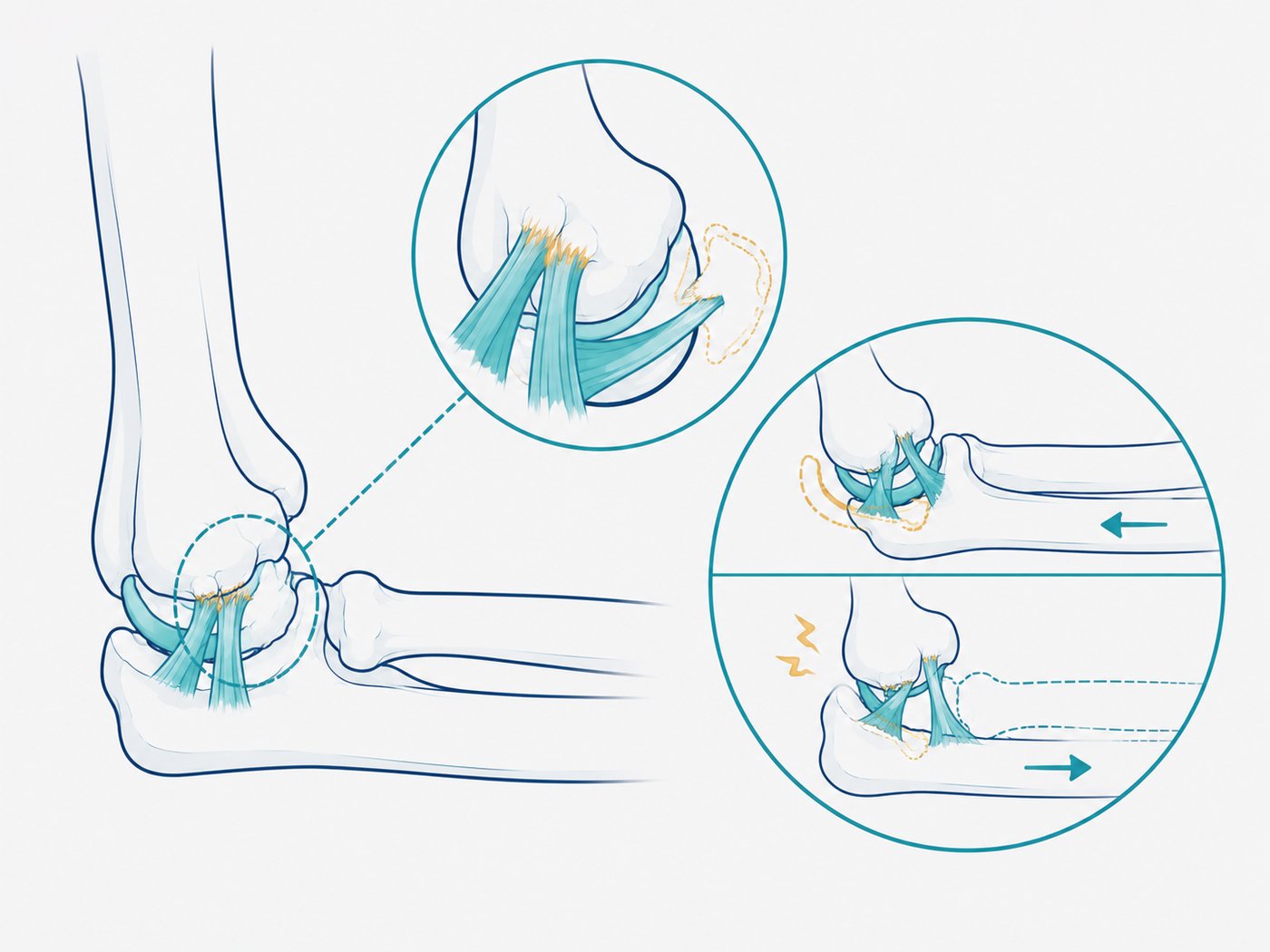
If you felt a sudden “tearing” at the front or back of the elbow while lifting a heavy weight, and since then there is a clear loss of strength and perhaps also a change in the shape of the muscle - this may be a tear of the distal biceps or triceps tendon, at the point where the tendon attaches to the bone of the elbow.
This is a completely different injury from biceps tendinopathy at the shoulder, which involves the other end of the same muscle - and its treatment is significantly different too.
How does it usually feel?
Symptoms can vary, but many describe:
- A sudden, painful “tearing” sensation while lifting a weight.
- An immediate, clear loss of strength, mainly in bending or straightening the elbow.
- Sometimes a visible change in the shape of the muscle, such as a “lump” riding upward.
- Swelling and bruising around the elbow.
- Pain located near the elbow rather than at the shoulder.
If you can identify that the strength that has weakened is mainly in bending (rather than straightening) the elbow, that points to the biceps tendon; if the opposite - that points to the triceps tendon. This is precise information that greatly helps the examination.
What causes a distal biceps or triceps tear?
Most of these tears happen when lifting too heavy a weight, in a sudden movement, or with an unexpected load on the bent elbow. Men aged 40-60 are at higher risk, particularly those who do strength training.
How is it treated?
In partial tears, conservative rehabilitation including gradual strengthening is usually enough to restore good function. In complete tears, by contrast, surgery is usually needed to reattach the tendon to the bone, followed by prolonged, structured physiotherapy rehabilitation that gradually restores full strength and range of motion.
When should you get checked?
If a complete tear is suspected - a clear loss of strength and a visible change in the muscle’s shape - see an orthopedic specialist quickly. Surgery in the first weeks gives much better results than late surgery.
Frequently asked questions
No. This is the other end of the same muscle, with a completely different injury mechanism, severity and treatment.
No - in partial tears it is sometimes possible to manage with conservative treatment. In complete tears, surgery is usually the best way to restore full strength.
After surgery, usually a few months of structured rehabilitation before a full return to activity and weightlifting.
What’s worth remembering?
A distal biceps or triceps tear comes with a clear loss of strength - and identifying it quickly significantly improves the chances of a full recovery.
- Most tears happen when lifting too heavy a weight or with an unexpected load on the bent elbow; men aged 40-60 are at higher risk.
- They are identified by a sudden “tearing” sensation, an immediate loss of strength and sometimes a visible change in the shape of the muscle.
- Weakness in bending the elbow points to the biceps tendon; weakness in straightening points to the triceps tendon - precise information that helps the diagnosis.
Not sure if this is your situation? I’d be happy to give you a professional assessment and build a treatment plan that fits you.
Book a consultation callYou might also be interested in:
 Pain somewhere else?
Return to the interactive body map and pick an area
←
Pain somewhere else?
Return to the interactive body map and pick an area
←