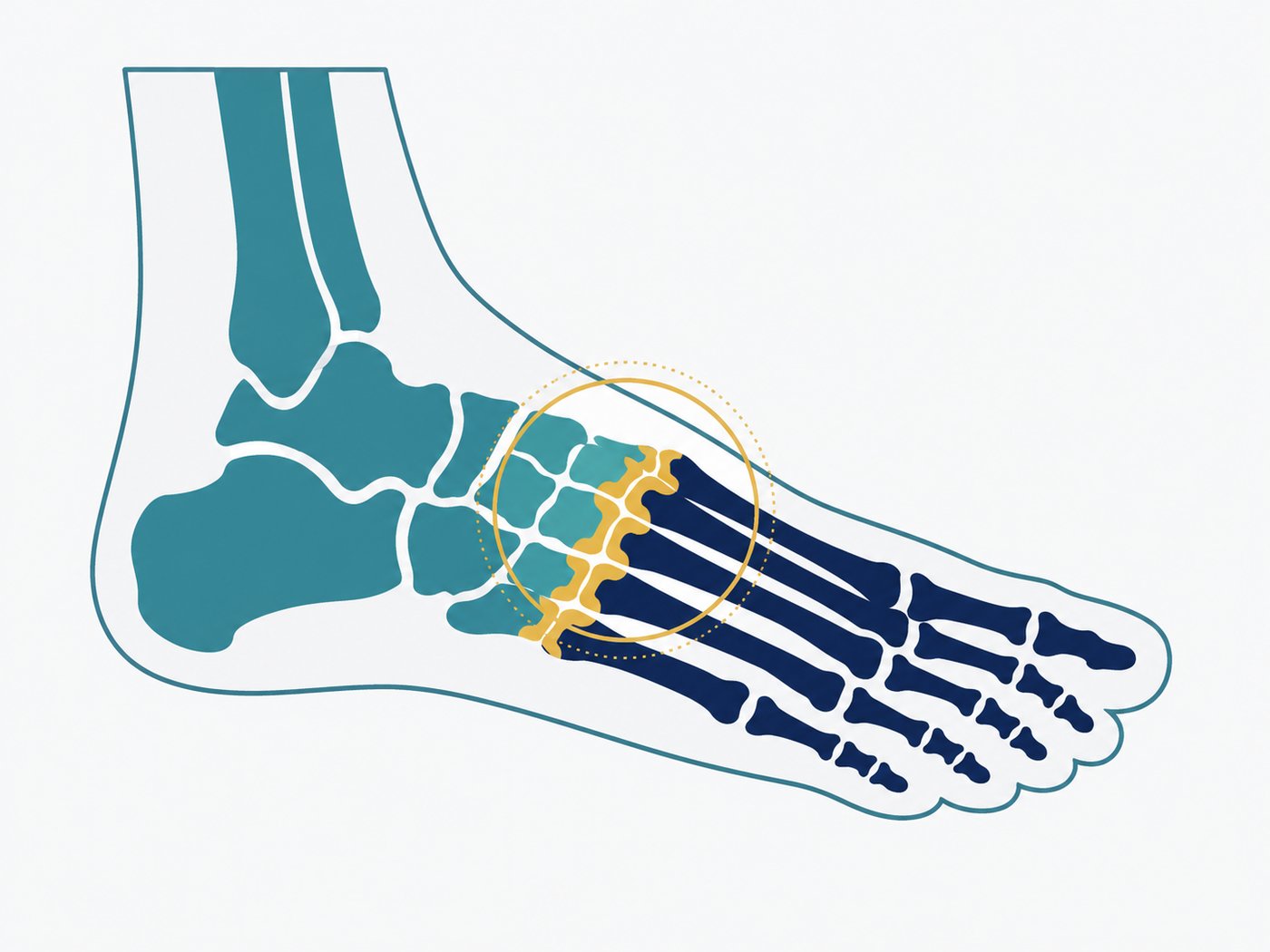
Lisfranc injury: small in appearance, big in consequences
An injury to the joints of the midfoot, less common than a bunion or metatarsalgia - but easily missed and capable of causing long-term damage.
A Lisfranc injury is less common than a bunion or metatarsalgia, but particularly important because it is easily missed on initial examination and on an ordinary X-ray - and if not treated correctly can cause chronic damage.
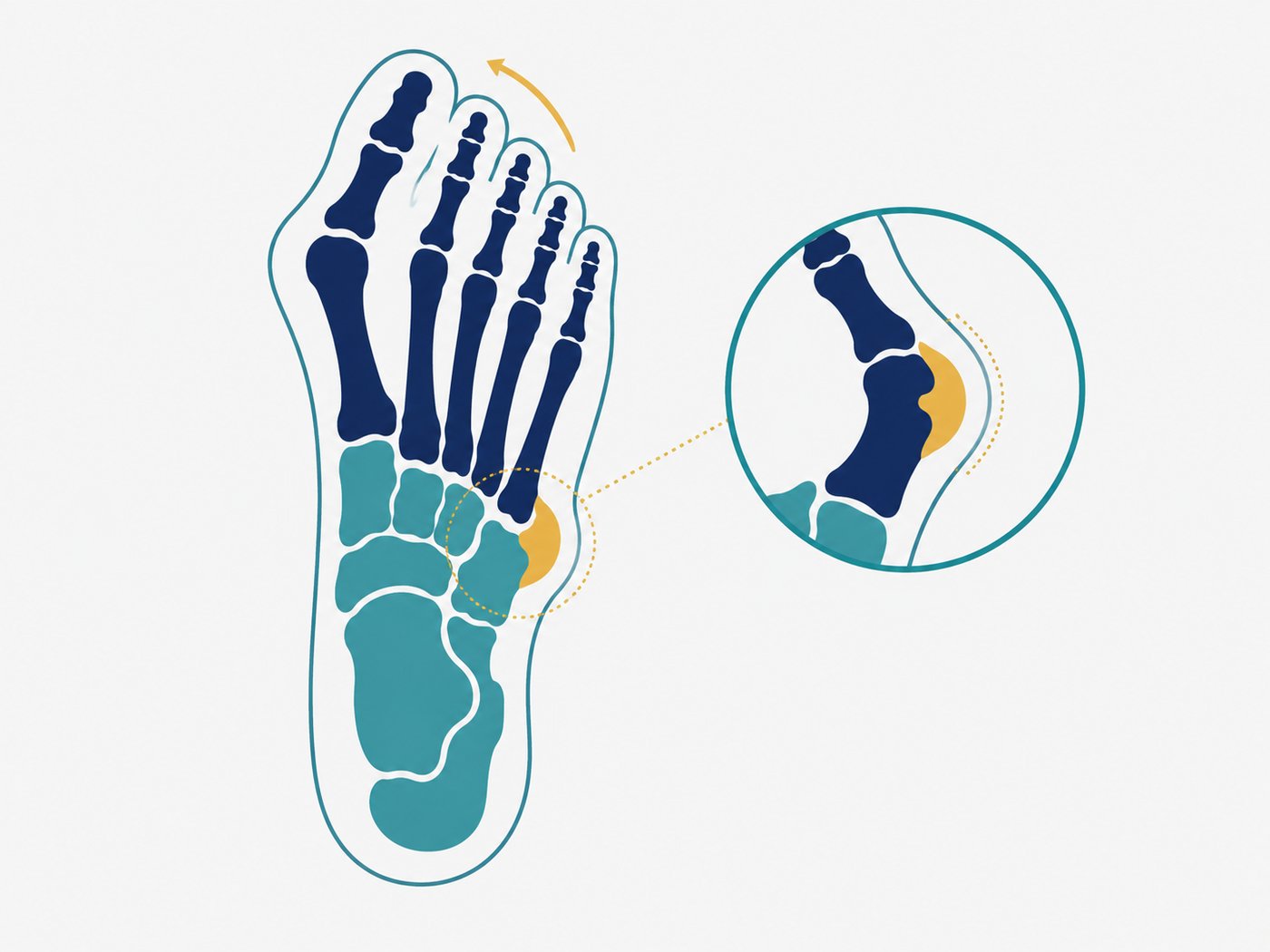
If you have had an injury to the foot, for example a fall with the foot caught in place or a sharp twist during sport, and you have pain and bruising in the middle of the foot, on the top, that isn’t resolving like an ordinary sprain - this may be a Lisfranc injury: damage to the joints connecting the bones of the midfoot to the metatarsal bones.
This is a less common injury, but particularly important because it is easily missed on initial examination and on an ordinary X-ray - and if not treated correctly, it can cause significant chronic damage.
How does it usually feel?
Symptoms can vary, but many describe:
- Pain and swelling in the middle of the foot, on the top.
- Bruising in the sole of the foot, and sometimes on the top as well.
- Sharp pain that worsens when standing on the foot or pushing forward while walking.
- Significant difficulty bearing weight on the injured foot.
- Tenderness in one spot in the middle of the foot on pressure.
A simple check: if there is bruising in the sole of the foot, that is an important and unusual sign pointing to a suspected Lisfranc injury rather than an ordinary ankle sprain.
What causes a Lisfranc injury?
The injury can happen at high energy, such as a road accident or a fall from height, but also at relatively low energy - for instance when force is applied to a foot that is pointed downward, common in ball sports, dance or horse riding.
How is it treated?
Because these are joints critical to the stability of the foot, accurate diagnosis and the decision between conservative and surgical treatment are always made together with an orthopedic specialist. Where the injury is relatively stable, rehabilitation includes an initial period of immobilization, followed by a gradual and careful return to full load under close monitoring.
When should you get checked?
If a Lisfranc injury is suspected - significant pain in the middle of the foot after an injury, combined with bruising in the sole - you should be assessed by an orthopedic specialist as soon as possible, because late treatment significantly increases the risk of chronic damage and long-term functional problems.
Frequently asked questions
Not always - some ligament injuries aren’t clearly visible on a standard X-ray, and additional imaging such as CT or MRI is sometimes needed.
No, it depends on the severity of the injury and the stability of the joints. Stable injuries can be treated conservatively, whereas injuries with instability require surgery.
Significantly longer than an ordinary sprain - usually several months, including a period of immobilization and then gradual, careful rehabilitation.
What’s worth remembering?
A Lisfranc injury sometimes looks like an “ordinary” sprain but is less common and more critical to identify correctly - pain in the middle of the foot with bruising in the sole is a sign not worth ignoring.
- The injury involves the joints connecting the bones of the midfoot to the metatarsal bones, and can happen at high energy or from a sharp twist in sport.
- Bruising in the sole of the foot is an unusual and important sign pointing to a suspected Lisfranc injury rather than an ordinary sprain.
- Pain and significant difficulty bearing weight that don’t resolve like an ordinary sprain require assessment.
Not sure if this is your situation? I’d be happy to give you a professional assessment and build a treatment plan that fits you.
Book a consultation callYou might also be interested in:
 Pain somewhere else?
Return to the interactive body map and pick an area
←
Pain somewhere else?
Return to the interactive body map and pick an area
←