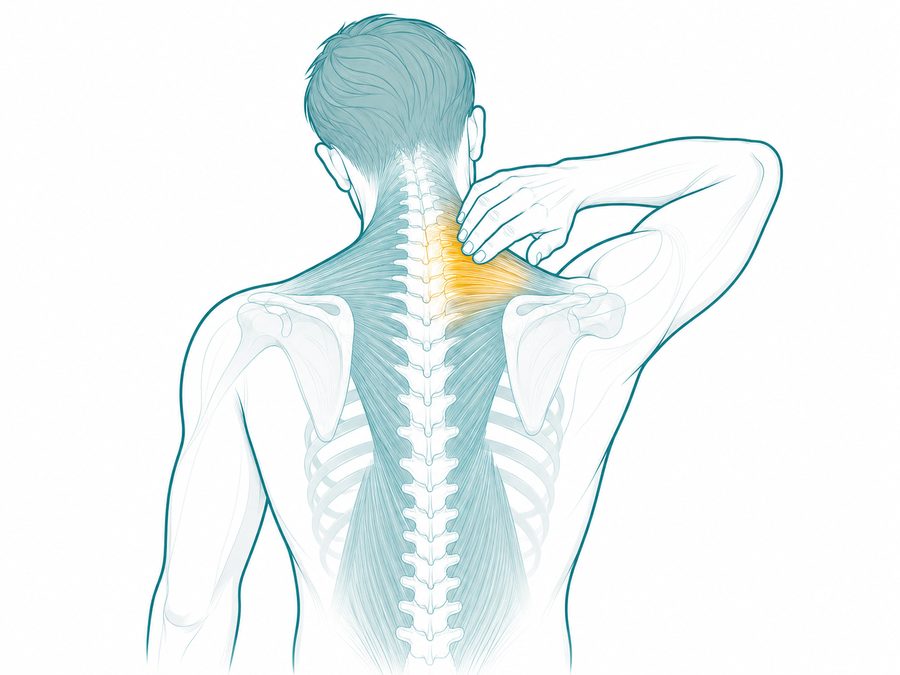
Trapezius syndrome: when your shoulders feel up around your ears
Pain, stiffness or a feeling of load in the neck, shoulders and shoulder blades.
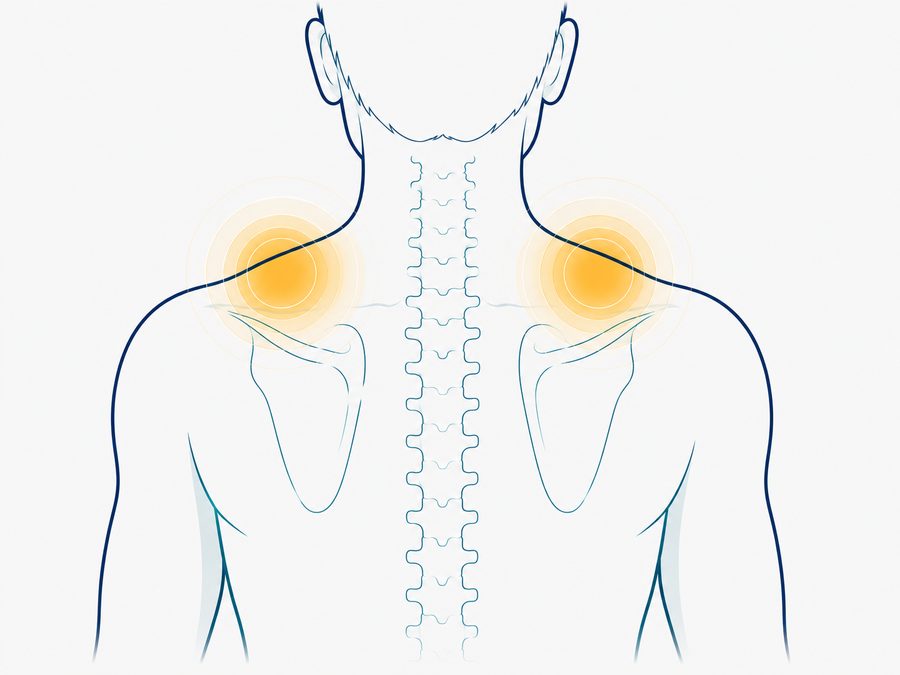
“Shoulders up around your ears” isn’t just an expression - it is exactly what happens physically when the trapezius muscle is held in prolonged contraction, usually without you noticing.
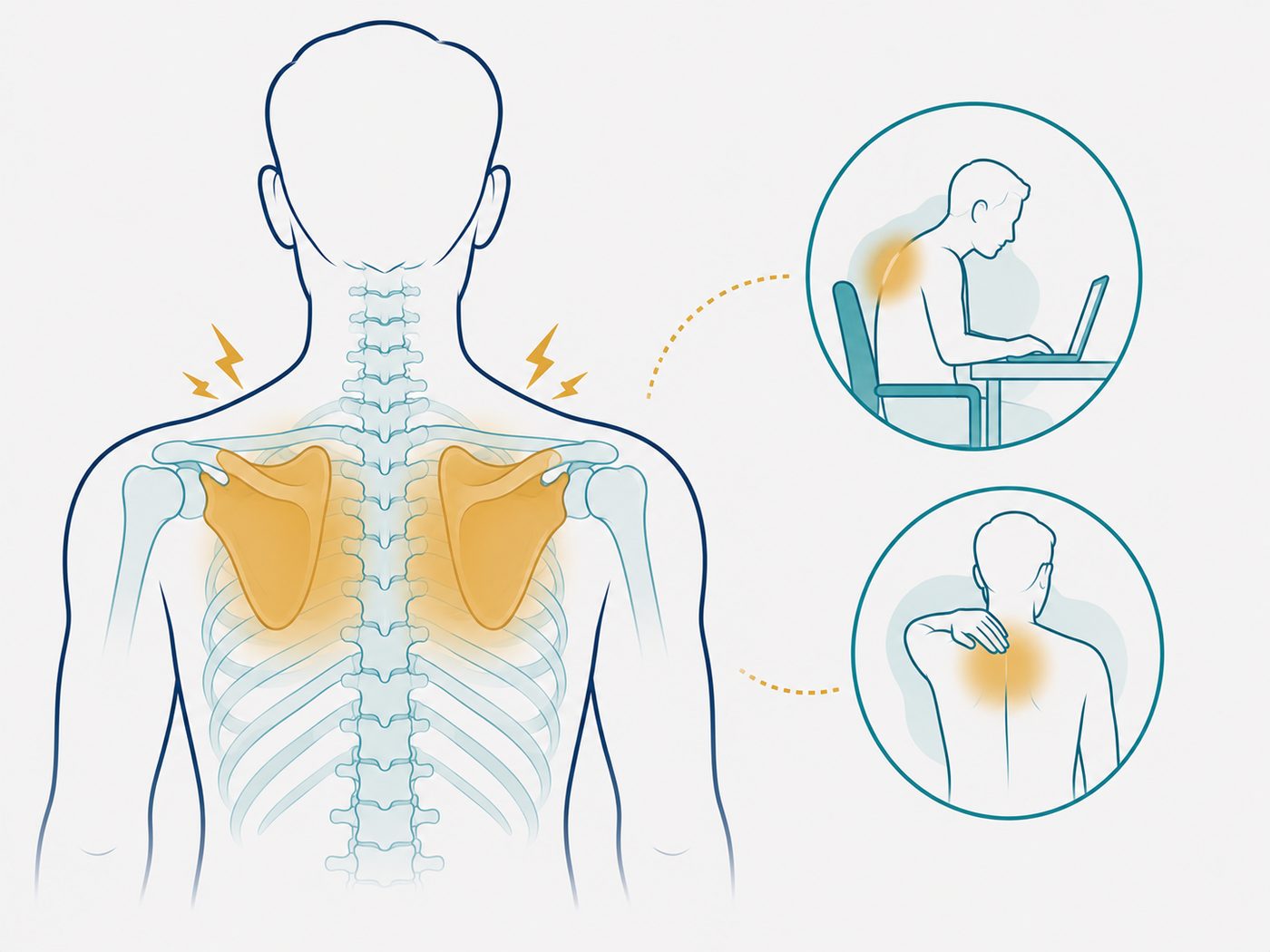
Many people describe a constant feeling of tension in the area between the neck and the shoulders. Sometimes the pain appears after hours at a computer, during stressful periods or after exertion, and radiates into the head or between the shoulder blades. In many cases the source of the symptoms is the trapezius muscle. The expression “shoulders up around your ears” that I hear so often isn’t just an expression - it is exactly what happens physically when this muscle is held in prolonged contraction.
What is the trapezius muscle?
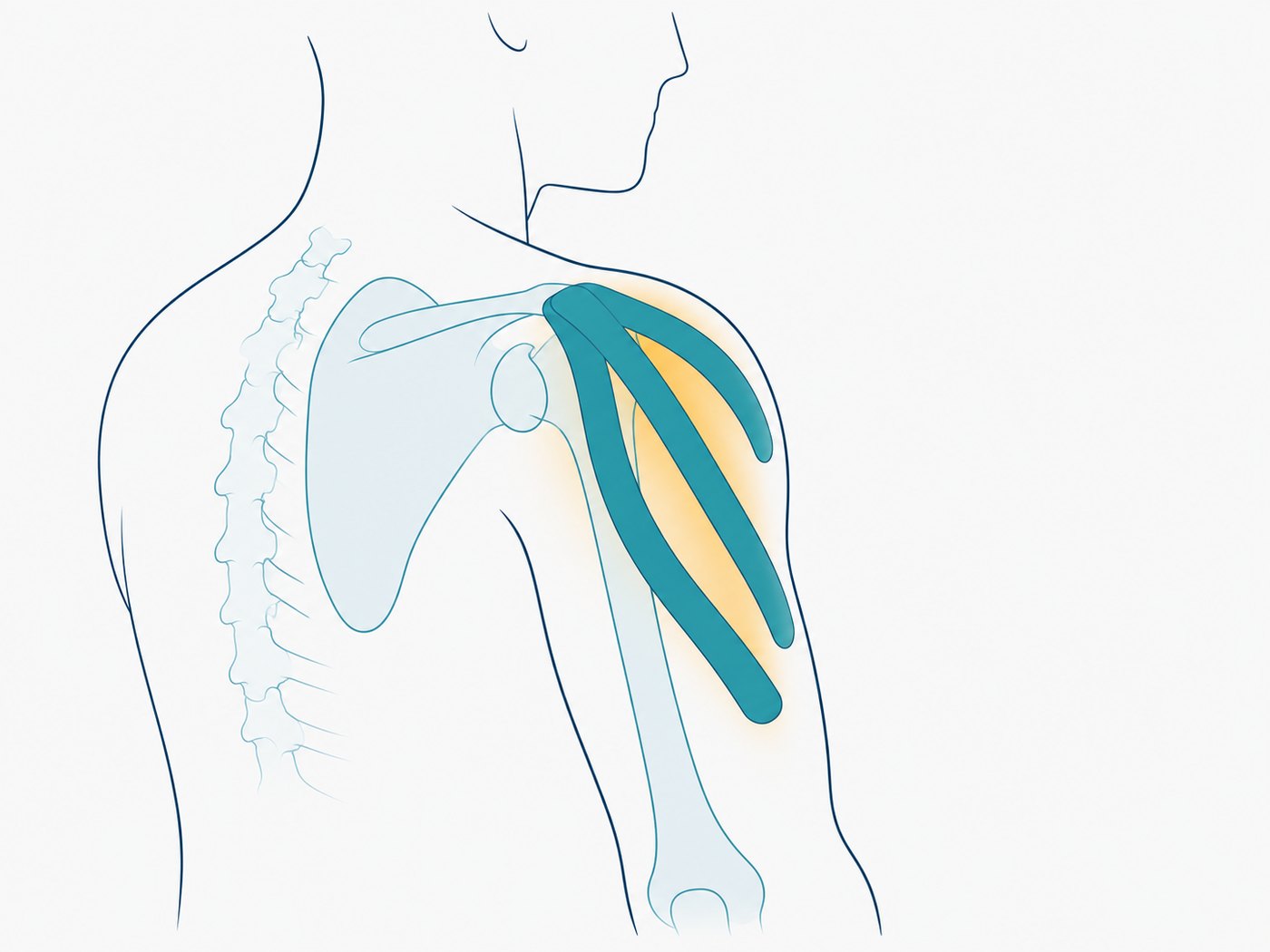
The trapezius is a large muscle running from the base of the skull to the middle of the back, contributing to posture and to the movement of the neck and shoulder blades. Prolonged load, static positions (particularly shoulders raised without noticing, for instance while typing) or repetitive activity can cause pain and tenderness in specific areas of the muscle.
Try checking the position of your shoulders during the day - if they are close to your ears without your noticing, that is a sign of ongoing contraction. Simply practising a conscious “shoulder drop” a few times a day can help reduce the tension that builds up.
How does it usually feel?
- Pain in the neck and shoulders.
- A feeling of tightness.
- Pain between the shoulder blades.
- Pain that builds toward the end of a working day.
- Sometimes a headache starting at the base of the skull.
How can physiotherapy help?
Treatment includes identifying the source of the pain, exercises to improve movement of the neck and shoulder blades, strengthening the stabilizing muscles, adjusting the workstation and guidance on reducing loads - including addressing non-physical factors such as psychological stress, where relevant.
Frequently asked questions
Yes, and significantly. In some people stress increases muscle contraction and can worsen the symptoms, even without any change in the actual physical load.
Usually not. Movement and adapted exercise are an important part of rehabilitation - a tight muscle benefits from gentle movement more than from immobilization.
If the pain doesn’t pass, limits you, or radiates into the arm - get a professional assessment to rule out other causes.
What’s worth remembering?
Pain in the trapezius muscle is a common problem, and in most cases it can be improved through the right assessment, adapted exercise and changes to daily habits.
- The trapezius runs from the base of the skull to the middle of the back; static positions such as raised shoulders while typing cause focal pain and tenderness.
- A simple self-check - whether the shoulders are close to the ears without you noticing - identifies ongoing contraction.
- A conscious shoulder drop a few times a day can significantly reduce the tension that builds up.
Not sure if this is your situation? I’d be happy to give you a professional assessment and build a treatment plan that fits you.
Book a consultation callYou might also be interested in:
 Pain somewhere else?
Return to the interactive body map and pick an area
←
Pain somewhere else?
Return to the interactive body map and pick an area
←