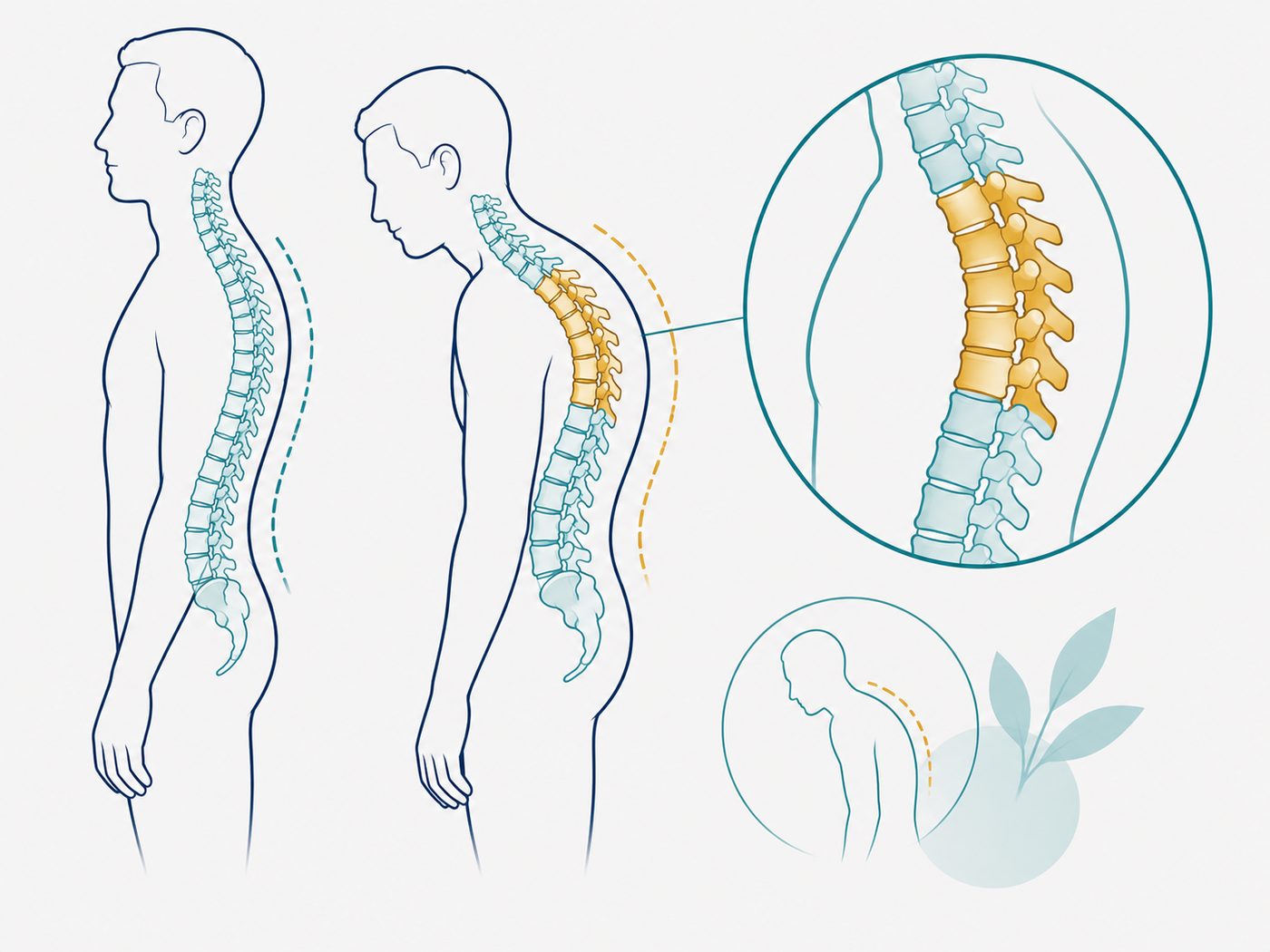
Kyphosis: when the upper back starts to round
A bent upper back, difficulty straightening up and sometimes pain or fatigue after prolonged sitting.
The “rounded back” people arrive worried about usually turns out to be something that can be significantly improved - not a permanent condition to be resigned to.
Many people notice over time that the shoulders are drawn forward, the upper back becomes more bent and it is hard to stand upright for long. In some it is a matter of postural habits, and in others it is kyphosis: a condition in which there is increased rounding of the upper back. I often meet people who arrive worried about “their rounded back”, and usually after the examination it turns out to be something that can be significantly improved, not a permanent condition to be resigned to.
What is kyphosis?
The spine has natural curves, but when the curve in the upper back increases beyond what’s expected, pain, stiffness, or difficulty with function can appear. Not every rounded back means a significant problem - the normal range is fairly wide, so get a structured assessment rather than comparing yourself to pictures on the internet.
Strengthening the upper back muscles (not only stretching the chest) is usually the most neglected part, even though it is the most significant for real, long-term improvement - stretching alone isn’t enough without muscles to hold the result.
How does it usually feel?
- A bent upper back.
- Difficulty straightening up.
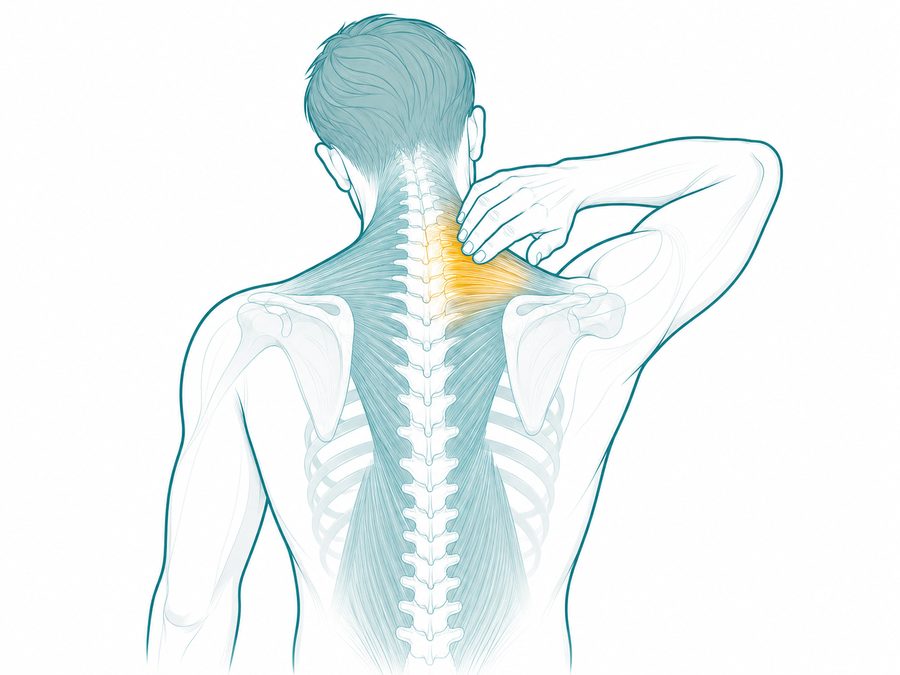
- Pain in the upper back.
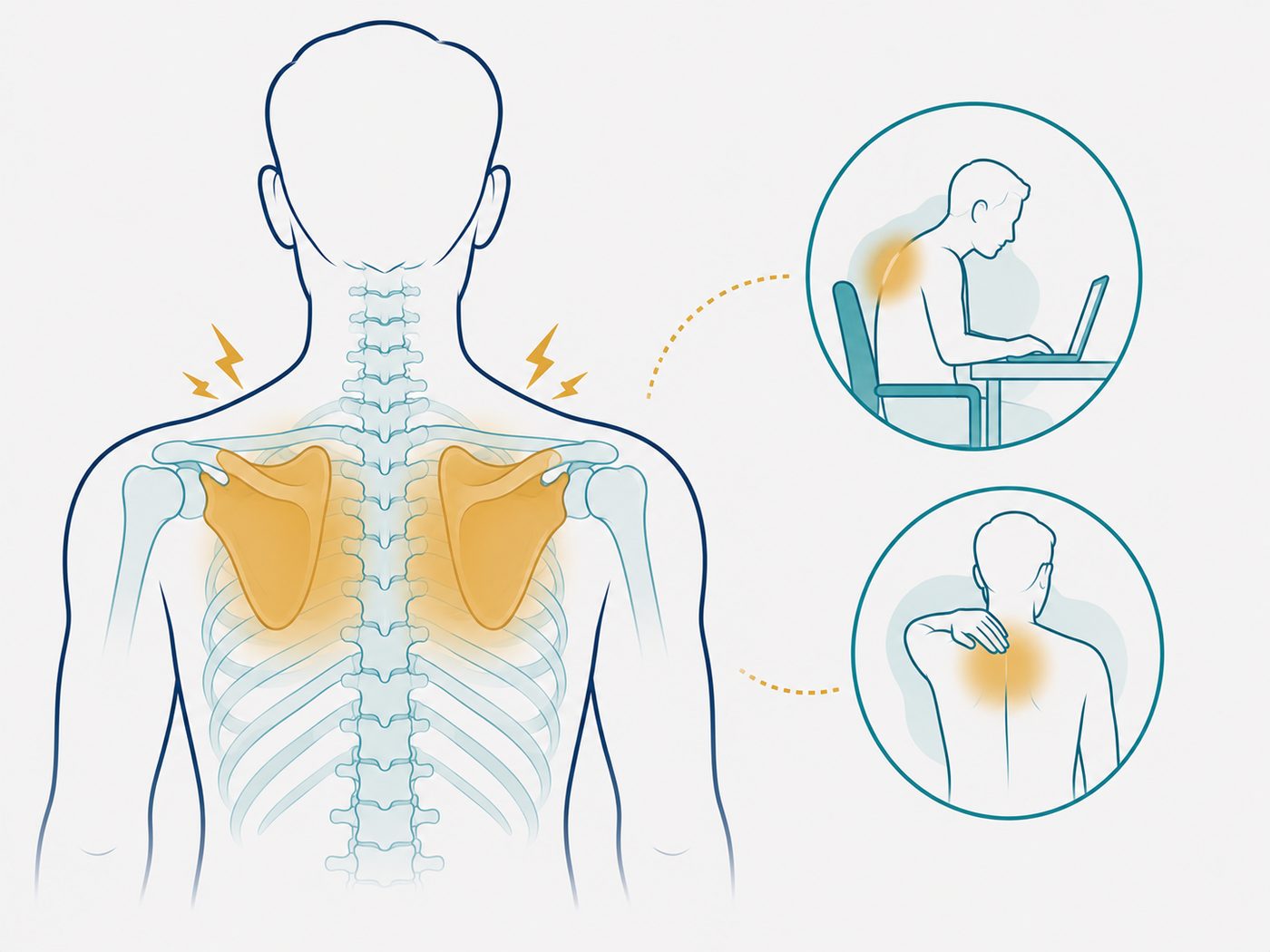
- Fatigue after sitting.
- Stiffness around the shoulder blades.
How can physiotherapy help?
After assessment, we build a program: posture exercises, strengthening the stabilizing muscles (mainly the upper back and shoulder blades), improving spinal movement, and guidance on making the new habits stick - because real change takes consistency, not a single exercise.
Frequently asked questions
In many cases function can be improved, pain reduced and posture improved through appropriate, consistent practice - the improvement takes time but it is certainly achievable in most cases.
Prolonged sitting can affect posture, but it is usually a combination of several factors - including muscle strength, genetics and sometimes bone structure.
If pain, difficulty moving, or a clear change in posture appear - get a professional assessment rather than relying on how it feels.
What’s worth remembering?
Even if you feel your back is becoming more bent, there are quite a few ways to improve movement, reduce pain and restore confidence in daily function.
- Kyphosis is increased rounding of the upper back beyond the natural and expected curve of the spine.
- There is a relatively wide normal range, which is why a structured assessment matters rather than comparison with pictures on the internet.
- Strengthening the upper back muscles, not only stretching the chest, is usually the neglected but most significant part for long-term improvement.
Not sure if this is your situation? I’d be happy to give you a professional assessment and build a treatment plan that fits you.
Book a consultation callYou might also be interested in:
 Pain somewhere else?
Return to the interactive body map and pick an area
←
Pain somewhere else?
Return to the interactive body map and pick an area
←