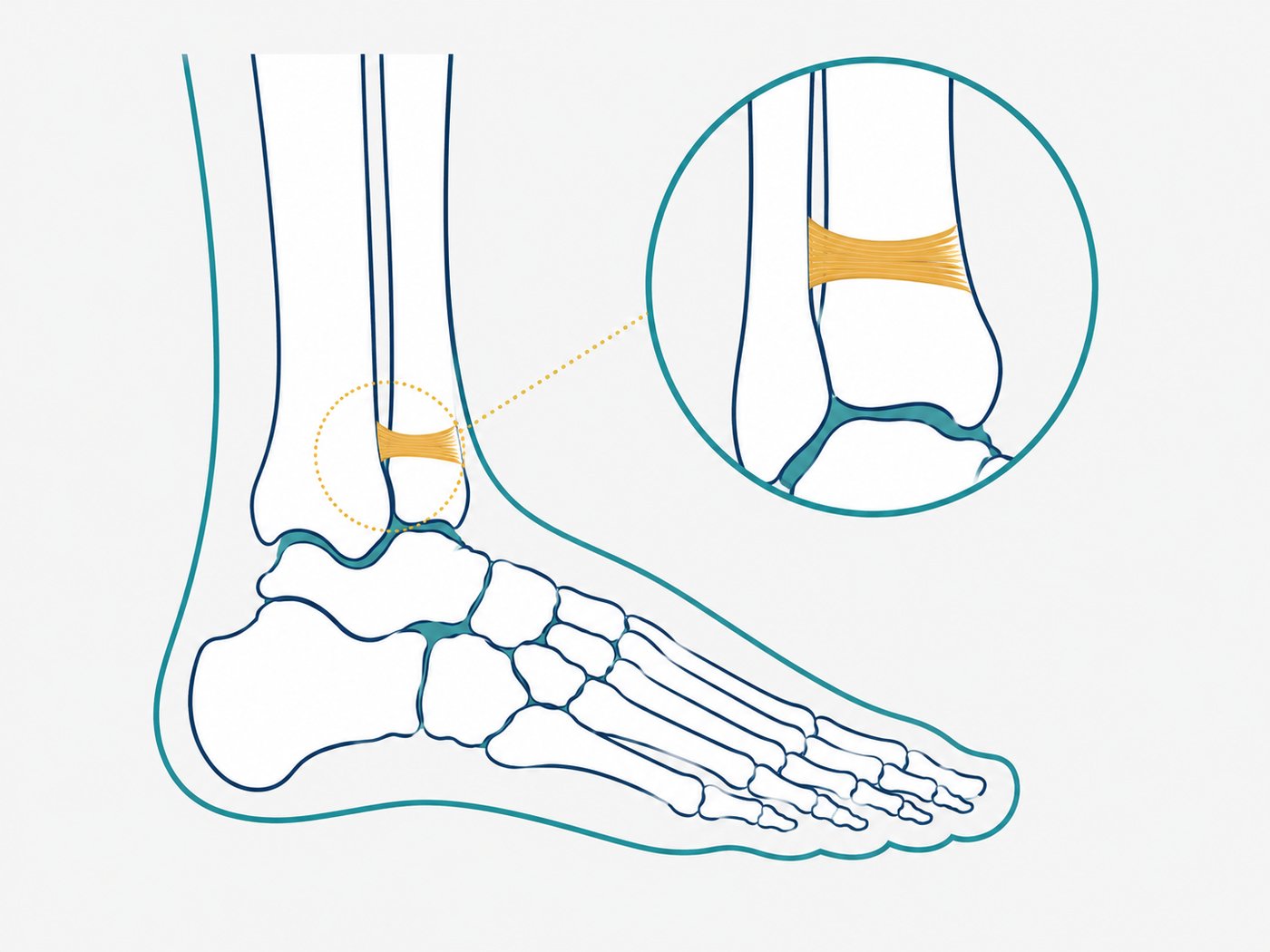
High ankle sprain: a completely different ligament
An injury to the syndesmotic ligament connecting the tibia and fibula above the ankle - a significantly longer recovery time than an ordinary sprain.
A high ankle sprain damages the syndesmotic ligament above the ankle joint itself - it accounts for only around 5% of all ankle sprains, but its recovery time is significantly longer than an ordinary sprain.
If you took a blow to the ankle during contact sport, and although the swelling is less dramatic than an “ordinary” sprain the pain sits above the ankle rather than at its sides, and recovery is taking far longer than you expected - this may be a high ankle sprain: an injury to the syndesmotic ligament connecting the two bones of the lower leg above the ankle joint itself.
This is significantly different from an “ordinary” ankle sprain, which involves the ligaments at the sides of the ankle. A high sprain accounts for only around 5% of all ankle sprains, but its recovery time is significantly longer - which is why it matters to identify it correctly from the start.
How does it usually feel?
Symptoms can vary, but many describe:
- Pain located above the ankle, between the tibia and fibula, rather than at the sides as in an ordinary sprain.
- Pain that worsens with turning the foot outward or pushing the body forward while walking.
- Swelling that is usually less dramatic than in an ordinary sprain, despite the severity of the injury.
- Significant difficulty bearing weight, sometimes more than in an ordinary sprain.
- Pain that lasts significantly longer than in an ordinary sprain.
A test that helps distinguish it: squeezing the tibia and fibula together, above the ankle. Pain appearing near the ankle from this squeeze, even though it doesn’t touch the joint directly, points strongly to a high sprain.
What causes a high ankle sprain?
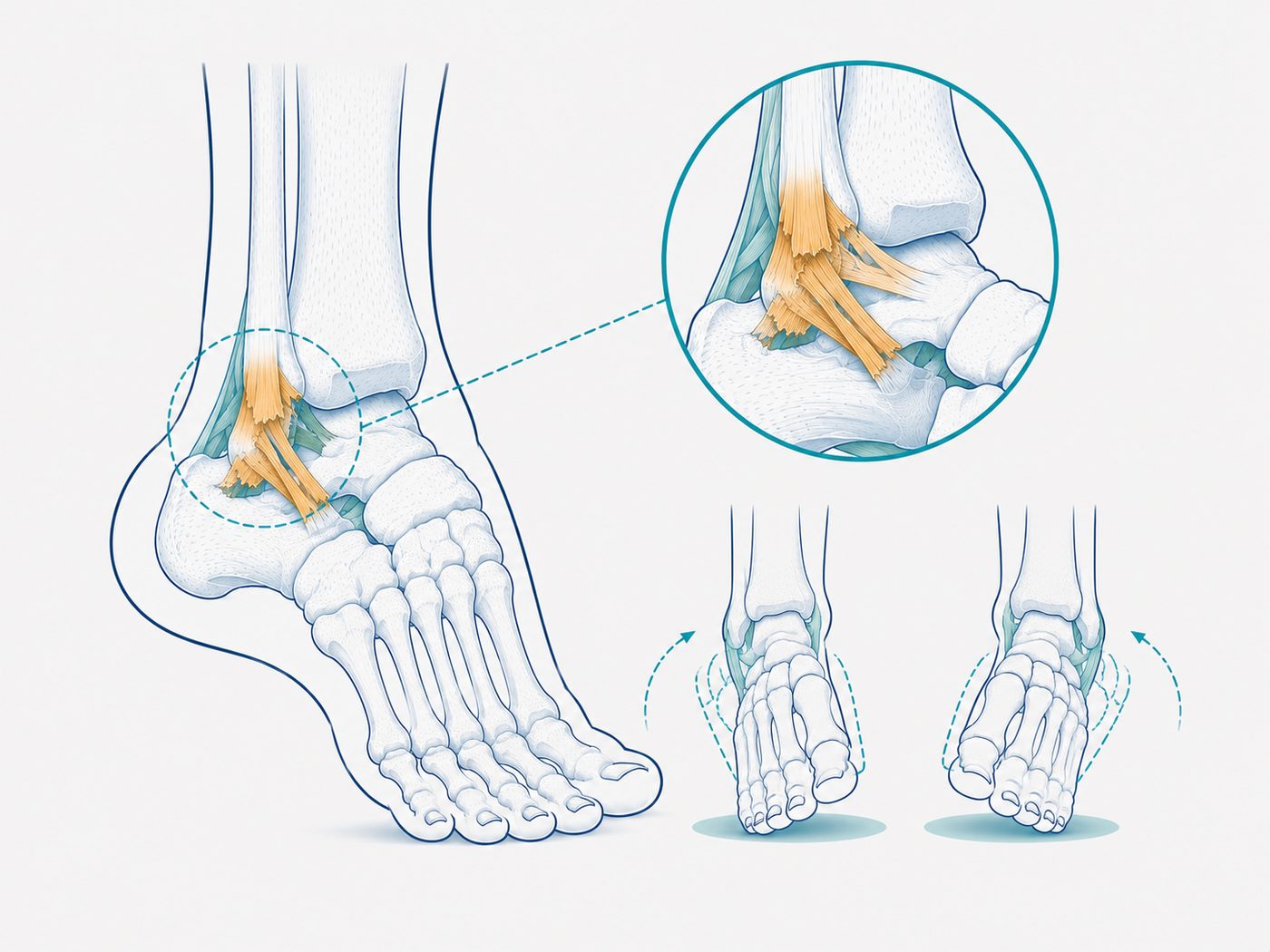
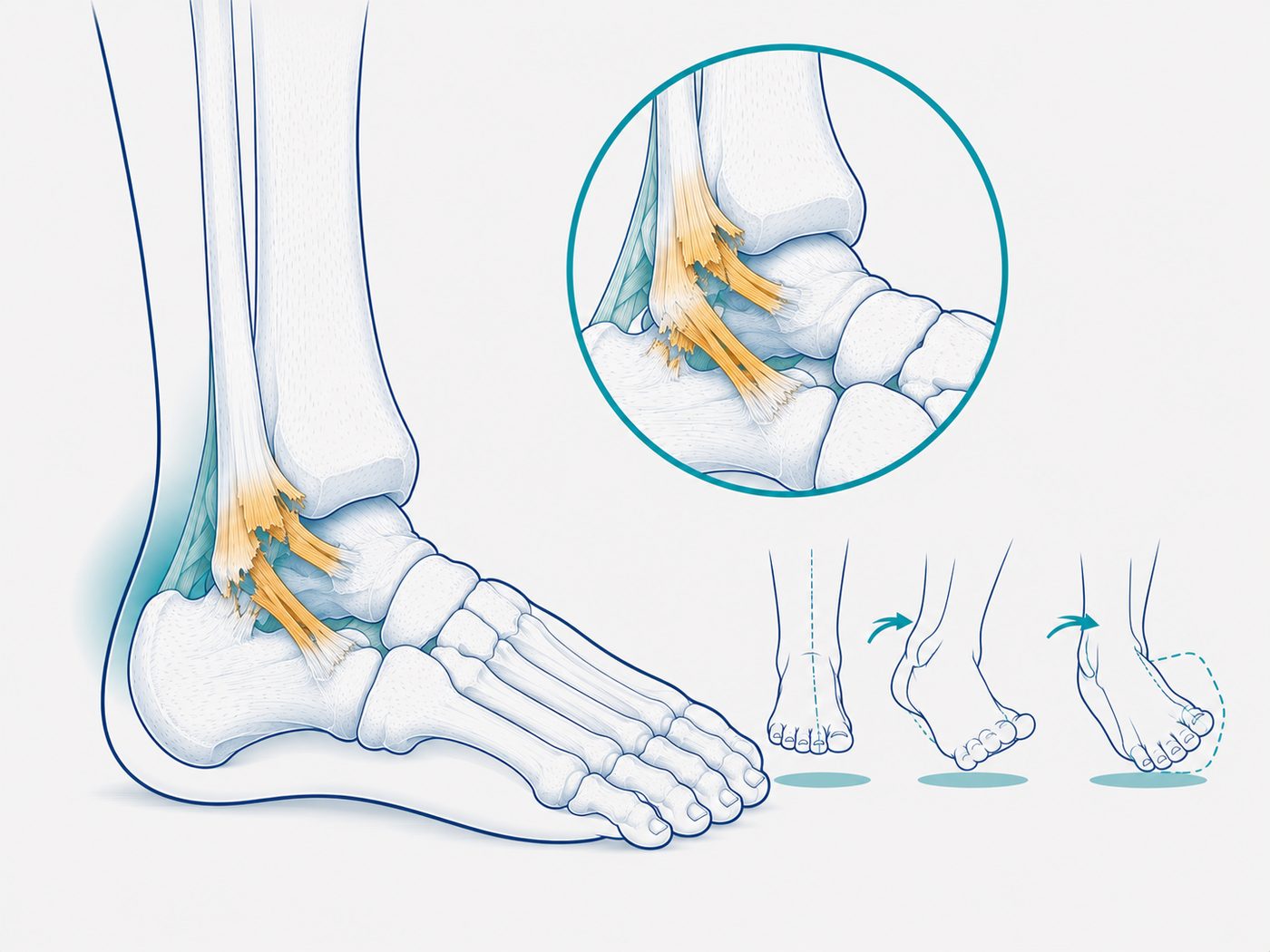
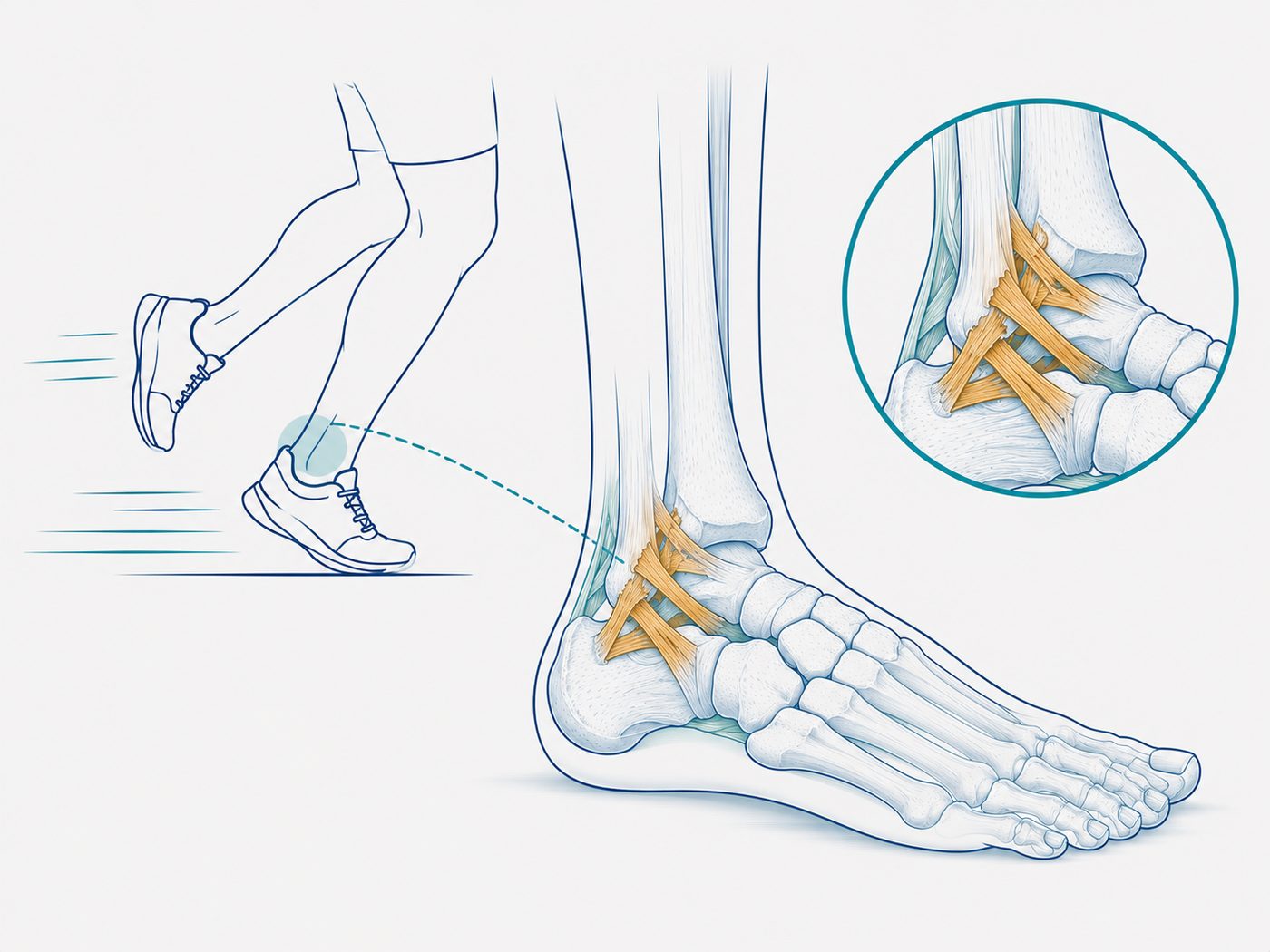
The characteristic mechanism is the foot turning outward while it is fixed on the ground, for example in a football tackle, a fall while skiing or a hit in American football - sports with sudden stops and changes of direction under high load.
How can physiotherapy help?
Because the injured ligament supports the stability between the two bones of the lower leg and not only the ankle joint, rehabilitation is more cautious and graded more slowly than for an ordinary sprain - including an initial period of restricted load, followed by a gradual return to strength, stability and full range of motion before returning to sport.
When should you get checked?
If real instability between the lower-leg bones is suspected, the pain doesn’t improve at all after a few weeks, or bearing weight is very hard - see an orthopedic specialist and consider imaging to assess the severity.
Frequently asked questions
The location of the pain - above the ankle rather than at its sides - is the main clue, alongside a longer recovery time than expected.
Significantly longer than an ordinary sprain - usually weeks to months, depending on the severity of the injury, compared with a few weeks in a classic sprain.
Only in severe cases with significant instability. Most cases are treated successfully without surgery, but with slower and more cautious rehabilitation.
What’s worth remembering?
A high ankle sprain tends to be missed because it looks “less dramatic” than an ordinary sprain - but it requires longer and more cautious rehabilitation, and identifying it early saves a lot of frustration later.
- It differs from an “ordinary” sprain in that the pain sits above the ankle, between the tibia and fibula, rather than at the sides.
- The swelling is usually less dramatic than in an ordinary sprain, even though the injury itself is more severe and recovery significantly slower.
- Squeezing the tibia and fibula together above the ankle, which causes pain even though it doesn’t touch the joint directly, points toward this diagnosis.
Not sure if this is your situation? I’d be happy to give you a professional assessment and build a treatment plan that fits you.
Book a consultation callYou might also be interested in:
 Pain somewhere else?
Return to the interactive body map and pick an area
←
Pain somewhere else?
Return to the interactive body map and pick an area
←