When You Start Fearing Movement: How to Get Moving Again with Confidence
Second-guessing every bend, giving up activities, watching every move? Why it happens and what helps. Part three of the "Understanding Pain" series.
In some people, after a period of pain, the fear of moving starts to become a real part of the limitation - second-guessing every bend, giving up activities, watching every move. It is a completely understandable response, not weakness. And there is a way out - gradual, at your own pace, and without ignoring the pain.
First: this fear makes sense
Someone whose back "locked up" mid-bend does not need an explanation for why they are careful with the next bend. It is an understandable protective response - the protection system doing its job: something hurt, so you guard against it. In the short term, after an injury or a flare-up, that kind of caution is sometimes exactly what is needed.
The question is what happens when the caution stays long after it has done its job.
The cycle - in some people
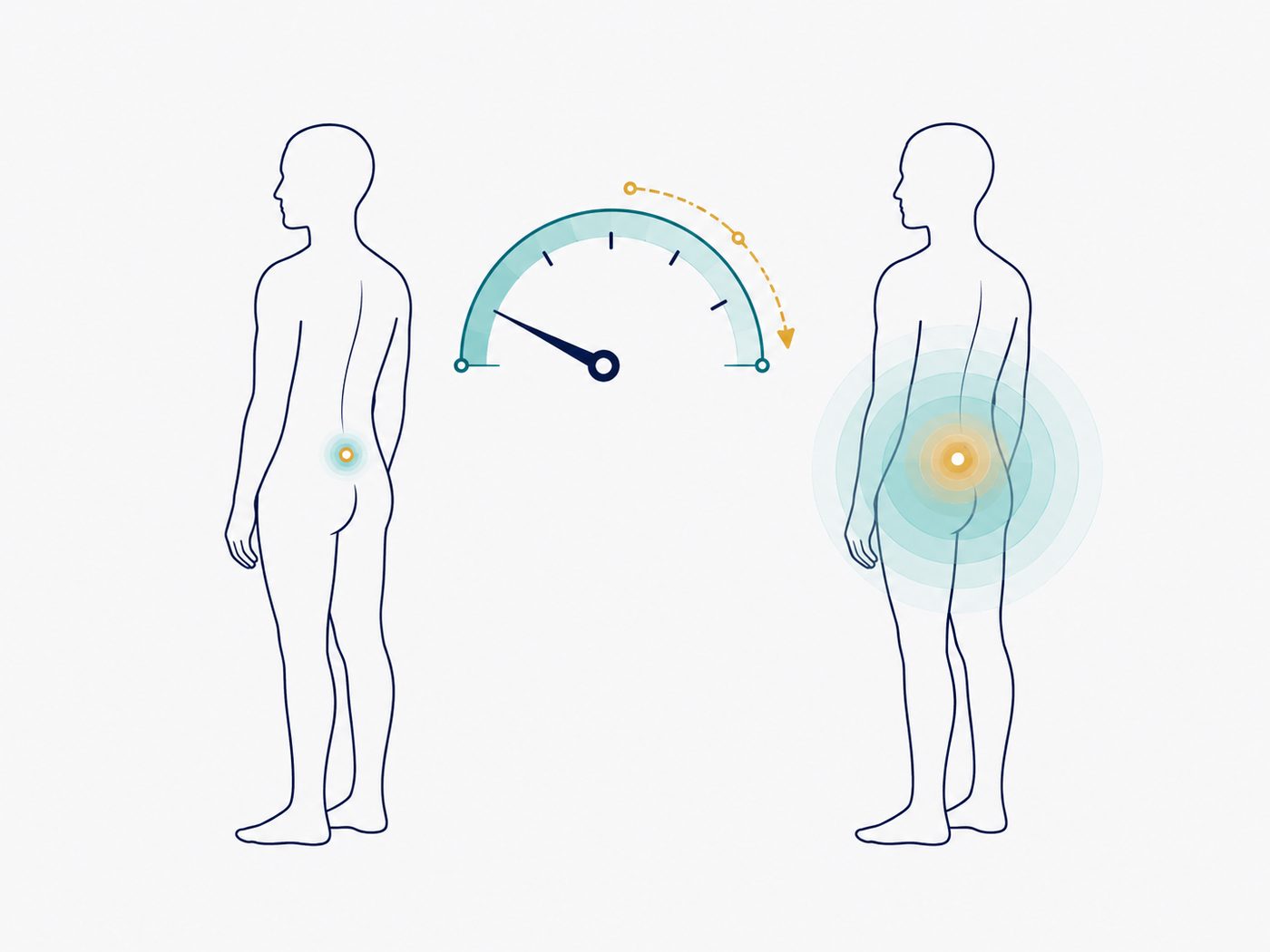
In some people, a self-feeding pattern can develop: pain creates fear of movement. Fear leads to avoidance, and prolonged avoidance can shrink activity and confidence in movement - and maintain the limitation. And in the previous article we saw the other side of the same coin: a movement you keep avoiding long after it is safe to return to can come to feel less familiar and more threatening.
Precision matters here: this does not happen to everyone, and it is not the "fault" of the person it happens to. But when the pattern exists - it can be worked on.
The way out - three paths, not one
There is no single formula. In practice, the main paths are:
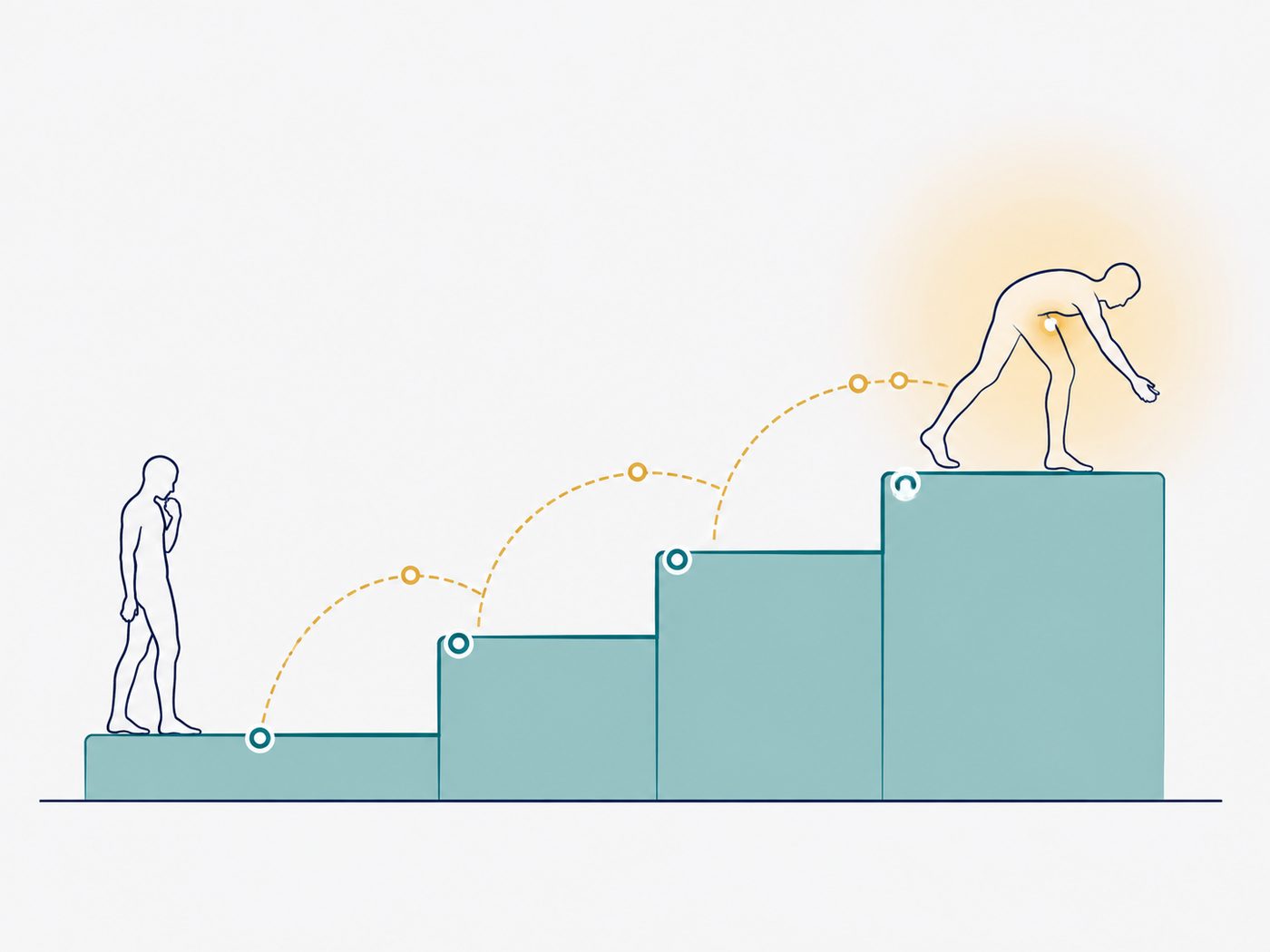
A gradual return to activity. You choose an activity that matters to you - walking, playing with the kids, getting back to training - and build toward it gradually, from a dose you can manage today. The principle that runs through this site: trend, not leaps.
Graded exposure to what feels threatening. When a specific movement makes you nervous - say, bending - you can approach it in stages: from a small, supported range, through easier versions, up to the full movement. Each stage that goes well can build confidence for the next.
And general activity. Sometimes the path is not to "attack" the feared movement directly, but simply to become more active overall - and confidence can return gradually along with fitness and routine.
Which path fits you depends on you, on how strong the fear is, and on your situation - and that is exactly the kind of decision a professional assessment helps with.
Is it okay to move when it hurts a little?
Sometimes yes - but not always. The context, the type of pain, your medical situation, and the response over time matter more than the simple fact that something hurt during the movement. So the conclusion that a particular movement is safe for you comes after screening - an assessment that rules out causes needing different care - not as a blanket assumption. The goal is not to ignore pain, but to learn when pain is a sign to stop and when it is possible to progress safely despite some discomfort.
And how do you know whether the progression suits you? You do not look only at what you felt during the movement, but also at how strong the response is, how long it lasts, and whether it allows you to keep progressing in the following days. Some temporary rise in pain after a new activity is not necessarily a sign that the activity was harmful or wrong - the picture is built from the overall response over time, not from the pain number of a single moment.
What this gives you in practice
Getting out of the cycle is not a single moment but an accumulation: every safe, graded experience of movement can help rebuild confidence. Over weeks, for many people the equation shifts - instead of "it hurts, so it must be dangerous", it becomes "I did it yesterday, I can do it today". And that is what studies of programs combining pain education with active exercise measure: improvement in pain, function, and fear of movement - in a sizable share of participants, even if not in everyone.
A practical tool that connects here directly: pacing - how to build a steady load without the "too much, flare-up, long rest" loop. And the closing article of the series is live: what actually helps with persistent pain.
Before starting a return-to-movement plan, an assessment is worthwhile if: the pain began after a significant injury, there is persistent weakness or numbness, the pain keeps intensifying, or you are simply not sure what is allowed - one assessment can save months of unnecessary caution or of loading the wrong way.
Needs urgent assessment: new pain after a significant injury, progressing weakness in an arm or leg, new trouble controlling bladder or bowels, or fever and unexplained weight loss alongside the pain.
Understanding pain is a tool, not a substitute for professional assessment.
Frequently asked questions
Completely. Caution after pain is an understandable protective response, and in the short term it is sometimes exactly right. The only question is whether it stays long after it has done its job - and then it can be worked on gradually.
Gradually and at your own pace: from a small, supported version of the movement, through steps that succeed, up to the full movement. You do not have to "attack" the fear directly - a general increase in activity can also build confidence. A professional assessment helps choose the path and the pace.
Some pain during a return to activity is not necessarily a sign of damage - once an assessment has ruled out causes that need different care. Suitability is judged by the overall response: how strong it is, how long it lasts, and whether it allows you to keep progressing in the following days - not by the pain number of a single moment. If the response is strong, prolonged, or new symptoms appear - stop and consult.
- Caution after pain is an understandable protective response - the only question is whether it stays after its job is done.
- In some people, fear and avoidance can become part of the limitation - and when the pattern exists, it can be worked on.
- There is more than one way back: gradual return to activity, graded exposure, or general activity - by person and goal.
- Suitability is judged by the overall response over days - not by the pain number of a single moment.
This article draws on the fear-avoidance model in the pain literature, on studies of graded exposure and graded activity in musculoskeletal pain, and on the principles of Pain Neuroscience Education - as part of an active treatment approach.
Not sure if this is your situation? I’d be happy to give you a professional assessment and build a treatment plan that fits you.
Book a consultation callYou might also be interested in:
 Pain somewhere else?
Return to the interactive body map and pick an area
←
Pain somewhere else?
Return to the interactive body map and pick an area
←