Why Pain Can Stay Even After the Body Has Improved
The tests look fine, time has passed, and it still hurts. The real explanations - and no, it is not in your head. Part two of the "Understanding Pain" series.
This is one of the most frustrating situations there is - time has passed, the tests look reasonable, and it still hurts. That does not mean you are imagining it, and it does not necessarily mean something hidden is wrong. Pain can persist even when the initial injury has improved, and there are real explanations - and none of them is "it is all in your head".
First: what does "healed" even mean?
When we talk about tissue healing, we mean a biological process that unfolds over weeks and months. But "improved" and "back to exactly what it was" are not the same thing - healed tissue can be slightly different from what it used to be, and the body usually handles that just fine.
The more important point is a different one: even when the tissue process has progressed well, pain does not always come down at the same rate. The two are related - but not locked together.
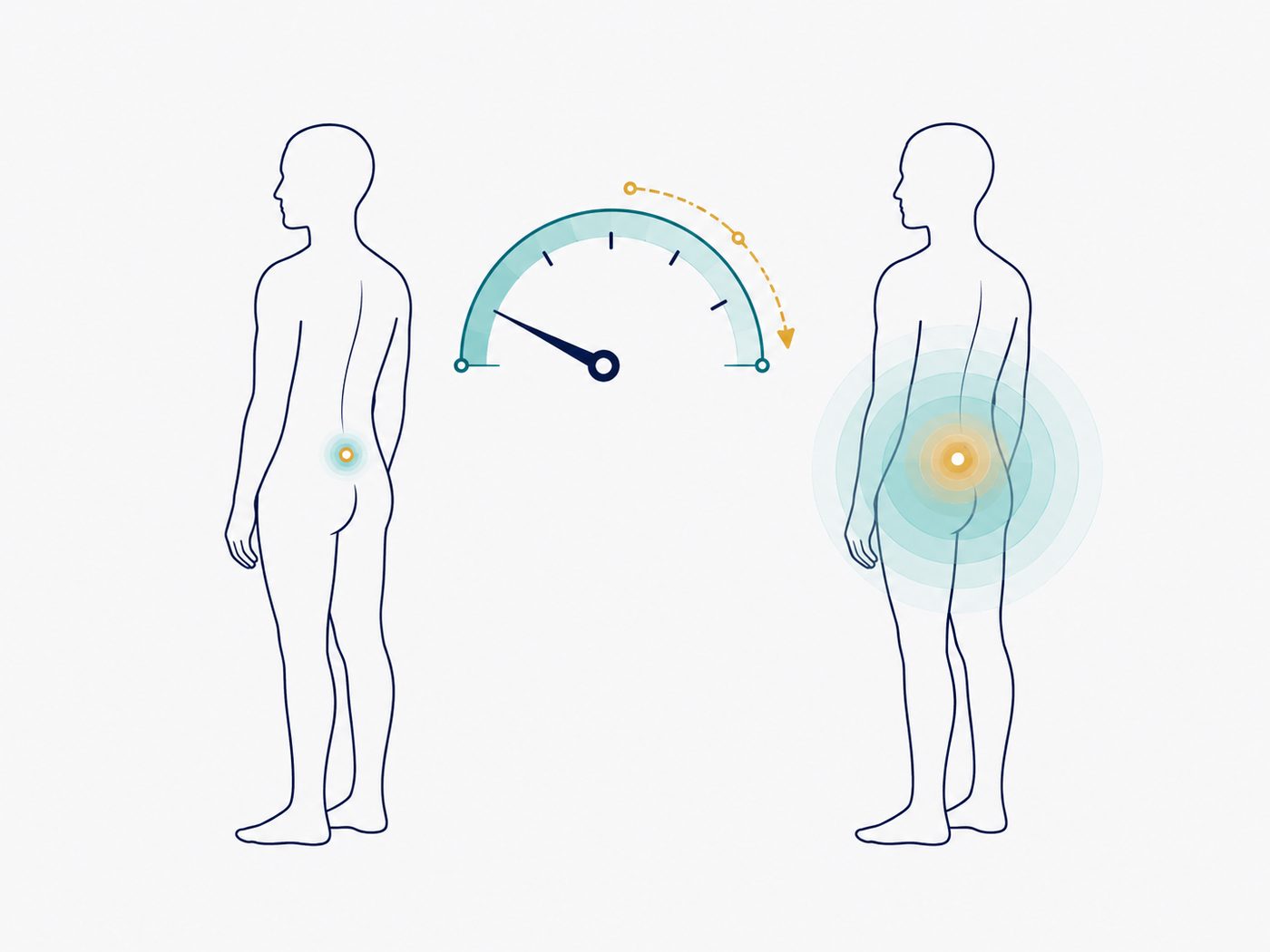
The pain system is not a fixed measuring instrument
In the first article in this series we saw that pain is shaped by much more than the state of the tissue alone. The important addition here: the pain system is also not static. Its sensitivity can change over time - rising and falling - influenced by sleep, stress, overall load, past experience, and even how confident you feel in movement.
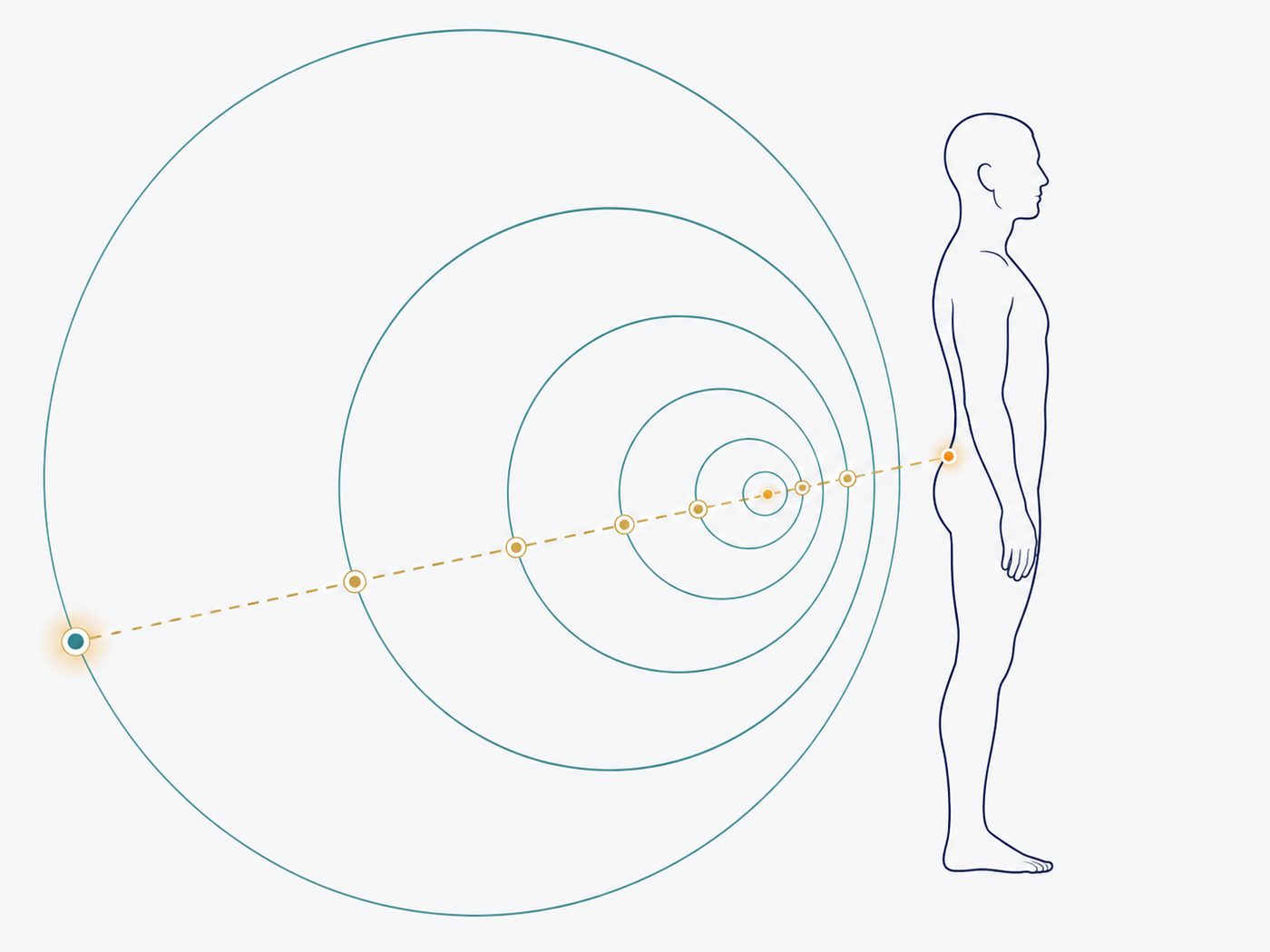
Think of an alarm with an adjustable sensitivity dial: the exact same touch can set it off or not, depending on how sensitive it is set right now. And it is worth saying immediately - this is an illustration only, not a precise physiological description of what happens in the body. But it helps capture something real: pain intensity can change without a parallel change in the tissue.
You have probably noticed this yourself
The exact same movement can hurt more on a busy, stressful day, after a bad night, or after a long stretch of avoiding it - and less on a calm day, after good sleep, in the middle of an active period. That does not mean the tissue was destroyed and rebuilt overnight, and it is not proof of any specific mechanism - it is simply a reminder that the experience of pain is sensitive to context.
One more thing about avoidance: when you keep avoiding a movement long after it is safe to return to it, it can become less familiar and feel more threatening. And when you do come back to it, the system may respond with suspicion. That is exactly what the next article in this series is about.
What about "heightened sensitivity"?
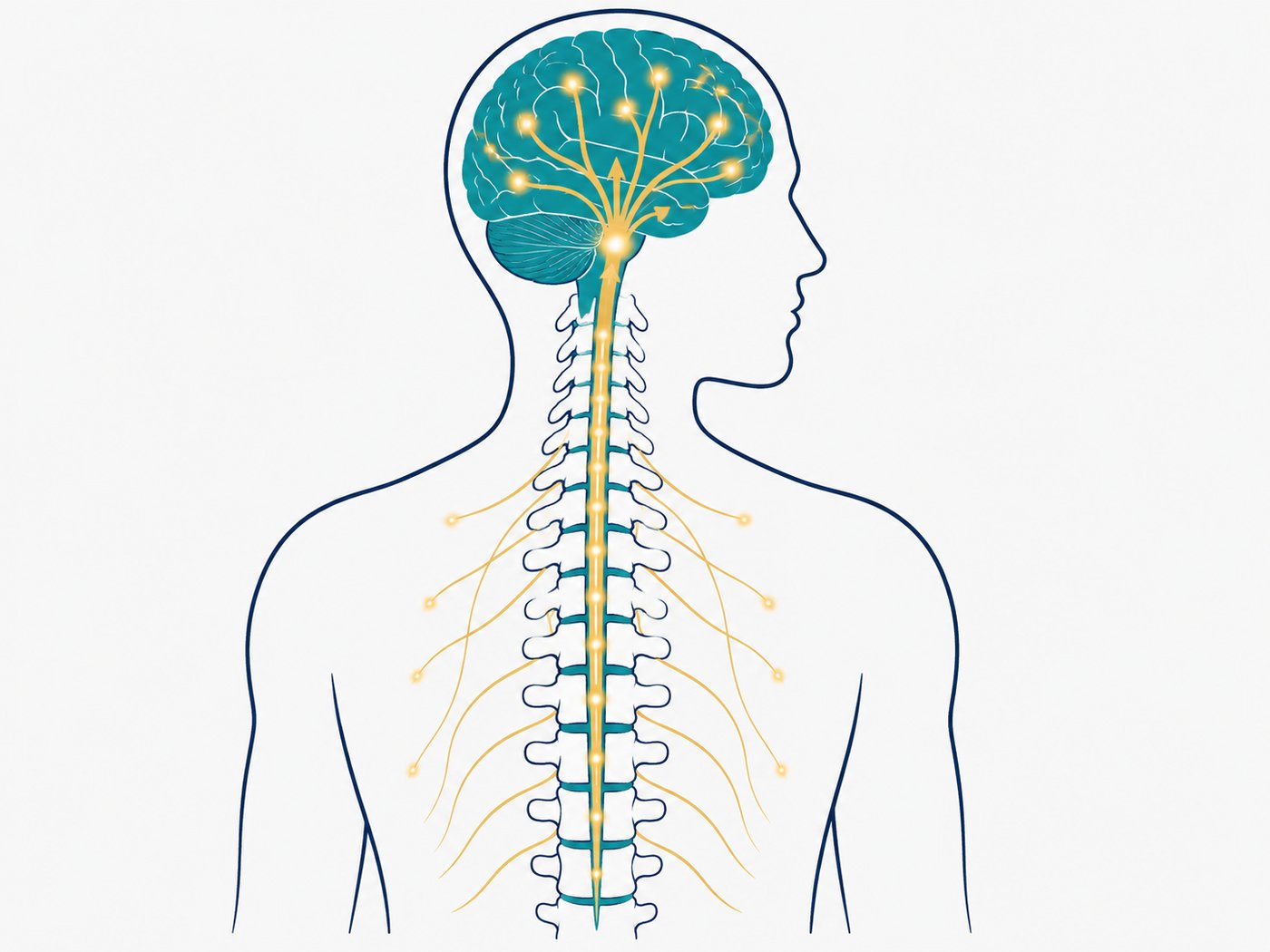
In some people with persistent pain, the nervous system becomes more responsive to stimuli - something that did not hurt before starts hurting, or mild pain feels intense. This phenomenon is well known and well studied, but precision matters: it is one possible mechanism, not the automatic explanation for every pain that lasts. In the same person, several factors can be at work in parallel, in different combinations, and clinicians can identify features that fit heightened sensitivity - but the mechanism cannot be determined from pain duration or a single sign alone.
If you want to go deeper, we have a detailed article on central sensitization.
The practical bottom line
Two things are true at once, and both matter:
Pain that persists does not automatically mean ongoing damage. You can genuinely hurt, for a long time, without ongoing damage in the body - so lasting pain is not a reason to stop living your life and moving.
And in the same breath: persistent pain also does not mean there is no physical cause worth checking. That is why lasting pain deserves a professional assessment - to make sure nothing is being missed, and to build a plan that fits your situation, not an average one.
And what do you actually do with a system whose sensitivity has changed? That is exactly what the next articles in this series cover: how to get out of the fear-of-movement cycle, and what actually helps with persistent pain. In the meantime, a practical tool that already lives on this site: pacing. And the principle that runs through this whole site holds here too: a trend over time says more than any single day.
Worth getting checked, without special urgency: persistent pain that has not yet been professionally assessed, pain that changes in character, or pain that gets in the way of daily life and sleep over time.
Needs urgent assessment: new pain after a significant injury, progressing weakness in an arm or leg, new trouble controlling bladder or bowels, or fever and unexplained weight loss alongside the pain.
Understanding pain is a tool, not a substitute for professional assessment.
Frequently asked questions
Not necessarily. Tissue healing and pain intensity are related, but not locked together - pain can persist even when the tissue process has progressed well. And equally, persistent pain that has not yet been assessed is worth a professional evaluation.
In some people with persistent pain, the nervous system responds more strongly to stimuli - mild pain feels intense, or something that did not hurt begins to. It is one possible mechanism in persistent pain, not an automatic explanation, and it cannot be determined from pain duration or a single sign alone.
The pain system's sensitivity is not fixed - it is influenced by sleep, stress, and activity levels. For many people, pain, function, and confidence in movement can gradually improve as part of an active treatment program.
- Tissue healing and pain intensity are related - but not locked together. Pain can persist even when the process has gone well.
- The pain system is not static: its sensitivity rises and falls with sleep, stress, load, and confidence in movement.
- Heightened sensitivity is one possible mechanism in persistent pain - not the automatic explanation.
- Persistent pain is not automatically ongoing damage - but it does deserve professional assessment.
This article draws on the current IASP terminology for pain mechanisms, the literature on central sensitization and nociplastic pain, and the principles of Pain Neuroscience Education - presented here as part of an active treatment approach.
Not sure if this is your situation? I’d be happy to give you a professional assessment and build a treatment plan that fits you.
Book a consultation callYou might also be interested in:
 Pain somewhere else?
Return to the interactive body map and pick an area
←
Pain somewhere else?
Return to the interactive body map and pick an area
←