What Actually Helps with Persistent Pain
Not a list of tips - five principles that pull it all together. The fourth and final part of the "Understanding Pain" series.
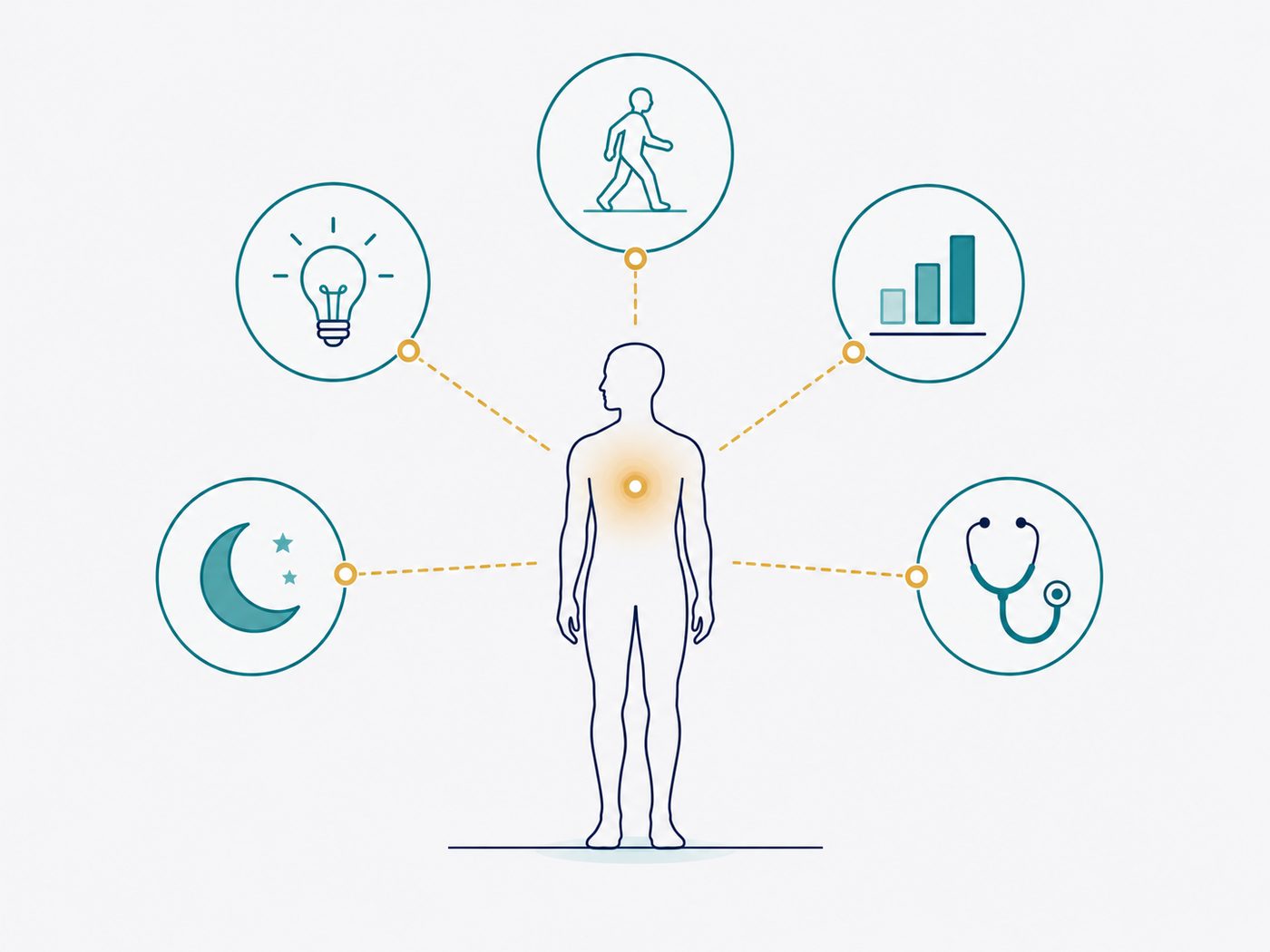
There is no single trick for persistent pain - and anyone selling you one is probably oversimplifying. What there is: five principles that come up again and again in evidence-based approaches to persistent pain, working together as a plan rather than a list of tips. If you have read the series this far, you already have the first one.
Why there is no "one trick"
In the previous three articles we saw that pain is shaped by many factors - the state of the tissue, sleep, stress, past experience, confidence in movement. A practical conclusion follows: what is influenced from many directions is treated from many directions. Not twenty things at once - but a few principles, gradually, over time.
The five principles
1. Understand - and this is not a symbolic step
Someone who believes every pain signals damage guards against every movement - we saw why that can maintain the limitation. Understanding that pain is not a damage meter is not "nice general knowledge": it is what makes all the other principles possible. And in the research, pain education is a component studied in its own right - we will get to what was found in a moment.
2. Stay active - at today's dose
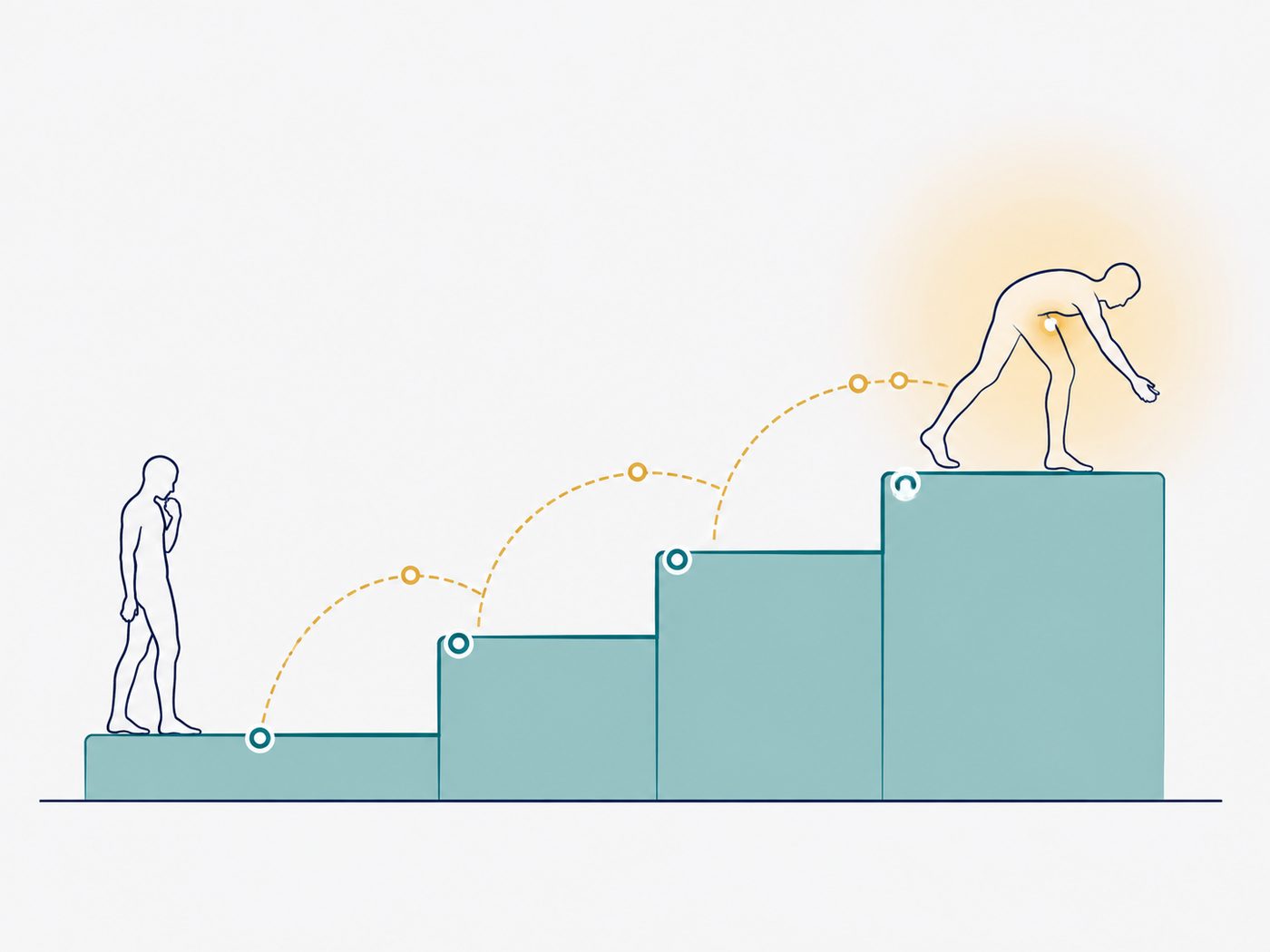
The body responds to what you do with it. In many people with persistent pain, prolonged avoidance of activity can contribute to declining function and confidence in movement. "Staying active" does not mean loading up - it means not stopping: choosing a dose you can manage today, however modest, and keeping it up consistently.
3. Increase load gradually - and this is where pacing comes in
You know the loop: a good day, do everything, flare-up, a week of rest, start over. Pacing breaks it: a steady, predictable load instead of reacting to the pain of the moment.
And an important caution, because there is a trap here: when the goal is a gradual return to activity, pacing should help build capacity over time - not fix a permanent ceiling out of fear of a flare-up. If the limit stays fixed for a long time purely out of worry that the pain will climb, it is worth checking whether the pacing is now limiting progress instead of supporting it.
And how do you know the rate of increase suits you? The rule from the previous article: not by the pain number of a single moment, but by the overall response - how strong it is, how long it lasts, and whether you can keep progressing in the following days.
4. Address the factors that affect the system
If sleep, stress, and overall load influence the pain system's sensitivity - they are part of the treatment, not background. Regular sleep, stress management with tools that work for you, and attention to the loads at work and at home. These are not marginal factors: in some people they can meaningfully affect pain, function, and the ability to progress in the plan.
5. Know when assessment or further care is needed
Smart self-management also includes knowing its limits. Pain that changes in character, a limitation that keeps progressing, or simply a long stretch with no trend of improvement - all deserve professional assessment. Medication and imaging have their place too - when they serve the plan, not when they replace it.
What the research says
Systematic reviews have found that pain education may reduce pain, disability, and fear of movement in some people with chronic low back pain, especially as part of a program that includes exercise or physiotherapy. The size of the effect and the certainty vary between studies, which is why it is presented here as a tool within a treatment plan and not a solution on its own.
In the words of this series: understanding is the first principle - but it works when you connect the other four to it.
What it looks like in practice
A real plan starts with an assessment: what the situation is, what is limiting you, what you want to get back to. From there, a plan connects the principles to your case - the activity, the rate of increase, the factors that need attention, and the checkpoints along the way. And what accompanies all of it: a trend over time says more than any single day.
That closes the series. If you arrived here from the first article - you have gone from "why does it hurt" to "what to do about it". And if you landed straight here, it is worth going back to the start: pain is not a damage meter.
Worth getting checked, without special urgency: persistent pain that has not yet been professionally assessed, pain that changes in character, or a long stretch with no trend of improvement.
Needs urgent assessment: new pain after a significant injury, progressing weakness in an arm or leg, new trouble controlling bladder or bowels, or fever and unexplained weight loss alongside the pain.
Understanding pain is a tool, not a substitute for professional assessment.
Frequently asked questions
There is no single treatment that fits everyone. In many persistent pain conditions, care combines a personally tailored mix of activity and exercise, understanding pain, and addressing other factors that affect function and coping - in a plan built after an assessment.
No - it means doing things consistently and gradually. Pacing builds a steady dose instead of a cycle of overload and flare-up, and the goal is usually to build capacity over time. If the limit stays fixed for months purely out of worry, it is worth revisiting the plan with a professional.
Very individual, and progress is measured as a trend over weeks - not by a single day. For many people, pain, function, and confidence in movement can gradually improve as part of an active program; if there is no trend of improvement over time, that itself is important information for a reassessment.
- There is no single trick for persistent pain - there are principles that work together: understanding, activity, gradual progression, addressing factors, and timely assessment.
- Pacing is meant to build capacity over time - if the limit stays fixed for months purely out of worry, it is limiting rather than supporting.
- Sleep, stress, and overall load are part of the treatment - in some people their effect is significant.
- Pain education helps especially as part of an active program - a tool within a plan, not a solution on its own.
This article draws on systematic reviews of pain education combined with exercise (through 2025), on the graded activity and pacing literature, and on the principles of Pain Neuroscience Education - as part of an active treatment approach.
Not sure if this is your situation? I’d be happy to give you a professional assessment and build a treatment plan that fits you.
Book a consultation callYou might also be interested in:
 Pain somewhere else?
Return to the interactive body map and pick an area
←
Pain somewhere else?
Return to the interactive body map and pick an area
←